AYAT IN THE HUMAN EXPERIENCE OF HISTORY
A
وَإِذۡ قُلۡتُمۡ يَٰمُوسَىٰ لَن نَّصۡبِرَ عَلَىٰ طَعَامٖ وَٰحِدٖ فَٱدۡعُ لَنَا رَبَّكَ يُخۡرِجۡ لَنَا مِمَّا تُنۢبِتُ ٱلۡأَرۡضُ مِنۢ بَقۡلِهَا وَقِثَّآئِهَا وَفُومِهَا وَعَدَسِهَا وَبَصَلِهَاۖ قَالَ أَتَسۡتَبۡدِلُونَ ٱلَّذِي هُوَ أَدۡنَىٰ بِٱلَّذِي هُوَ خَيۡرٌۚ ٱهۡبِطُواْ مِصۡرٗا فَإِنَّ لَكُم مَّا سَأَلۡتُمۡۗ وَضُرِبَتۡ عَلَيۡهِمُ ٱلذِّلَّةُ وَٱلۡمَسۡكَنَةُ وَبَآءُو بِغَضَبٖ مِّنَ ٱللَّهِۗ ذَٰلِكَ بِأَنَّهُمۡ كَانُواْ يَكۡفُرُونَ بَِٔايَٰتِ ٱللَّهِ وَيَقۡتُلُونَ ٱلنَّبِيِّۧنَ بِغَيۡرِ ٱلۡحَقِّۗ ذَٰلِكَ بِمَا عَصَواْ وَّكَانُواْ يَعۡتَدُونَ ٦١ [البقرة:61-61]
And (remember) when you said, ‘O Musa (Moses)! We cannot endure one kind of food. So invoke your Lord for us to bring forth for us of what the earth grows, its herbs, its cucumbers, its Fum (wheat or garlic), its lentils and its onions’. He said, ‘Would you exchange that which is better for that which is worse? Go you down to any town and you shall find what you want!’ And they were covered with humiliation and misery, and they drew on themselves the Wrath of Allah. That was because they used to disbelieve the Ayat of Allah and killed the Prophets wrongfully. That was because they disobeyed and used to transgress the bounds (in their disobedience to Allah).
Surah 2 Al-Baqarah Verse 61
- Manna and Quails constituted the natural food that was continually made available to the Jews throughout the forty years of their wandering in the Sinai Desert (the Israelites reached the Sinai Peninsula after their exodus from Egypt). Manna was like coriander seed. When the dew fell in the night, Manna fell with it from above. By Allah’s grace the quails (genre of mid-sized birds) were made available so plentifully that the entire nation was able to live on them alone and so escaped starvation.
- ‘…killed the Prophets wrongfully’ – the Israelites recorded their crimes in detail in their own history. Here are a few examples from the Bible:
| Victim | Transgressor | For What | How |
|---|---|---|---|
| Hamani, the Seer, under God’s directions | Asa, the king of Judah | Rebuking Asa for seeking the assistance of Armenian state of Damascus against its own people (Jews of Samaria) | He was put in the stocks (stocks are restraining devices used as a form of corporal punishment and public humiliation) |
| Elijah (the Prophet) | Ahab, the king of Israel | Denounced the Jews for their worship of Baal and invited them to return to monotheism | He was pursued so that he had to seek refuge in the mountains of Sinai Peninsula |
| Micah (the Prophet) | Ahab, the king of Israel | For speaking the truth | He was imprisoned and only given bread and water |
| Zechariah (the Prophet) | Court of the house of the Lord at Judah | For raising his voice against idol worship and moral corruption that became prevalent | He was stoned to death |
| Jeremiah (the Prophet) | State of Jerusalem | For deploring the condition of the Israelites and for warning them to mend their ways | He was abused and cursed; beaten and imprisoned; put in stocks and lowered by ropes into a cistern where he was left to die in hunger and thirst. He was also accused of crimes of treason and conspiracy. |
| Amos (the Prophet) | State of Samaria | For denouncing the widespread error and corruption in the state and warning of the evil consequences that follow such misdeeds | He was condemned to exile and told to pursue his prophetic task somewhere beyond its frontiers. |
| John the Baptist (Saint) | Herod, the ruler of Judah | For protesting against the acts of moral corruption brazenly practiced in his court | He was first put into prison; then he was beheaded at the request of a dancing girl and his head was presented to her on a platter. |
| Jesus (pbuh) (the Prophet) | Priests and political leaders of Israel | For criticizing them for their impiety and hypocrisy and for inviting them to true faith and righteousness | A false case was prepared against him and Romans were persuaded to sign a death sentence against him. |
وَإِذۡ قَتَلۡتُمۡ نَفۡسٗا فَٱدَّٰرَٰٔتُمۡ فِيهَاۖ وَٱللَّهُ مُخۡرِجٞ مَّا كُنتُمۡ تَكۡتُمُونَ ٧٢ فَقُلۡنَا ٱضۡرِبُوهُ بِبَعۡضِهَاۚ كَذَٰلِكَ يُحۡيِ ٱللَّهُ ٱلۡمَوۡتَىٰ وَيُرِيكُمۡ ءَايَٰتِهِۦ لَعَلَّكُمۡ تَعۡقِلُونَ ٧٣ [البقرة:72-73]
And (remember) when you killed a man and fell into dispute among yourselves as to the crime. But Allah brought forth that which you were hiding. So We said: ‘Strike him (the dead man) with a piece of it (the cow)’. Thus, Allah brings the dead to life and shows you His Ayat so that you may understand.
Surah 2 Al-Baqarah Verses 72-73
- Through contact with neighboring people, the Israelites had become infested with the attitude of sanctifying the cow; in fact they had even become accustomed to cow-worship. In order to disabuse the Jews of this, they were ordered to slaughter the cow. Their professed belief that God alone was worthy of worship could only be tested by making them slaughter with their own hands what they had formerly worshipped. The using of piece of the slaughtered cow to restore the dead man’s life appears to be for two purposes:
- To behold a sign of God’s Power – Resurrection.
- To shatter the notion that the cow possessed any holiness or sanctity – for if the cow (an object of their worship) had any supernatural power, some calamity should have visited them as a consequence of slaughtering it. But no calamity took place; on the contrary, killing the cow seemed to be beneficial in so far as striking the dead man with a part of it brought him back to life.
- Allah mentioned His bringing back the dead back to life in several instances in Surah Baqarah, as in:
- The story about the cow
- The story of those who escaped death in their land, while they were numbering thousands
- The story of the Prophet who passed by a village that was destroyed
- The story of Abraham (pbuh) and the four birds
- The land that comes back to life after it has died (metaphoric)
سَلۡ بَنِيٓ إِسۡرَٰٓءِيلَ كَمۡ ءَاتَيۡنَٰهُم مِّنۡ ءَايَةِۢ بَيِّنَةٖۗ وَمَن يُبَدِّلۡ نِعۡمَةَ ٱللَّهِ مِنۢ بَعۡدِ مَا جَآءَتۡهُ فَإِنَّ ٱللَّهَ شَدِيدُ ٱلۡعِقَابِ ٢١١ [البقرة:211-211]
Ask the Children of Israel how many clear Ayats We gave them. And whoever changes Allah’s Favour after it has come to him then surely, Allah is severe in punishment.
Surah 2 Al-Baqarah Verse 211
- Allah mentioned that the Children of Israel were witness to many clear signs that attest to truth of Moses (pbuh) regarding what he was sent with for them. They witnessed his hand (when it became lit with light), his parting of the sea, his striking the rock (and water flowed from the rock), the clouds that shaded them during the intense heat, the manna and the quails, and so forth. These signs attested to the existence of the Creator and the truth of Moses (pbuh) by whose hand these signs appeared. Yet, so many among them changed Allah’s Favour, by preferring disbelief to faith and by ignoring Allah’s favours.
- There are two reasons why this query is addressed to the Children of Israel:
- A group of living human beings provide a better source of instruction and admonition than mute archaeological findings.
- The Israelites were a people who, having been endowed with Scripture and Prophethood were entrusted with the leadership of the world. By falling prey to worldliness, hypocrisy and other errors of belief and conduct they subsequently lost Allah’s Favour.
وَقَالَ لَهُمۡ نَبِيُّهُمۡ إِنَّ ءَايَةَ مُلۡكِهِۦٓ أَن يَأۡتِيَكُمُ ٱلتَّابُوتُ فِيهِ سَكِينَةٞ مِّن رَّبِّكُمۡ وَبَقِيَّةٞ مِّمَّا تَرَكَ ءَالُ مُوسَىٰ وَءَالُ هَٰرُونَ تَحۡمِلُهُ ٱلۡمَلَٰٓئِكَةُۚ إِنَّ فِي ذَٰلِكَ لَأٓيَةٗ لَّكُمۡ إِن كُنتُم مُّؤۡمِنِينَ ٢٤٨ [البقرة:248-248]
And their Prophet (Samuel) said to them: ‘Verily, the sign of his Kingdom is that there shall come to you At-Tabut (a wooden box), wherein is Sakinah (peace and reassurance) from your Lord and a remnant of that which the household of Musa (Moses) and the household of Harun (Aaron) left behind, carried by the angels. Verily, in this is a sign for you if you are indeed believers’
Surah 2 Al-Baqarah Verse 248
- …his - In the Bible he is called Saul. He was a thirty-year-old Benjaminite youth. 'There was not a man among the people of Israel more handsome than he; from his shoulders upward, he was taller than any of the people' (1 Samuel 9: 2). He went out in search of the lost asses of his father. During this search, he passed through the house of Samuel and God informed Samuel that this was the person who had been chosen to govern the people of Israel. Samuel brought Saul to his house, took a vial of oil, poured it on his head, kissed him and said: 'Has not the Lord anointed you to be the prince over His people of Israel? ‘(1 Samuel 10: 1). Samuel later called the people of Israel together and proclaimed Saul to be their king (1 Samuel 10: 17). This was the second Israelite to be anointed by God's command to a position of leadership. Earlier, Aaron had been anointed as the chief priest. The third case of anointment was that of David, and the fourth that of Jesus. There is no clear statement in the Quran regarding the designation of Talut (the Saul of the Bible) to Prophethood. The mere fact of his being appointed a ruler does not necessarily warrant considering him a Prophet as well.
The Biblical version of this incident is different from the Quranic one. The former sheds light, however, on certain details of the incident. It shows that during a military engagement the pagan Philistines had captured the 'Ark of the covenant'. Terrified of the scourge and pestilence which spread wherever they carried the Ark, these pagans placed it on a cart driven by milk cows, and sent it off (1 Samuel 5-6 - Ed.). Perhaps the Quran alludes to this when it mentions angels, since the cart was driverless and it was the angels who kept it in their custody and brought it to the Israelites. The Quranic statement, that in the Ark 'lies inward peace for you', can be understood in the light of the Biblical statements that the Israelites regarded the Ark as highly auspicious, and as an emblem of their triumph and victory. When they were deprived of it, they began to feel that they had been deprived of the mercy of God. The return of the Ark, therefore, had a highly salutary effect on them as it strengthened their sagging morale and raised their spirits.
The Quranic mention of 'the sacred relics left behind by the house of Aaron' seems to allude to the Tablets of Law bequeathed to Moses on Mount Sinai. The Ark is also said to have contained the original copy of the Torah, which Moses himself had had transcribed and which he had himself handed over to the Levites. The Ark is also supposed to have contained a golden urn holding the manna (Hebrews 9: 2 ff - Ed.), in order that the coming generations might recall God's benevolence to their forefathers during their wandering in the desert. The Ark also probably contained the rod of Moses which was one of the great miracles of Allah. (Hebrews 9: 5 mentions the rod of Aaron - Ed.)
أَوۡ كَٱلَّذِي مَرَّ عَلَىٰ قَرۡيَةٖ وَهِيَ خَاوِيَةٌ عَلَىٰ عُرُوشِهَا قَالَ أَنَّىٰ يُحۡيِۦ هَٰذِهِ ٱللَّهُ بَعۡدَ مَوۡتِهَاۖ فَأَمَاتَهُ ٱللَّهُ مِاْئَةَ عَامٖ ثُمَّ بَعَثَهُۥۖ قَالَ كَمۡ لَبِثۡتَۖ قَالَ لَبِثۡتُ يَوۡمًا أَوۡ بَعۡضَ يَوۡمٖۖ قَالَ بَل لَّبِثۡتَ مِاْئَةَ عَامٖ فَٱنظُرۡ إِلَىٰ طَعَامِكَ وَشَرَابِكَ لَمۡ يَتَسَنَّهۡۖ وَٱنظُرۡ إِلَىٰ حِمَارِكَ وَلِنَجۡعَلَكَ ءَايَةٗ لِّلنَّاسِۖ وَٱنظُرۡ إِلَى ٱلۡعِظَامِ كَيۡفَ نُنشِزُهَا ثُمَّ نَكۡسُوهَا لَحۡمٗاۚ فَلَمَّا تَبَيَّنَ لَهُۥ قَالَ أَعۡلَمُ أَنَّ ٱللَّهَ عَلَىٰ كُلِّ شَيۡءٖ قَدِيرٞ ٢٥٩ [البقرة:259-259]
Or like the one who passed by a town which had tumbled over its roofs. He said: ‘Oh! How will Allah ever bring it to life after its death?’ So Allah caused him to die for a hundred years, then raised him up (again). He said: ‘How long did you remain (dead)’. He (the man) said: ‘(Perhaps) I remained (dead) a day or part of a day’. He said, ‘Nay, you have remained (dead) for a hundred years, look at your food and your drink, they show no change, and look at your donkey! And thus, We have made you a sign for the people. Look at the bones, how We bring them together and clothe them with flesh’. When this was clearly shown to him, he said, ‘I know (now) that Allah is able to do all things’.
Surah 2 Al-Baqarah Verse 259
- Ibn Abi Hatim recorded that Ali bin Abi Talib said that the Ayah (2:259) meant Uzayr. Ibn Jarir also reported it, and this explanation was also reported by Ibn Jarir and Ibn Abi Hatim from Ibn Abbas, Al-Hasan, Qatadah, As-Suddi and Sulayman bin Buraydah. Uzayr is most often identified with the Biblical Ezra. Ishaaq Ibn Bishr reported, on the authority of Ibn' Abbas and others, that Ezra was a saint and a wise man. He went out one day to his own farm, as was his custom. About noon he came to a deserted, ruined place and felt the heat. He entered the ruined town and dismounted his donkey, taking figs and grapes in his basket. He went under the shade of the khaiba tree and ate his food. Then he got up to look at what remained of the ruins. The people had long been lost, and he saw bones: Oh! How will Allah ever bring it to life after its death? He said this not out of doubt but out of curiosity. Allah sent the Angel of Death to take his life. He remained dead for one hundred years. After one hundred years had passed and there had been changes in Israelite affairs, Allah sent an angel upon Ezra to revive his heart and his eyes in order for him to feel and see how Allah revives the dead. The angel said: “For how long did you sleep?” He said: “A Day or part of a day”. He said this because he knew he had slept early in the afternoon and woke up late in the afternoon. The angel said: “You remained asleep for one hundred years”. He ate and drank the food which he had prepared before he was overtaken by that long sleep. Then the angel revived his donkey. Almighty Allah said: and look at your donkey! Thus, We have made of you a sign for the people. Look at the bones, how We bring them together and clothe them with flesh. As-Suddi said, “Uzayr observed the bones of his donkey, which were scattered all around him to his right and left, and Allah sent a wind that collected the bones from all over the area. Allah then brought every bone to its place, until they formed a full donkey made of fleshless bones. Allah then covered these bones with flesh, nerves, veins and skin. Allah sent an angel who blew life in the donkeys' nostrils, and the donkey started to bray by Allah's leave.”. All this occurred while Uzayr was watching, and When this was clearly shown to him he said: I know now that Allah is able to do all things.
Ezra Returns Home: He rode on his donkey and entered his native place, but the people did not recognize him, nor did his household, except the maid, now an old woman. He asked her: “Is this the house of Ezra?” She said: “Yes, but the people have long forgotten Ezra”. He said: “I am Ezra; Allah had taken my life for one hundred years and has now returned it to me”. She said: “Ezra used to be answered when he prayed to Allah. Pray to cure me of blindness if you are Ezra”. He prayed for her and massaged her eyes and took her by the hand. “Get up by the power of Allah”, he said. The crippled woman stood up and walked; she opened her eyes and saw; her blindness was gone. She said: “I bear witness that you are Ezra”.
Ezra Finds and Copies the Torah: She rushed to the assembly of the Israelites. Ezra's son was one hundred eighteen years old, and his children’s children now were lords of the assembly. She called out to them saying: “This is Ezra come to you”. They accused her of lying. She said: “I am your old maid. He has just prayed to Allah for me, and here I am whole again, walking and seeing”. The people stood up and looked at him. His son said: “My father had a mark between his shoulders, a black mole”, and they discovered it. They said: “None among us memorized the Torah since Nabuchadnezzar burned it, except Ezra; and there was only one copy of the Torah, which was hidden by Sarukha. He buried it in the days of Nabuchadnezzar in a place none but Ezra knows”. Ezra led the people to the hidden place and took out that copy of the Torah. Its leaves had rotted, and the book itself crumpled. Ezra sat under the shade of a tree surrounded by the children of Israel and copied out the Torah for them from that script. Henceforth, the Jews said that Ezra is the son of Allah, for two evidences which came down from Heaven and for his copying the Torah and for his fighting the cause of the Israelites. He had been copying the Torah for Ezekial in the land of darkness in the hermitage of Ezekiel. The village which was in ruins is said to be Sayrabadh. Ibn Abbas commanded: “So it is as Allah said: We have made of you a sign for the people. That is, for the Israelites, in that he was sitting among his children, the old men, and he a youth. He died as a forty-year-old, and Allah resurrected him at the same age on the day of his death”.
قَدۡ كَانَ لَكُمۡ ءَايَةٞ فِي فِئَتَيۡنِ ٱلۡتَقَتَاۖ فِئَةٞ تُقَٰتِلُ فِي سَبِيلِ ٱللَّهِ وَأُخۡرَىٰ كَافِرَةٞ يَرَوۡنَهُم مِّثۡلَيۡهِمۡ رَأۡيَ ٱلۡعَيۡنِۚ وَٱللَّهُ يُؤَيِّدُ بِنَصۡرِهِۦ مَن يَشَآءُۚ إِنَّ فِي ذَٰلِكَ لَعِبۡرَةٗ لِّأُوْلِي ٱلۡأَبۡصَٰرِ ١٣ [آل عمران:13-13]
There has already been a sign for you (O Jews) in the two armies that met (in combat, the battle of Badr). One was fighting in the Cause of Allah, and as for the other, (they) were disbelievers. They (the believers) saw them (the disbelievers) with their own eyes twice their number (although they were thrice their number). And Allah supports with His victory whom He wills. Verily, in this is a lesson for those who understand.
Surah 3 Al-Imran Verse 13
- The actual disparity between the two armies was roughly three to one. It is said that the Muslims saw twice as many idolators as they were, yet Allah gave them victory over the disbelievers’ forces. Abdullah bin Masud said: “When we looked at the disbelievers’ forces, we found that they were twice as many as we were. When we looked at them again, we thought they did not have one man more than we had”. So Allah’s statement:
And (remember) when you met, He showed them to you as few in your eyes and He made you appear as few in their eyes. (Verse 8:44)
إِنَّ أَوَّلَ بَيۡتٖ وُضِعَ لِلنَّاسِ لَلَّذِي بِبَكَّةَ مُبَارَكٗا وَهُدٗى لِّلۡعَٰلَمِينَ ٩٦ فِيهِ ءَايَٰتُۢ بَيِّنَٰتٞ مَّقَامُ إِبۡرَٰهِيمَۖ وَمَن دَخَلَهُۥ كَانَ ءَامِنٗاۗ وَلِلَّهِ عَلَى ٱلنَّاسِ حِجُّ ٱلۡبَيۡتِ مَنِ ٱسۡتَطَاعَ إِلَيۡهِ سَبِيلٗاۚ وَمَن كَفَرَ فَإِنَّ ٱللَّهَ غَنِيٌّ عَنِ ٱلۡعَٰلَمِينَ ٩٧ [آل عمران:96-97]
Verily, the first House (of worship) appointed for mankind was at Bakkah, full of blessings, and guidance for Al-Alamin (mankind and jinn and all that exists). In it are manifest signs, (for example) the maqam (place) of Ibrahim; whoever enters it, he attains security. And Hajj (pilgrimage to Makkah) to the House (Kabah) is a duty that mankind owes to Allah, those who can afford the expenses; and whoever disbelieves, then Allah stands not in need of any of Al-Alamin.
Surah 3 Al-Imran Verses 96-97
- Bakkah is one of the many names of Makkah. Bakkah means, ‘it brings Buka’ (crying, weeping) to the tyrants and arrogant, meaning they cry and become humble in its vicinity. It was also said that Makkah was called Bakkah because people do ‘Buka’ next to it, meaning they gather around it. There are many names for Makkah, such as Bakkah, Al-Bayt Al-Atiq (the Ancient House), Al-Balad Al-Amin (the City of Safety) and Al-Mamun (Security). Makkah’s names include Umm Raham (Mother of Mercy), Umm Al-Qura (Mother of the towns), and others.
- In the verse it is stressed that there are several clear signs which prove that the Makkan sanctuary enjoys Allah’s blessings and has been chosen by Him as His sanctuary:
- Even though it is located in the middle of the wide expanses of desert, Allah has seen to it that its inhabitants enjoy a satisfactory living.
- Although the rest of Arabia was plunged into chaos and disorder for about two and a half thousand years, peace and tranquility reigned in both the precincts and the environs of the Kabah.
- Thanks to the Kabah the entire Arabian Peninsula enjoyed four months of peace and order every year. These were the sacred months when people went on pilgrimage.
- Barely half a century before the revelation of these verses, people had seen how Abrahah, the Abyssinian invader, fell prey to Allah’s scourge when he attacked Makka with the intention of destroying Kabah. Its memory was fresh and many eye-witnesses were still alive at the time of the Prophet (pbuh).
ضُرِبَتۡ عَلَيۡهِمُ ٱلذِّلَّةُ أَيۡنَ مَا ثُقِفُوٓاْ إِلَّا بِحَبۡلٖ مِّنَ ٱللَّهِ وَحَبۡلٖ مِّنَ ٱلنَّاسِ وَبَآءُو بِغَضَبٖ مِّنَ ٱللَّهِ وَضُرِبَتۡ عَلَيۡهِمُ ٱلۡمَسۡكَنَةُۚ ذَٰلِكَ بِأَنَّهُمۡ كَانُواْ يَكۡفُرُونَ بَِٔايَٰتِ ٱللَّهِ وَيَقۡتُلُونَ ٱلۡأَنۢبِيَآءَ بِغَيۡرِ حَقّٖۚ ذَٰلِكَ بِمَا عَصَواْ وَّكَانُواْ يَعۡتَدُونَ ١١٢ [آل عمران:112-112]
Indignity is put over them (the Jews) wherever they may be, except when under a covenant (of protection) from Allah, and a covenant from men; they have drawn on themselves the Wrath of Allah, and destitution is put over them. This is because they disbelieved in the Ayat of Allah and killed the Prophets without right. This is because they disobeyed (Allah) and used to transgress beyond bounds (in Allah’s disobedience, crimes and sins).
Surah 3 Al-Imran Verse 112
- Indignity is put over them (the Jews) wherever they may be - In Jewish history, Jews have experienced mass expulsions or ostracism by various local authorities and have sought refuge in other countries. The Land of Israel was widely regarded by the Jews as the Jewish homeland, though most of them were barred from the land. After its establishment in 1948, the State of Israel adopted the 1950 Law of Return restoring Israel as the Jewish homeland and making it the place of refuge for Jewish refugees at the time and into the future. This law was intended to encourage Jews to return to their homeland in Israel. After 1970 the Jackson-Vanik amendment granted to those Jewish emigrants from the Soviet bloc countries who would like to enter the United States refugee status with federal assistance in the initial stages of their resettlement.
List of events that prompted major streams of Jewish refugees:
722 BCE
The Assyrians led by Shalmaneser conquered the (Northern) Kingdom of Israel and the Israelites into captivity at Khorasan. Ten of Twelve Tribes of Israel are considered lost; but these tribes are not considered Jewish, rather than Samaritan. These tribes have been living since then near the city of Nablus in what is today the West Bank.
597 BCE
The Babylonian captivity. In 537 BCE the Persians, who conquered Babylon, Jerusalem and the Temple.
70
The defeat of the Great Jewish Revolt. Masses of Jews were sold to the Roman Empire, many fled.
119
Large Jewish communities of Cyprus, Cyrene and Alexandria become extinct after the Jewish defeat in Kitos - War against Rome. This event caused a major demographic shift in the Levant and North Africa.
135
The Novels defeated Bar Kokhba’s revolt. Emperor Hadrian expelled hundreds of thousands of Jews from Judea, replaced by Palestine Palaestina, forbade Jews to set foot in Jerusalem.
629
The entire Jewish population of Galilee is massacred or expelled, following the Jewish rebellion against Byzantium.
7th century
Muhammad expelled Jewish tribes Banu Qaynuqa and Banu Nadir from Medina. The Banu Qurayza tribe was slaughtered and the Jewish settlement of Khaybar was ransacked. All three tribes previously had a peace treaty with Muhammad, but they broke the treaty and sided with the opposition. The Banu Qurayza, not only sided with the opposing leaders (The Quraish) but they also waged war against Muhammad.
1095 – mid-13th century
The waves of Crusades destroyed hundreds of Jewish communities in Europe and the Middle East, including Jerusalem.
Mid-12th century
The invasion of Almohads brought to an end the Golden Age of Jewish culture in Spain. Among other refugees was Maimonides, who fled to Morocco, then Egypt , then Eretz Israel .
1276
Jews expelled from Upper Bavaria.
12th-14th centuries
France. The practice of expelling the Jews accompanied by confiscation of their property, followed by temporary readmissions for ransom, was used to enrich the crown: expulsions from Paris by Philip Augustus in 1182, from France by Louis IX in 1254, by Charles IV in 1322, by Charles V in 1359, by Charles VI in 1394.
13th century
The influential philosopher and logician Ramon Llull (1232-1315) called for expulsion of all Jews who would refuse conversion to Christianity. Some scholars look at Llull’s first comprehensive understanding, in the Christian West, of an expulsionist policy regarding Jews.
1288
Naples issues first expulsion of Jews in Southern Italy.
1290
King Edward I of England issues the Edict of Expulsion for all Jews from England. The politics was reversed after 365 years in 1655 by Oliver Cromwell.
1293
Destruction of most of the Jewish communities in the Kingdom of Naples.
1392
Jews expelled from Bern, Switzerland. Although between 1408 and 1427 Jews were again residing in the city, the only Jews to appear in Bern were subsequently trafficked, chiefly physicians and cattle dealers.
1442
Jews again expelled from Upper Bavaria.
1478
Jews expelled from Passau.
1491
Jews of Ravenna expelled, synagogues destroyed.
1492
Ferdinand II and Isabella I issued the Alhambra Decree, General Edict on the Expulsion of the Jews from Spain (approx 200,000), from Sicily (1493, approx 37,000), from Portugal (1496) from Calabria Italy 1554. It is important to note that this event happened on Tisha B’Av, with many other events in Jewish history.
1495
Charles VIII of France occupies Kingdom of Naples, bringing new persecution against the Jews, many of whom went there as refugees from Spain.
1496
Jews expelled from Portugal
1499
Jews expelled from Nuremberg.
1510
Jews expelled from Naples.
1519
Jews expelled from Regensburg.
1547
Jews expelled from Naples.
1551
All remaining Jews expelled from the duchy of Bavaria. Jewish settlement in Bavaria ceded to the end of the 17th century, when a small community was founded in Sulzbach by refugees from Vienna.
1569
Pope Pius V expels the Jews from the Papal States, with the exception of Ancona and Rome.
1593
Pope Clement VIII expels the Jews living in all the Papal States, except Rome, Avignon and Ancona. Jews are invited to settle in Leghorn, the main port of Tuscany, where they are granted full religious liberty and civil rights, by the Medici family, who want to develop the region into a center of commerce.
1597
Nine hundred Jews expelled from Milan.
1654
The fall of the Dutch colony of Recife in Brazil to the Portuguese led to the first group of Jews to flee to North America.
1701-1714
War of the Spanish Succession. After the war, Jews of Austrian origin were expelled from Bavaria, but some were able to acquire the right to reside in Munich.
1744-1790s
The reforms of Frederick II, Joseph II, and Maria Theresa push masses of impoverished German and Austrian Jews east.
1933-1957
The German Nazi persecution started with the Nazi boycott of Jewish businesses in 1933, reached a first climax during Kristallnacht in 1938 and culminated in the Holocaust of European Jewry. The British Mandate of Palestine prohibited Jewish emigration to Mandatory Palestine. The 1938 Evian Conference, the 1943 Bermuda Conference and other attempts to resolve the problem of Jewish refugees, was widely used in Nazi propaganda. Many German and Austrian Jewish Refugees from Nazism emigrated to Britain where many were treated, but many were not and many fought for Britain in the Second World War. After WW-II Eastern European Holocaust survivors migrated to the allied controlled part of Europe as the Jewish society to which most of the belonged did not exist anymore. Often, they have been often consumed by the people and often unwelcome in the towns from which they came. They were known as displaced persons (also known as Sh’erit ha-Pletah) and placed in displaced persons camps, most of which were by 1951 closed. The last camp Föhrenwald was closed in 1957.
1947-1972
The Jewish exodus from Arab and Muslim countries, in which the combined population of Jewish communities of the Middle East and North Africa (excluding Israel) was reduced from about 900,000 in 1948 to less than 8,000 today, and approximately 600,000 of which became citizens of Israel.
1947
Egypt passed the Companies’ Law. This law required that no less than 75% of employees in Egypt must be Egyptian citizens. This law strongly affected Jews, as only about 20% of all Jews in Egypt were Egyptian citizens. The rest, born in Egypt and living there for generations, did not hold Egyptian citizenship.
1948
State of Israel established. Antisemitism in Egypt intensified. On May 15, 1948, emergency law has been declared, and a royal decree forbade Egyptian citizens to leave the country without a special permit. This was applied to Jews. Hundreds of Jews were arrested and many had their property confiscated. In June through August 1948, bombs were planted in Jewish neighborhoods and Jewish businesses looted. About 250 Jews were killed or wounded by the bombs. Roughly 14,000 Jews left Egypt from 1948 to 1950.
1949
Jordan occupies and then annexes the West Bank – largely allotted by the 1947 UN partition of Palestine to an Arab state, proposal rejected by the Arab leadership – and conducts large scale discrimination and persecution of all non-Muslim residents – Jewish, Christian (of many denominations), Druze, Circassian, etc. – and forces Arabization of all public activities, including schools and public administration.
1954
Gamal Abdel Nasser seizes power in Egypt. Nasser immediately arrested many Jews who have been tried on various charges, mainly for Zionist and communist activities. Jews were forced to donate large sums of money to the military. Strict supervision of Jewish enterprises was introduced; some have been confiscated and others forcibly sold to the government.
1956
Suez Crisis. Roughly 3,000 Egyptian Jews were interned without charge in four detention camps. They are not allowed to sell their property, or to take any capital with them. The deportees have been made to sign statements to the United States and to transfer their property to the administration of the government. The International Red Cross helped about 8,000 stateless Jews to leave the country, most of them to Italy and Greece. Most of the Jews of Port Said (about 100) were smuggled to Israel, by Israel agents. The system of deportation continued in 1957. Other Jews left voluntarily, after their livelihoods had been taken from them, until only 8,561 were registered in the 1957 census. The Jewish exodus continued to be about 3,000 Jews left as of 1967.
1967
Six Day War. Hundreds of Egyptian Jews arrested, suffering beatings, torture, and abuse. Some Spainish Jews were especially permitted to leave the country. Libyan Jews, who numbered approximately 7,000, were subjected to pogroms in which 18 were killed, prompting a mass exodus that left 100 Jews in Libya.
1970
Less than 1,000 Jews still lived in Egypt in 1970. They were given permission to leave their possessions. As of 1971, only 400 Jews remained in Egypt. As of 2013, only a few dozen Jews remain in Egypt.
1960s-1989
Due to the 1968 Polish political crisis the Jews were forced to leave Poland.
1962
Jews flee Algeria as result of OAS violence. The community feared that the proclamation of independence would precipitate a Muslim outburst. By the end of July 1962, 70,000 Jews had left for France and another 5,000 for Israel. It is estimated that some 80% of Algerian Jews settled in France.
1965
Jews in Algeria. By 1969, fewer than 1,000 Jews remain. By the 1990s, the numbers have dwindled to approximately 70.
1970s-1990s
State-sponsored persecution in the Soviet Union prompted hundreds of thousands of Soviet Jews to flee; most went to Israel or came to the United States on refugee status
A bare perusal of the above history speaks volumes on the accuracy of the wrath of Allah.
- If the Jews have ever enjoyed any measure of peace and security anywhere in the world, they owe it to the goodwill and benevolence of others rather than to their own power and strength. At times, Muslim governments granted them refuge while at others non-Muslim powers extended protection.
ٱلَّذِينَ قَالُوٓاْ إِنَّ ٱللَّهَ عَهِدَ إِلَيۡنَآ أَلَّا نُؤۡمِنَ لِرَسُولٍ حَتَّىٰ يَأۡتِيَنَا بِقُرۡبَانٖ تَأۡكُلُهُ ٱلنَّارُۗ قُلۡ قَدۡ جَآءَكُمۡ رُسُلٞ مِّن قَبۡلِي بِٱلۡبَيِّنَٰتِ وَبِٱلَّذِي قُلۡتُمۡ فَلِمَ قَتَلۡتُمُوهُمۡ إِن كُنتُمۡ صَٰدِقِينَ ١٨٣ فَإِن كَذَّبُوكَ فَقَدۡ كُذِّبَ رُسُلٞ مِّن قَبۡلِكَ جَآءُو بِٱلۡبَيِّنَٰتِ وَٱلزُّبُرِ وَٱلۡكِتَٰبِ ٱلۡمُنِيرِ ١٨٤ [آل عمران:183-184]
Those (Jews) who said: ‘Verily, Allah has taken our promise not to believe in any Messenger unless he brings us an offering which the fire (from heaven) shall devour’. Say: ‘Verily, there came to you Messengers before me, with clear signs and even with what you speak of; why then did you kill them, if you are truthful?’ Then if they deny you (O Muhammad, pbuh) so were Messengers denied before you, who came with Al-Baiyyinat (clear signs, proofs, evidences) and the Scripture and the Book of Enlightenment.
Surah 3 Al-Imran Verses 183-184
- The Bible mentions at several places that the token of Divine acceptance of a person’s sacrificial offering was the appearance of a mysterious fire which consumed the offering. The Bible does not state, however, that the consumable fire was an indispensable token of Prophethood and that anyone not endowed with that miracle could not be a Prophet. The Jews in discussing the claim of Muhammad (pbuh) to be a Messenger of Allah brought up the question of this miraculous sign, and used it as a pretext for denying that claim.
- The Jews had not hesitated to murder a number of Prophets who had been endowed with the miracles of consuming fire. The Bible mentions, for example, the Prophet Elijah who challenged the worshippers of Baal to sacrifice a bull, promising that he too would sacrifice a bull. He stated that the offering of the one who was truthful would be consumed by the miraculous fire. The confrontation took place before a large crowd and it was Elijah’s sacrifice which was consumed by the fire. This so antagonized the Baal-worshipping Queen that the henpecked king decided to put the Prophet Elijah to death. Elijah was forced to leave his homeland and take refuge in the mountain of Sinai. The Jews are told in effect: “How dare you ask for the miracle of the consuming fire when in the past you have not even refrained from murdering Prophets who performed that miracle?”
يَسَۡٔلُكَ أَهۡلُ ٱلۡكِتَٰبِ أَن تُنَزِّلَ عَلَيۡهِمۡ كِتَٰبٗا مِّنَ ٱلسَّمَآءِۚ فَقَدۡ سَأَلُواْ مُوسَىٰٓ أَكۡبَرَ مِن ذَٰلِكَ فَقَالُوٓاْ أَرِنَا ٱللَّهَ جَهۡرَةٗ فَأَخَذَتۡهُمُ ٱلصَّٰعِقَةُ بِظُلۡمِهِمۡۚ ثُمَّ ٱتَّخَذُواْ ٱلۡعِجۡلَ مِنۢ بَعۡدِ مَا جَآءَتۡهُمُ ٱلۡبَيِّنَٰتُ فَعَفَوۡنَا عَن ذَٰلِكَۚ وَءَاتَيۡنَا مُوسَىٰ سُلۡطَٰنٗا مُّبِينٗا ١٥٣ [النساء:153-153]
The people of the Scripture (Jews) ask you to cause a book to descend upon them from heaven. Indeed, they asked Musa (Moses, pbuh) for even greater than that, when they said: ‘Show us Allah in public’, but they were struck with thunderclap and lightning for their wickedness. Then they worshipped the calf even after clear proofs, evidences and signs had come to them. (Even) so We forgave them. And We gave Musa a clear proof of authority.
Surah 4 An-Nisa Verse 153
- One of the odd demands which the Jews of Madina (Medina) made to the Prophet (pbuh) was that if he wanted them to accept his claim to Prophethood he should have them either witness a book descending from the heavens or that each one of them should receive a writ from Allah, confirming Muhammad’s Prophethood and the absolute necessity of believing in him.
- When Moses (pbuh) went to Mount Sinai with the seventy elders - there he communicated with Allah. The elders heard Moses (pbuh) speaking with his Lord. This was, perhaps, the last miracle that they could see, and it was hoped that it would be sufficient enough to convey the religion to their hearts forever. However, the seventy elite who heard the miracle were dissatisfied and demanded to see Allah ‘plainly’. This was truly a tragedy that amazes one. Their stubborn demand was rewarded with punishing lightning bolts and a violent quaking that stupefied their souls and bodies at once, leaving them dead.
- ‘clear proofs, evidences and signs’ – refer to the signs which people had constantly witnessed from the time of Moses’ appointment to his prophetic office, to the drowning of Pharaoh and the deliverance of the Israelites out of Egypt. It is clear that He Who had secured the deliverance of the Israelites from the clutches of the powerful Egyptian Empire was not the calf, but Allah, the Lord of the universe. One is simply staggered at the overpowering predisposition of the Jews to error, as evidenced by the fact that at that very juncture in their history when they had experienced the most illustrious signs of Allah’s Power and Grace, they bowed down before the image of the calf, rather than before Allah, their Benefactor.
وَرَفَعۡنَا فَوۡقَهُمُ ٱلطُّورَ بِمِيثَٰقِهِمۡ وَقُلۡنَا لَهُمُ ٱدۡخُلُواْ ٱلۡبَابَ سُجَّدٗا وَقُلۡنَا لَهُمۡ لَا تَعۡدُواْ فِي ٱلسَّبۡتِ وَأَخَذۡنَا مِنۡهُم مِّيثَٰقًا غَلِيظٗا ١٥٤ فَبِمَا نَقۡضِهِم مِّيثَٰقَهُمۡ وَكُفۡرِهِم بَِٔايَٰتِ ٱللَّهِ وَقَتۡلِهِمُ ٱلۡأَنۢبِيَآءَ بِغَيۡرِ حَقّٖ وَقَوۡلِهِمۡ قُلُوبُنَا غُلۡفُۢۚ بَلۡ طَبَعَ ٱللَّهُ عَلَيۡهَا بِكُفۡرِهِمۡ فَلَا يُؤۡمِنُونَ إِلَّا قَلِيلٗا ١٥٥ [النساء:154-155]
And for (breaking) their covenant, We raised over them the Mount and (on other occasion) We said to them: ‘Enter the gate prostrating (or bowing) with humility’; and We commanded them: ‘Transgress not on the Sabbath (Saturday)’. And We took from them a firm covenant. Because of their breaking the covenant, and of their rejecting the Ayat of Allah, and of their killing the Prophets unjustly, and of their saying: ‘Our hearts are wrapped (with coverings i.e. we do not understand what the Messengers say)’ – nay Allah has set a seal upon their hearts because of their disbelief, so they believe not but little.
Surah 4 An-Nisa Verses 154-155
- ‘…raised over them the Mount’ - The allusion here is to the event which took place when Moses proclaimed God's Divine Law at the foot of Mount Sinai. Then Moses brought the people out of the camp to meet God; and they took their stand at the foot of the mountain.
And Mount Sinai was wrapped in smoke, because the Lord descended upon it in fire; and the smoke of it went up like the smoke of a kiln, and the whole mountain quaked greatly. (Exodus 19: 17-18)
This awesome atmosphere was created by God at the time when He made the people of Israel enter into a covenant with Him in order to impress upon them the gravity of the event and the supreme importance of the covenant. It should not be mistakenly assumed, however, that the people of Israel, who were reluctant to make the covenant, were forced to enter into it. In fact, they were all believers and had gone to the Mount merely to make the covenant. The extraordinary conditions which Allah created were such as to make the Israelites realize that making a covenant with Allah was not an ordinary matter. They were rather made to feel that they were entering into a covenant with none other than Almighty Allah and that violating it could spell their disaster.
- ‘Sabbath’ - which means Saturday, was declared for the Israelites as the holy day of the week. God declared the Sabbath as a sign of the perpetual covenant between God and Israel. (Exodus 31: 12-16.) The Israelites were required to strictly keep the Sabbath which meant that they may not engage in any worldly activity; they may not cook, nor make their slaves or cattle serve them. Those who violated these rules were to be put to death. The Israelites, however, publicly violated these rules. In the days of the Prophet Jeremiah (between 628 and 586 B.C.), the Israelites carried their merchandise through the gates of Jerusalem on the Sabbath day itself. Jeremiah, therefore, warned them that if they persisted in their flagrant violation of the Law, Jerusalem would be set on fire. (Jerermiah 17: 21-7.) The same complaint is voiced in the Book of the Prophet Ezekiel (595-536 B.C.) who referred to their violation of the Sabbath rules as their major sin.
As a result, they were turned into apes. The exact manner in which their transformation into apes took place is disputed. Some scholars are of the opinion that the transformation was a physical one, while others hold that they were invested with the attributes characteristic of apes. But both the words and the manner in which this incident is recounted in the Quran seem to suggest that what took place was a physical transformation of certain persons into apes rather than just a moral metamorphosis. What seems plausible is that while their minds were allowed to remain intact, their bodies were changed into those of apes.
- ‘Our hearts are wrapped’ - This statement of the Jews has already been mentioned in Surah Al-Baqarah Verse 2: 88. In fact, like all ignorant worshippers of falsehood, these people also boasted that their faith in the ideas and prejudices, customs and usages of their forefathers was so firm that they could never be made to forsake them. Whenever the Messengers of Allah tried to admonish them, they have been told point-blank that no matter what argument or evidence the latter might adduce in support of their message, they would never be prepared to alter their viewpoint.
- Narrated Abu Hurairah that the Prophet (pbuh) said: ‘It was said to Bani Israel, “Enter the gate (of the town) bowing with humility (prostrating yourselves) and say: ‘Repentance’”, but they changed the word and entered the town crawling on their buttocks and said: “A wheat grain in the hair”’ [they said so just to ridicule Allah’s order as they were disobedient to Him. So Allah punished them severely by sending on them punishment, most probably in the form of (an epidemic of) plague.]
مَّا ٱلۡمَسِيحُ ٱبۡنُ مَرۡيَمَ إِلَّا رَسُولٞ قَدۡ خَلَتۡ مِن قَبۡلِهِ ٱلرُّسُلُ وَأُمُّهُۥ صِدِّيقَةٞۖ كَانَا يَأۡكُلَانِ ٱلطَّعَامَۗ ٱنظُرۡ كَيۡفَ نُبَيِّنُ لَهُمُ ٱلۡأٓيَٰتِ ثُمَّ ٱنظُرۡ أَنَّىٰ يُؤۡفَكُونَ ٧٥ [المائدة:75-75]
The Messiah [Isa (Jesus), pbuh], son of Maryam (Mary) was no more than a Messenger; many were the Messengers that passed away before him. His mother was a Siddiqah (i.e. she believed in the words of Allah and His Books). They both used to eat food (as any other human being, while Allah does not eat). Look how We make the Ayat clear to them; yet look how they are deluded away (from the truth).
Surah 5 Al-Maidah Verse 75
فَكَذَّبُوهُ فَأَنجَيۡنَٰهُ وَٱلَّذِينَ مَعَهُۥ فِي ٱلۡفُلۡكِ وَأَغۡرَقۡنَا ٱلَّذِينَ كَذَّبُواْ بَِٔايَٰتِنَآۚ إِنَّهُمۡ كَانُواْ قَوۡمًا عَمِينَ ٦٤ [الأعراف:64-64]
But they denied him [Nuh (Noah), pbuh], so We saved him and those along with him in the ship, and We drowned those who denied Our Ayat. They were indeed a blind people.
Surah 7 Al-Araf Verse 64
- Nuh (Noah, pbuh) was the first Messenger of Allah sent to the people of the earth after Adam (pbuh). His name was Nuh bin Lamak bin Matushalakh bin Khanukh. And Khanukh was, as they claim, the Prophet Idris. And Idris was the first person to write letters using pen, and he was the son of Barad bin Mahlil bin Qanin bin Yanish bin Shith bin Adam, peace be upon them all. This lineage has been delineated by Muhammad bin Ishaq and others.
- Abdullah bin Abbas said that the first idol worship began when some righteous people died and their people built places of worship over their graves. They made images of them so that they could remember their righteousness and devotion, and thus, imitate them. When time passed, they made statues of them and later on worshipped these idols, naming them after the righteous people: Wadd, Suwa, Yaguth, Ya’uq and Nasr. After this practice became popular, Allah sent Nuh (pbuh) as a Messenger.
- Allah destroyed the people of Nuh (when they rejected him), and saved Nuh and his believing followers. Ibn Wahb said that he was told that Ibn Abbas said that eighty men were saved with Nuh in the ship; one of them was Jurhum, who spoke Arabic.
- In light of the Quranic allusions and Biblical statements it seems certain the people of Noah inhabited the land presently known as Iraq. This view is also supported by inscriptions of pre-biblical times discovered in the course of archaeological excavations in Babylonia. These inscriptions contain almost the same account which is recounted in the Quran and the Torah. The locale of the event is the vicinity of Mosul. Kurdish and Armenian traditions also corroborate this account in so far as they mention that it was in this area that Noah’s Ark anchored. Some relics ascribed to Noah are still found in Jazirat bin Umar, situated north of Mosul and on the frontiers of Armenia in the vicinity of the Ararat Mountain mass. The inhabitants of Nakhichevan believe to this day that their town was founded by Noah.
- Traditions similar to the story of Noah are found in classical Greek, Egyptian, Indian and Chinese literature. Moreover, stories of identical import have been popular since time immemorial in Burma, Malaya, the East Indies, Australia, New Guinea and various parts of Europe and America. This shows clearly that the event took place at some point in the dim past when men lived together in one region and it was after Noah’s Flood that they dispersed to different parts of the world. This is why traditions of all nations mention the Flood of the early time. This is not withstanding the fact that the actual event has increasingly been shrouded in mystery, and the authentic elements of the event overlaid with myth and legend.
فَأَنجَيۡنَٰهُ وَٱلَّذِينَ مَعَهُۥ بِرَحۡمَةٖ مِّنَّا وَقَطَعۡنَا دَابِرَ ٱلَّذِينَ كَذَّبُواْ بَِٔايَٰتِنَاۖ وَمَا كَانُواْ مُؤۡمِنِينَ ٧٢ [الأعراف:72-72]
So, We saved him (Hud, pbuh) and those who were with him by a mercy from Us, and We cut the roots of those who denied Our Ayat; and they were not believers.
Surah 7 Al-Araf Verse 72
- The Quran informs us that Allah brought about the total extermination of the Ad (believed to be among the first inhabitants of the country of the Arabians), a fact borne out by both Arabian historical traditions and recent archaeological discoveries. The Ad was so totally destroyed and their monuments so completely effaced that the Arab historians refer to them as one of the ‘umam baidah’ (extinct people) of Arabia. The Arab tradition also affirms that the only people belonging to the Ad who survived were the followers of the Prophet Hud. These survivors are known as the Second Ad (Ad Thaniyah).
- According to the Quran, the people of Ad lived mainly in the Ahqaf region which is situated to the south-west of the Empty Quarter (al-Rub-al-Khali) and which lies between Hijaz, Yemen and Yamamah. It was from there that the people of Ad spread to the western coast of Yemen and established their hegemony in Oman, Hadramout and Iraq. At a place in Hadramout, there is a grave which is considered to be that of the Prophet Hud. James R Wellested, a British naval officer, discovered an ancient inscription in 1837 in a place called Hisn-al-Ghurab which contains a reference to the Prophet Hud. The contents unmistakably bear out that it had been written by those who followed the Shariah of Hud. One inscription, which is generally considered to date from the eighteenth-century BC, contains the following sentence:
‘We have lived for a long time in this fort in full glory. Free of all want. Our canals were always full to the brim with water…Our rulers were kings who were far removed from evil ideas, who dealt sternly with mischief-makers and governed us according to the law of Hud. Their edicts were recorded in a book. We believed in miracles and resurrection’
The above account fully corroborates the Quranic statement that it was only the companions of Hud who survived and inherited the glory and prosperity of the Ad.
وَلَقَدۡ أَخَذۡنَآ ءَالَ فِرۡعَوۡنَ بِٱلسِّنِينَ وَنَقۡصٖ مِّنَ ٱلثَّمَرَٰتِ لَعَلَّهُمۡ يَذَّكَّرُونَ ١٣٠ فَإِذَا جَآءَتۡهُمُ ٱلۡحَسَنَةُ قَالُواْ لَنَا هَٰذِهِۦۖ وَإِن تُصِبۡهُمۡ سَيِّئَةٞ يَطَّيَّرُواْ بِمُوسَىٰ وَمَن مَّعَهُۥٓۗ أَلَآ إِنَّمَا طَٰٓئِرُهُمۡ عِندَ ٱللَّهِ وَلَٰكِنَّ أَكۡثَرَهُمۡ لَا يَعۡلَمُونَ ١٣١ [الأعراف:130-131]
And indeed, We punished the people of Firaun (Pharaoh) with years of drought and shortness of fruits (crops) that they might remember (take heed). But whenever good came to them, they said: ‘Ours is this’. And if evil afflicted them, they ascribed it to evil omens connected with Musa (Moses, pbuh) and those with him. Be informed! Verily, their evil omens are with Allah but most of them know not.
Surah 7 Al-Araf Verses 130-131
- ‘…lack of fruits’ – Abu Ishaq narrated from a source, “The date tree used to provide only one date”.
- ‘…their evil omens are with Allah’ – Ali bin Abi Talhah reported that Ibn Abbas commented on this Ayah, “Allah says that their afflictions are with and from Him”.
۞وَٱتۡلُ عَلَيۡهِمۡ نَبَأَ نُوحٍ إِذۡ قَالَ لِقَوۡمِهِۦ يَٰقَوۡمِ إِن كَانَ كَبُرَ عَلَيۡكُم مَّقَامِي وَتَذۡكِيرِي بَِٔايَٰتِ ٱللَّهِ فَعَلَى ٱللَّهِ تَوَكَّلۡتُ فَأَجۡمِعُوٓاْ أَمۡرَكُمۡ وَشُرَكَآءَكُمۡ ثُمَّ لَا يَكُنۡ أَمۡرُكُمۡ عَلَيۡكُمۡ غُمَّةٗ ثُمَّ ٱقۡضُوٓاْ إِلَيَّ وَلَا تُنظِرُونِ ٧١ [ يونس:71-71] فَكَذَّبُوهُ فَنَجَّيۡنَٰهُ وَمَن مَّعَهُۥ فِي ٱلۡفُلۡكِ وَجَعَلۡنَٰهُمۡ خَلَٰٓئِفَ وَأَغۡرَقۡنَا ٱلَّذِينَ كَذَّبُواْ بَِٔايَٰتِنَاۖ فَٱنظُرۡ كَيۡفَ كَانَ عَٰقِبَةُ ٱلۡمُنذَرِينَ ٧٣ [ يونس:73-73]
And recite to them the news of Nuh (Noah). When he said to his people: ‘O my people, if my stay, and my reminding (you) of the Ayat of Allah is hard for you, then I put my trust in Allah. So, devise your plot, you and your partners, and let not your plot be in doubt for you. Then pass your sentence on me and give me no respite…’ They denied him, but We delivered him, and those with him in the ship, and We made them generations replacing one after another, while We drowned those who denied Our Ayat. Then see the end of those who were warned.
Surah 10 Yunus Verses 71/73
- For many generations Noah’s people had been worshipping statues that they called gods. They gave their idols names such as Waddan, Suwaan, Yagutha and Nasran, according to the power that they thought these gods possessed. As mentioned earlier, originally these were the names of good people who had lived among them. After their deaths statues of them were erected to keep their memories alive. Later generations did not even know why they had been erected; they only knew their parents had prayed to them.
- Noah continued to call his people to believe in Allah for nine hundred fifty years. It happened that every passing generation admonished the succeeding one not to believe Noah and to wage war against him. The father used to teach his child about the matter that was between himself and Noah and counsel him to reject his call when he reached adulthood. Their natural disposition rejected believing and following the truth.
ثُمَّ بَعَثۡنَا مِنۢ بَعۡدِهِۦ رُسُلًا إِلَىٰ قَوۡمِهِمۡ فَجَآءُوهُم بِٱلۡبَيِّنَٰتِ فَمَا كَانُواْ لِيُؤۡمِنُواْ بِمَا كَذَّبُواْ بِهِۦ مِن قَبۡلُۚ كَذَٰلِكَ نَطۡبَعُ عَلَىٰ قُلُوبِ ٱلۡمُعۡتَدِينَ ٧٤ ثُمَّ بَعَثۡنَا مِنۢ بَعۡدِهِم مُّوسَىٰ وَهَٰرُونَ إِلَىٰ فِرۡعَوۡنَ وَمَلَإِيْهِۦ بَِٔايَٰتِنَا فَٱسۡتَكۡبَرُواْ وَكَانُواْ قَوۡمٗا مُّجۡرِمِينَ ٧٥ [يونس:74-75]
Then after him (Noah) We sent Messengers to their people. They brought them clear proofs, but they would not believe what they had already rejected beforehand. Thus, We seal the hearts of the transgressors. Then after them We sent Musa (Moses, pbuh) and Harun (Aaron) to Firaun (Pharaoh) and his chiefs with Our Ayat. But they behaved arrogantly and were a Mujrimun (polytheists, criminals) folk.
Surah 10 Yunus Verse 74-75
- ‘…transgressors’ – mentioned in the verse are those who, once they commit a wrong, cling to it out of adamancy and obstinacy. These are the ones who, out of sheer arrogance and egotism, would like to stick to the stand they once took even if it was erroneous. Such people remain unmoved even by the most reasonable arguments. As a result, they become victims of a curse and are never able to find the right way.
فَٱلۡيَوۡمَ نُنَجِّيكَ بِبَدَنِكَ لِتَكُونَ لِمَنۡ خَلۡفَكَ ءَايَةٗۚ وَإِنَّ كَثِيرٗا مِّنَ ٱلنَّاسِ عَنۡ ءَايَٰتِنَا لَغَٰفِلُونَ ٩٢ [يونس:92-92]
So, this day We shall deliver your (dead) body (out from the sea) that you may be a sign to those who come after you! And verily, many among mankind are heedless of Our Ayat.
Surah 10 Yunus Verse 92
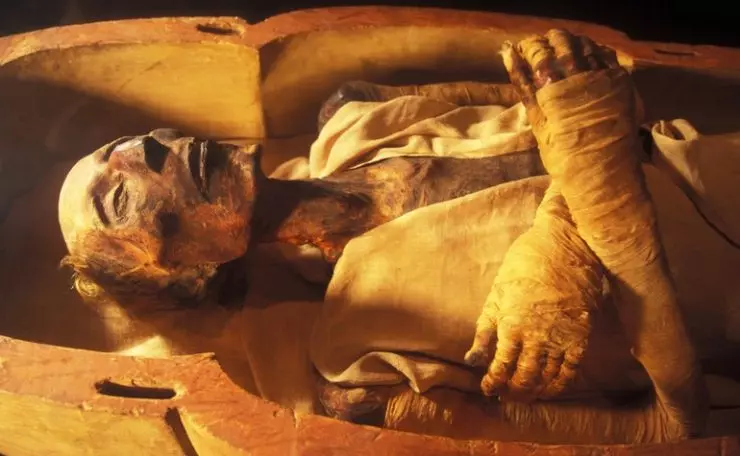
- One of the most intriguing predictions made by the Quran concerns a Pharaoh of Egypt, called Merneptah, who was the son of Rameses II. According to historical records, this king was drowned in pursuit of Musa (Moses, pbuh) in the Red sea. When the Quran was revealed, the only other mention of Pharaoh was in the Bible, the sole reference to his having drowned being in the Book of Exodus: ‘And the waters returned, and covered the Chariots, and the horsemen, and all the host of Pharaoh that came into the Sea after them; there remained not so much as one of them.’ (Exodus 14:28)
Amazingly, when this was all the world knew about the drowning of Pharaoh, the Quran produced this astounding revelation through this verse. How extraordinary this verse must have appeared when it was revealed? At that time no one knew that the Pharaoh’s body was really intact, and it was nearly 1,400 years before this fact came to light. It was a Professor Loret who, in 1898, was the first person to find the mummified remains of the Pharaoh who lived in the days of Musa.
For 3,000 years, the corpse had remained wrapped in a sheet in the Tomb of the Necropolis at Thebes where Loret had found it and subjected it to proper scientific examination. In 1912 he published a book, entitled ‘The Royal Mummies.’ His research has proved that the mummy discovered by Loret was indeed that of the Pharaoh who knew Musa, resisted his pleas, pursued him as he took flight, and lost his life in the process. His earthly remains were saved by the will of Allah from destruction to become a sign to man, as is written in the Quran. In 1975, Dr. Bucaille, made a detailed examination of the Pharaoh’s mummy which by then had been taken to Cairo. His findings led him to write in astonishment and acclaim:
‘Those who seek among modern data for proof of the Holy Scriptures will find a magnificent illustration of the verses of the Quran dealing with the Pharaoh’s body by visiting the Royal Mummies Room of the Egyptian Museum, Cairo.’
As early as the seventh century A.D., the Quran had asserted that the Pharaoh’s body was preserved as a sign for man, but it was only in the 19th century that the body’s discovery gave concrete proof of this prediction. What further proof is needed that the Quran is the Book of Allah!
وَلَقَدۡ أَرۡسَلۡنَا مُوسَىٰ بَِٔايَٰتِنَآ أَنۡ أَخۡرِجۡ قَوۡمَكَ مِنَ ٱلظُّلُمَٰتِ إِلَى ٱلنُّورِ وَذَكِّرۡهُم بِأَيَّىٰمِ ٱللَّهِۚ إِنَّ فِي ذَٰلِكَ لَأٓيَٰتٖ لِّكُلِّ صَبَّارٖ شَكُورٖ ٥ [إبراهيم:5-5]
And indeed, We sent Musa (Moses, pbuh) with Our Ayat (saying): ‘Bring out your people from darkness into light, and remind them of the annals (or days) of Allah. Truly, therein are Ayat for every patient, thankful (person)’.
Surah 14 Ibrahim Verse 5
- The word ayyam, as a technical term, signifies events of great historical significance. The expression ‘ayyam Allah’ (literally, ‘the days of Allah’) refers to those major events in human history which show that Allah treated the nations and major personalities of the past according to their deeds, punishing or rewarding them on that account
- Historical events contain many signs which are of great significance. Through these signs a person can find convincing evidence of God’s unity. Through them he can also find overwhelming evidence of the fact that the law of retribution is a universal law, based on a sharp distinction – at both the intellectual and moral levels – between truth and falsehood. Furthermore, the major events of history also provide ample signs with the help of which man can know the evil results of following false doctrines, and thus, learn an instructive lesson from the past.
- Such signs are found everywhere. However, not everyone can derive the right conclusions from them. It is only people who possess certain qualities who can fully appreciate those signs, and thus benefit from them. Such people are those, who, when they are put to any test by Allah, observe patience and fortitude. When they are blessed with Allah’s favours, they are fully appreciative of them and are inclined to give thanks to Allah. People who are frivolous and ungrateful can never derive full benefit from those signs even if they are able to perceive them.
فَجَعَلۡنَا عَٰلِيَهَا سَافِلَهَا وَأَمۡطَرۡنَا عَلَيۡهِمۡ حِجَارَةٗ مِّن سِجِّيلٍ ٧٤ إِنَّ فِي ذَٰلِكَ لَأٓيَٰتٖ لِّلۡمُتَوَسِّمِينَ ٧٥ وَإِنَّهَا لَبِسَبِيلٖ مُّقِيمٍ ٧٦ إِنَّ فِي ذَٰلِكَ لَأٓيَةٗ لِّلۡمُؤۡمِنِينَ ٧٧ وَإِن كَانَ أَصۡحَٰبُ ٱلۡأَيۡكَةِ لَظَٰلِمِينَ ٧٨ فَٱنتَقَمۡنَا مِنۡهُمۡ وَإِنَّهُمَا لَبِإِمَامٖ مُّبِينٖ ٧٩ [الحجر:74-79]
And We turned (the towns of Sodom in Palestine) upside down and rained down on them stones of baked clay. Surely, in this are signs for those who see (or understand or learn the lessons from the signs of Allah). And verily, they (the cities) were right on the highroad. Surely, therein is indeed a sign for the believers. And the Dwellers of the Wood (i.e. people of the Madyan) were also Zalimun (polytheist and wrong doers). So, We took vengeance on them. They are both on an open highway, plain to see.
Surah 15 Al-Hijr Verses 74-79
- ‘…highroad’ – The devastated piece of land lies on the route from the Hijaz to Syria and Iraq to Egypt. The caravans that pass by this region witness traces of the devastation. In fact, some of these traces can still be observed even today. The area referred to is situated to the east and south of the Dead Sea. As to its southern part, geographers are of the view that it is characterized by devastation for which there is no parallel on earth.
- ‘…open highway’ – The territory of Madyanites also lies on the route from the Hijaz to Palestine and Syria.
- Another verse of the Quran clearly states the kind of disaster that befell the people of Lut:
So, when Our commandment came, We turned (the towns of Sodom in Palestine) upside down, and rained on them stones of baked clay, in a well-arranged manner one after another (Verse 11:82).
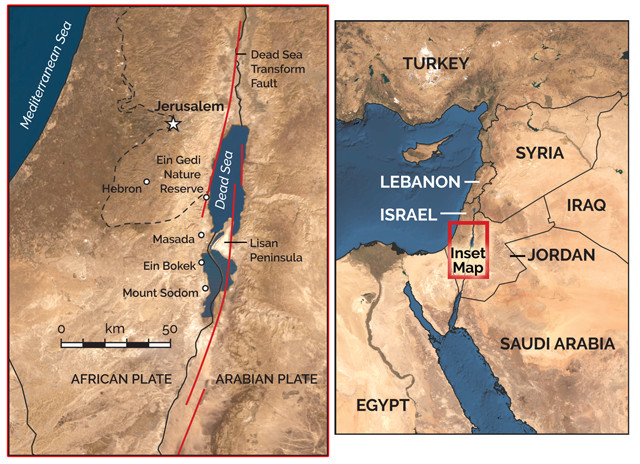
The statement of turning (the cities) ‘upside down’ implies that the region was totally destroyed by a violent earthquake. Accordingly, the Lake of Lut, where the destruction took place, bears “obvious” evidence of such a disaster. We quote German archaeologist Werner Keller as follows:
“Together with the base of this mighty fissure, which runs precisely through this area, the Vale of Siddim, including Sodom and Gomorrah, plunged one day into the abyss. Their destruction came about through a great earthquake which was probably accompanied by explosions, lightning, issue of natural gas and general conflagration”.
As a matter of fact, the Lake of Lut, or the Dead Sea as it is otherwise known, is located right on the top of an active seismic region, that is, an earthquake zone. The base of the Dead Sea is located with a tectonic rooted downfall. This valley is located in a tension stretching between the Taberiye Lake in the north, and mid of Arabah Valley in the south.
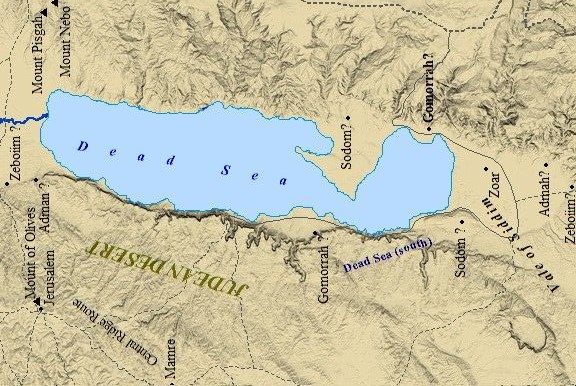
On the eastern shore of the Dead Sea the peninsula of el-Lisan protrudes like a tongue far into the water. El-Lisan means “the tongue” in Arabic (see figure ahead). Unseen from the land the ground falls away here under the surface of the water at a prodigious angle, dividing the sea into two parts. To the right of the peninsula the ground slopes sharply down to a depth of 1200 feet. On the left of the peninsula the water remains remarkably shallow. Soundings taken in the last few years established depths of only fifty to sixty feet. That extraordinary shallow part of the Dead Sea, from the peninsula el-Lisan to the southernmost tip, was the Vale of Siddim.
Werner Keller noted that this shallow part, which was discovered to have formed subsequently, was the outcome of the aforementioned earthquake and the massive collapse this earthquake had caused. However, now, the Vale of Siddim, where Sodom and Gomorrah were once situated, is covered by the flat surface of the lower part of the Dead Sea. The collapse of the base as a result of the dreadful catastrophe that came to pass in the beginning of the 2nd millennium B.C., caused salt water from the north to flow into this recently formed cavity and filled the basin with salty water.
|
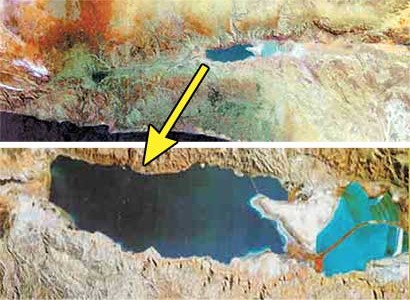
When one takes a rowing boat across the Lake of Lut to the southernmost point, if the sun is shining in the right direction, one sees something quite fantastic. Some distance from the shore and clearly visible under the surface of the water, there are the outlines of the forests which the extraordinarily high salt content of the Dead Sea preserved. The trunks and roots in the shimmering green water are very ancient. The Siddim valley, where these trees were once in blossom green foliage covered their twigs and branches, was one of the most beautiful locations in the region.
|
- baked clay in all probability meant to be the volcanic explosion that took place on the banks of the Lake of Lut, and because of which the rocks and stones that erupted were in a “baked form”. (The same event is related in the 173rd verse of Surah Ash-Shuara)
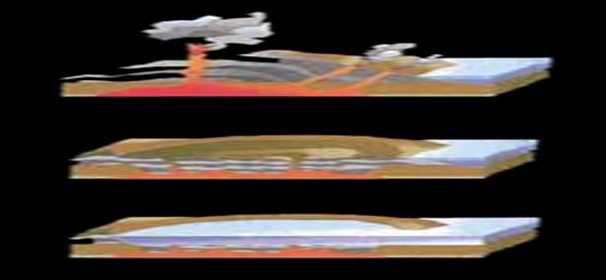
An illustration showing the volcanic eruption and the collapse that followed it, which caused the whole people to disappear.
In relation to this subject, Werner Keller writes:
|
These lava and basalt layers constitute the greatest evidence that a volcanic explosion and earthquake had once taken place here.
وَمَا مَنَعَنَآ أَن نُّرۡسِلَ بِٱلۡأٓيَٰتِ إِلَّآ أَن كَذَّبَ بِهَا ٱلۡأَوَّلُونَۚ وَءَاتَيۡنَا ثَمُودَ ٱلنَّاقَةَ مُبۡصِرَةٗ فَظَلَمُواْ بِهَاۚ وَمَا نُرۡسِلُ بِٱلۡأٓيَٰتِ إِلَّا تَخۡوِيفٗا ٥٩ [الإسراء:59-59] And nothing stops Us from sending the Ayat but that the people of old denied them. And We sent the She-camel to Thamud as a clear sign, but they did her wrong. And We sent not the signs except to warn, and to make them afraid (of destruction). Surah 17 Al-Isra Verse 59
|
أَمۡ حَسِبۡتَ أَنَّ أَصۡحَٰبَ ٱلۡكَهۡفِ وَٱلرَّقِيمِ كَانُواْ مِنۡ ءَايَٰتِنَا عَجَبًا ٩ [الكهف:9-9] ۞وَتَرَى ٱلشَّمۡسَ إِذَا طَلَعَت تَّزَٰوَرُ عَن كَهۡفِهِمۡ ذَاتَ ٱلۡيَمِينِ وَإِذَا غَرَبَت تَّقۡرِضُهُمۡ ذَاتَ ٱلشِّمَالِ وَهُمۡ فِي فَجۡوَةٖ مِّنۡهُۚ ذَٰلِكَ مِنۡ ءَايَٰتِ ٱللَّهِۗ مَن يَهۡدِ ٱللَّهُ فَهُوَ ٱلۡمُهۡتَدِۖ وَمَن يُضۡلِلۡ فَلَن تَجِدَ لَهُۥ وَلِيّٗا مُّرۡشِدٗا ١٧ [الكهف:17-17]
Do you think the People of the Cave and the Inscription (the news or the names of the people of the cave) were a wonder among Our signs?...And you might have seen the sun, when it rose, declining to the right from their cave, and when it set, turning away from them to the left, while they lay in the midst of the cave. That is (one) of the Ayat of Allah. He whom Allah guides, he is the rightly-guided; but he whom He sends astray, for him you will find no Wali (guiding friend) to lead him (to the Right Path).
Surah 18 Al-Kahf Verses9/17
- ‘…wonder among Our signs’ – The unbelievers are being asked whether they consider it impossible to believe that Allah – Who out of His Power could bring the earth and the heaven into existence – would be unable to cause a group of people to remain asleep for a few hundred years and then restore them to their former state – youthful and healthy – as if they had never been subjected to such a long spell of slumber? If the unbelievers were to keep in mind Allah’s Power to create such objects as the sun, the moon and the earth, they would never have considered that act at all difficult for Allah. Ibn Jurayj reported Mujahid saying about the Ayah, “Among Our signs are things that are more amazing than this”
- Ar-Raqim (translated Inscription) refers to:
- Valley near Aylah, in which was the cave (Ibn Abbas)
- Name of the valley, in which was the cave (Ad-Dahahk)
- Their buildings (Mujahid)
- Town, in which was the cave (Kab)
- Mountains, in which was the cave (Ibn Abbas)
- A tablet of stone on which they wrote the story of the people of the cave, and they placed it at the entrance of the cave (Said bin Jubayr)
وَلَقَدۡ أَرَيۡنَٰهُ ءَايَٰتِنَا كُلَّهَا فَكَذَّبَ وَأَبَىٰ ٥٦ قَالَ أَجِئۡتَنَا لِتُخۡرِجَنَا مِنۡ أَرۡضِنَا بِسِحۡرِكَ يَٰمُوسَىٰ ٥٧ [طه:56-57]
And indeed, We showed him (Firaun/Pharaoh) all Our Ayat, but he denied and refused. He (Firaun) said: ‘Have you come to drive us out of our land with your magic, O Musa (Moses, pbuh)?’
Surah 20 Ta-Ha Verses 56-57
- ‘…Our Ayat’ – Allah’s signs mentioned here refers to those signs both in natural phenomena and in men’s lives, as well as to the miracles granted to Moses (pbuh). The Quran also mentions several successive speeches made by Moses on different occasions in order to explain his message to Pharaoh, as it does the several miracles performed in succession and which Pharaoh was made to witness.
- ‘…magic’ – Magic here refers to the miracle of the rod and to Moses’ shining hand – a miracle which Moses performed during his first meeting with Pharaoh when the latter’s court was in full attendance. This particular miracle totally unnerved Pharaoh, a fact which can be gauged by his response.
أَفَلَمۡ يَهۡدِ لَهُمۡ كَمۡ أَهۡلَكۡنَا قَبۡلَهُم مِّنَ ٱلۡقُرُونِ يَمۡشُونَ فِي مَسَٰكِنِهِمۡۚ إِنَّ فِي ذَٰلِكَ لَأٓيَٰتٖ لِّأُوْلِي ٱلنُّهَىٰ ١٢٨ [طه:128-128]
Is it not a guidance for them (to know) how many generations We destroyed before them in whose dwellings they walk? Verily, in this are signs indeed for men of understanding.
Surah 20 Ta-Ha Verse 128
- ‘them’ – refers to Makkans to whom the Quranic message was then addressed.
- ‘…generations’ – In their different travels to Yemen, travelers may see the house of the people of Ad, and in their way to Syria they confront the ruined dwellings of the people of Thamud, and in their voyage to Palestine they pass by the houses of the people of Lut which had been destroyed upside down.
- The matter of taking an example from history of former nations is one of the subjects on which the Quran and Islamic traditions have emphasized very much. A tradition from the Prophet (pbuh) indicates that the Messenger of Allah said: ‘The most neglectful people is he who takes no admonition from the change of the world’
إِنَّ فِي ذَٰلِكَ لَأٓيَٰتٖ وَإِن كُنَّا لَمُبۡتَلِينَ ٣٠ [المؤمنون:30-30]
Verily, in this (what We did as regards drowning of the people of Nuh) there are indeed Ayat, for sure We are ever putting (men) to the test.
Surah 23 Al-Muminun Verse 30
- ‘…there are indeed Ayat’ – means in this event, which is the saving of the believers and the destruction of the disbelievers there are signs i.e. clear evidence and proof that the Prophets speak the truth in the Message they bring from Allah, may He be exalted, and that Allah does what He wills, and He is able to do all things and knows all things.
ثُمَّ أَرۡسَلۡنَا مُوسَىٰ وَأَخَاهُ هَٰرُونَ بَِٔايَٰتِنَا وَسُلۡطَٰنٖ مُّبِينٍ ٤٥ إِلَىٰ فِرۡعَوۡنَ وَمَلَإِيْهِۦ فَٱسۡتَكۡبَرُواْ وَكَانُواْ قَوۡمًا عَالِينَ ٤٦ فَقَالُوٓاْ أَنُؤۡمِنُ لِبَشَرَيۡنِ مِثۡلِنَا وَقَوۡمُهُمَا لَنَا عَٰبِدُونَ ٤٧ [المؤمنون:45-47]
Then We sent Musa (Moses, pbuh) and his brother Harun (Aaron) with Our Ayat and manifest authority, To Firaun (Pharaoh) and his chiefs, but they behaved insolently and they were people self-exalting. They said ‘Shall we believe in two men like ourselves, and their people are obedient to us with humility!’
Surah 23 Al-Muminun Verses 45-47
- ‘Our Ayat and manifest authority’ – The expression ‘manifest authority’ which follows the word ‘Ayat’ signifies that the Ayat which had been bestowed upon Moses were sufficient to prove that he indeed was a Messenger raised by Allah. It is also possible that Ayat here refers to all of Moses’ other miracles that were witnessed in Egypt with the exception of the miracle of the rod. As for manifest authority, this refers to that miracle i.e. the miracle of the rod.
- ‘…obedient to us with humility’ – the word used to characterize the people in question is abidoon (root abid). In Arabic usage, to accept someone as an object of unquestioned obedience and to worship him are almost synonymous. So whoever unreservedly obeys and serves someone appears as though he worships him. This sheds significant light on the connotation of the term ibadah (worship). It also highlights the full significance of the teaching of the Prophets to the people: that they should shun the ibadah of any other god and to bind themselves to the ibadah of the One True God alone. This also clearly indicates that, ibadah, as conceived by the Prophets, did not merely consist of consecrating the rituals of worship for Allah alone but also to become fully devoted to Allah alone in servitude.
وَجَعَلۡنَا ٱبۡنَ مَرۡيَمَ وَأُمَّهُۥٓ ءَايَةٗ وَءَاوَيۡنَٰهُمَآ إِلَىٰ رَبۡوَةٖ ذَاتِ قَرَارٖ وَمَعِينٖ ٥٠ [المؤمنون:50-50]
And We made the son of Maryam (Mary) and his mother as a sign, and We gave them refuge on high ground, a place of rest, security and flowing streams.
Surah 23 Al-Muminun Verse 50
- Jesus as a sign - The Jews had no grounds for suspicion regarding the miraculous birth of Jesus. The day he was born Allah made the entire Jewish people witness that it was the birth of an extraordinary person, and that his birth had taken place miraculously rather than as the result of an act of moral corruption. When this unmarried girl, of a highly esteemed and pious Israelite family, produced a new-born infant, thousands of people of all age groups thronged to her house out of curiosity. Instead of replying to their queries verbally, Mary pointed to the baby, indicating that he would himself reply. The wonder-struck crowd inquired if they were expected to direct their questions to the infant child who lay in the cradle. To their amazement the child addressed the crowd in a clear and eloquent style.
Thus, Allah demolished every basis for casting doubt on the birth of Jesus. When Jesus was young no one accused Mary of either unchastity or Jesus of being born illegitimately. When Jesus reached the age of thirty, he launched his prophetic mission, censuring the Jews for their misdeeds and reproaching the rabbis and the Pharisees for their hypocrisy. He also called attention to the moral degeneration to which they had sunk, urging people to rise up and engage in the perilous struggle to establish the hegemony of Allah's religion. Such a struggle called for all kinds of sacrifices and involved confrontation with satanic forces on all fronts. Once Jesus launched this mission these criminals decided to spare no weapon, however base, in their bid to silence this fearless voice of truth. It was at this point that they flung at Mary the accusation of unchastity and at Jesus that of illegitimate birth. They made these accusations despite full knowledge that both mother and child were absolutely chaste and innocent. That is why this accusation is not characterized as either a wrong or a falsehood. It is rather branded as disbelief (kufr) since the calumny was motivated chiefly by the desire to obstruct the path of true faith and not just to bring an innocent woman into disrepute.
- ‘…refuge on high ground’ - Different people have mentioned different places, like Damascus, Ar-Ramlah, Jerusalem and Egypt, in regard to the plateau where Allah gave them shelter. From the Christian traditions it appears that Mary had to leave her home twice after the birth of Prophet Jesus (pbuh), first in the time of Herod when she took him to Egypt and stayed there till Herod’s death, and then in the time of Arichelaus when she took him to Nazareth in Galilee. (Matthew 2: 13-23). Therefore, it cannot be said with certainty to which of these two emigrations the Quran refers here. It is, however, obvious that the place of shelter was a plateau which provided them with all the necessities of life.
وَٱتۡلُ عَلَيۡهِمۡ نَبَأَ إِبۡرَٰهِيمَ ٦٩ إِذۡ قَالَ لِأَبِيهِ وَقَوۡمِهِۦ مَا تَعۡبُدُونَ ٧٠ قَالُواْ نَعۡبُدُ أَصۡنَامٗا فَنَظَلُّ لَهَا عَٰكِفِينَ ٧١ قَالَ هَلۡ يَسۡمَعُونَكُمۡ إِذۡ تَدۡعُونَ ٧٢ أَوۡ يَنفَعُونَكُمۡ أَوۡ يَضُرُّونَ ٧٣ قَالُواْ بَلۡ وَجَدۡنَآ ءَابَآءَنَا كَذَٰلِكَ يَفۡعَلُونَ ٧٤ قَالَ أَفَرَءَيۡتُم مَّا كُنتُمۡ تَعۡبُدُونَ ٧٥ أَنتُمۡ وَءَابَآؤُكُمُ ٱلۡأَقۡدَمُونَ ٧٦ فَإِنَّهُمۡ عَدُوّٞ لِّيٓ إِلَّا رَبَّ ٱلۡعَٰلَمِينَ ٧٧ [ الشعراء:69-77] إِنَّ فِي ذَٰلِكَ لَأٓيَةٗۖ وَمَا كَانَ أَكۡثَرُهُم مُّؤۡمِنِينَ ١٠٣ [ الشعراء:103-103]
And recite to them the story of Ibrahim (Abraham). When he said to his father and his people: ‘What do you worship?’ They said: ‘We worship idols, and to them we are ever devoted’. He said: ‘Do they hear you when you call on (them)? Or do they benefit you or do they harm (you)?’ They said: ‘(Nay) but we found our fathers doing so’ He said: ‘Do you observe that which you have been worshipping. You and your ancient fathers? Verily, they are enemies to me, except the Lord of the Alamin (mankind, jinn and all that exists)’…Verily, in this is indeed a sign, yet most of them are not believers.
Surah 26 As-Shuara Verses 69-77/103
- The sign in this story stems from the fact that the unbelievers of Mecca and especially the Quraish claimed to be the followers of Abraham and were proud of being his descendants. In actual fact, however, they were immersed in shirk (associating others with Allah in His Divinity) against which Abraham had fought all his life. Further, as far as the Prophet Muhammad (pbuh) was concerned – he who had brought to them the same religion that Abraham had preached – they treated him in exactly the same manner as Abraham’s people had treated him. The Quraish are being reminded, in this context, that Abraham was a standard bearer of tauhid (Allah is One) and was an enemy of shirk; nevertheless, they did not pay heed to the call of truth.
وَجَعَلۡنَا مِنۡهُمۡ أَئِمَّةٗ يَهۡدُونَ بِأَمۡرِنَا لَمَّا صَبَرُواْۖ وَكَانُواْ بَِٔايَٰتِنَا يُوقِنُونَ ٢٤ [السجدة:24-24]
And We made from among them (Children of Israel) leaders, giving guidance under Our Command, when they were patient and used to believe with certainty in Our Ayat.
Surah 32 As-Sajdah Verse 24
- The Torah changed the course of the Israelites’ history. All this was not because a heavenly Book was sent to them, for the Book was not some kind of amulet that the Israelites wore around their necks and no sooner than they did so they began scaling the heights of greatness and glory. Instead, the fact is that the Israelites owed their historical achievements to the fact that they chose to believe in the teachings of Allah’s Book that had come to them and because they followed its teachings with patience and perseverance. Furthermore, the leadership of the Israelites was entrusted to those who truly believed in the Scripture and who were not obsessed with the pursuit of worldly gain and pleasure. They resolutely braved every danger and endured every loss and suffering which came their way because of their devotion to truth. They vigorously resisted the promptings of carnal desires within themselves and valiantly fought against the enemies of truth.
لَقَدۡ كَانَ لِسَبَإٖ فِي مَسۡكَنِهِمۡ ءَايَةٞۖ جَنَّتَانِ عَن يَمِينٖ وَشِمَالٖۖ كُلُواْ مِن رِّزۡقِ رَبِّكُمۡ وَٱشۡكُرُواْ لَهُۥۚ بَلۡدَةٞ طَيِّبَةٞ وَرَبٌّ غَفُورٞ ١٥ فَأَعۡرَضُواْ فَأَرۡسَلۡنَا عَلَيۡهِمۡ سَيۡلَ ٱلۡعَرِمِ وَبَدَّلۡنَٰهُم بِجَنَّتَيۡهِمۡ جَنَّتَيۡنِ ذَوَاتَيۡ أُكُلٍ خَمۡطٖ وَأَثۡلٖ وَشَيۡءٖ مِّن سِدۡرٖ قَلِيلٖ ١٦ [سبإ:15-16]
Indeed, there was for Saba (Sheba) a sign in their dwelling place – two gardens on the right hand and on the left; (and it was said to them) ‘Eat of the provisions of your Lord, and be grateful to Him’. A fair land and an Oft-Forgiving Lord! But they turned away (from the obedience of Allah), so We sent against them Sail Ar-Arim (flood released from the dam) and We converted their two gardens into gardens producing bitter bad fruit, and tamarisks, and some few lote trees.
Surah 34 Saba Verses 15-16
- Saba refers to the kings and the people of Yemen. At-Tababa’ah (Tubba’) (surname of the ancient kings of Yemen) was part of them, and Bilqis, the queen who met Sulaiman, pbuh, was also one of them. Ibn Jarir recorded that Farwah bin Musayk Al-Ghutayfi said, “A man said: ‘O Messenger of Allah! Tell me about Saba – what was it, a land or a woman?’ He (pbuh) said, ‘It was neither a land nor a woman. It was a man who had ten children, six of whom went Yemen and four of whom went Ash-Sham. Those who went Ash-Sham were Lokhm, Judham, Amilah and Ghassan. Those who went south were Kindah, Al-Ash’ariyyum, Al-Azd, Madhhij, Himyar and Anmar’”
The community of Saba was one of the four biggest civilisations living in South Arabia. This nation is estimated to have been established some time between 1000-750 BC and to have collapsed around 550 AD with the two centuries long attacks of the Persians and the Arabs. The date of the establishment of the civilisation of Saba is a subject of much discussion. The people of Saba started recording their governmental reports around 600 BC. This is why there are no records of them prior to this date. The oldest sources which refer to the people of Saba are annual war chronicles left from the time of the Assyrian King Sargon II (722-705 BC). While Sargon records details about the people that pay taxes to him, he also refers to the King of Saba, Yith’iamara (It’amara). This record is the oldest written source that yields information about the Saba civilisation. Yet, it would not be right to draw the conclusion that the Saba culture was established around 700 BC depending only on this source, for it is highly
probable that Saba had existed for quite some time before it was recorded in writing. This means that the history of Saba may predate the above. In-deed, in the inscriptions of Arad-Nannar, one of the latest kings of the state of Ur, the word "Sabum", which is thought to mean "the country of Saba", was used. If this word does mean Saba, then, this shows that the history of Saba goes back as far as 2500 BC.
Historical sources talking about Saba usually say that this was a culture, like the Phoenicians, particularly involved in commercial activities. Accordingly, these people owned and administered some of the trade routes passing across Northern Arabia. In order for the Sabaean traders to carry their goods to the Mediterranean and Gaza, and thus pass across Northern Arabia, they had to get permission from Sargon II, the ruler of the entire region, or pay a certain amount of tax to him. When the Sabaean people started paying taxes to the Assyrian Kingdom, their name began to be recorded in the annals of this state. The Sabaeans are known to have been a civilised people in history. In the inscriptions of the rulers of Saba, words such as "restore", "dedicate" and "construct" are frequently used. The Ma’rib Dam, which is one of the most important monuments of this people, is an important indication of the technological level this people had reached.
However, this did not mean that the military power of the Sabaeans was weak; the Sabaean army was one of the most important factors contributing to the endurance of their culture over such a long period without collapse. The Sabaean state had one of the strongest armies in the region. The state was able to adopt an expansionist policy thanks to its army. It had conquered the lands of the Old Qataban state. It owned many lands on the African continent. During 24 BC, during an expedition to Magrib, the Sabaean army utterly defeated the army of Marcus Aelius Gallus, the Governor of Egypt for the Roman Empire which was definitely the strongest state at the time. Saba can be portrayed as a state that pursued moderate policies, yet did not hesitate to use power when necessary. With its advanced culture and army, the Sabaean state was without doubt one of the "super powers" of the region at the time. This extraordinarily strong army of the Sabaean state is also described in the Quran. An expression of the commanders of the Saba army related in the Quran shows the extent of the confidence this army had in it. The commanders called out to the female ruler (queen Bilqis of Sheba) of the state:
They said: ‘We have great strength and great ability for war, but it is for you to command; so, think over what you will command’. (Surah An-Naml Verse 33)
- ‘…a sign in their dwelling place’ – The capital city of the Sabaean state was Ma’rib, which was quite wealthy thanks to the advantageous position of its geography. The capital city was very close to the river Adhanah. The point where the river reached Jabal Balaq was most suitable for the construction of a dam. Making use of this condition, the Sabaean people constructed a dam at this location at the time when their civilisation was first established, and they began irrigation. As a result, they indeed reached a very high level of prosperity. The capital city, Ma’rib, was one of the most developed cities of the time. The Greek writer Pliny, who had visited the region and greatly praised it, also mentioned how green this region was.
The height of the dam in Ma’rib was sixteen metres, its width was sixty metres and its length was 620 metres. According to the calculations, the total area that could be irrigated by the dam was 9,600 hectares, of which 5,300 hectares belonged to the southern plain, while the remaining part belonged to the northern plain. These two plains were referred to as "Ma’rib and two plains" in the Sabaean inscriptions. The expression in the Quran, two gardens on the right hand and on the left, refers to the imposing gardens and vineyards in these two valleys. Thanks to this dam and its irrigation systems, the region became famous as the best irrigated and most fruitful area of Yemen. The Frenchman J. Holevy and the Austrian Glaser proved from written documents that the Ma’rib dam has existed since ancient times. In documents written in the Himer dialect, it is related that this dam rendered the territory very productive.
In other words, there was enough indication (sign) of the fact that whatever they have was not their own creation but was bestowed upon them by Allah and by none other than Him.
- ‘…turned away’ – means, from worshipping Allah alone and from giving thanks to Him for the blessings that He had bestowed upon them, and they started to worship the sun instead of Allah (as the hoopoe told Sulaiman, pbuh). A number of Salaf, including Qatadah, mentioned that a woman could walk beneath the trees, carrying a basket or vessel – such as is used for gathering fruit – on her head; and that the fruit would fall from the trees and fill the basket without any need for her to make the effort to pick the fruit, because it was so plentiful and ripe. This was the dam of Ma’arib, a land between which and Sana’ was a journey of three days. Others said that in their land there were no flies, mosquitoes or fleas, or any kind of vermin. This was because the weather was good and the people were healthy. Yet they turned away.
- Sail Ar-Arim – This dam was extensively repaired during the fifth and sixth centuries AD. Yet, these reparations could not prevent the dam from collapsing in 542 AD. Some, including Ibn Abbas, Wahb bin Munabbih, Qatadah and Ad-Dahak said that when Allah wanted to punish them by sending the flood upon them, he sent beasts from the earth to the dam, large rats, which made a hole in it. Wahb bin Munabbih said “They found it written in their scriptures that the dam would be destroyed because of these large rats. So they brought cats for a while, but when the decree came to pass, the rats overran the cats and went into the dam making a hole in it, and it collapsed”. As the dam collapsed, the waters rushed through the bottom of the valley and destroyed everything in their path – building, trees, gardens etc. The vineyards, gardens and fields of the Sabaean people, which they had cultivated for hundreds of years, were completely destroyed.
The Christian archaeologist Werner Keller, writer of "And Yet the Bible is Right" (Und Die Bible Hat Doch Recht), accepted that the flood of Arim occurred according to the description of the Quran and wrote that the existence of such a dam and the destruction of the whole country by its collapse proves that the example given in the Quran about the people of the garden was indeed realized.
It is also known that the Sabaean people quickly went into a period of recession after the destruction of the dam. The end of the Sabaean state came at the end of this period which had begun with the destruction of the dam. After the disaster of the Arim flood, the region started to turn into a desert and the Sabaean people lost their most important source of income with the disappearance of their agricultural lands. The people, who had not heeded the call of Allah to believe in Him and to be grateful to Him, were in the end punished with such a disaster as this. After the great destruction caused by the flood the people started to disintegrate. The Sabaean people started to desert their houses and emigrate to Northern Arabia, Makkah and Syria.
The Ma’rib Dam seen above in ruins was one of the most important works of the Sabaean people. This dam collapsed because of the flood of Arim mentioned in the Quran and all the cultivated areas were swamped. Its territory destroyed with the collapsing of the dam, the Sabaean state lost its economic strength in a very short time and was soon completely demolished.
وَجَعَلۡنَا بَيۡنَهُمۡ وَبَيۡنَ ٱلۡقُرَى ٱلَّتِي بَٰرَكۡنَا فِيهَا قُرٗى ظَٰهِرَةٗ وَقَدَّرۡنَا فِيهَا ٱلسَّيۡرَۖ سِيرُواْ فِيهَا لَيَالِيَ وَأَيَّامًا ءَامِنِينَ ١٨ فَقَالُواْ رَبَّنَا بَٰعِدۡ بَيۡنَ أَسۡفَارِنَا وَظَلَمُوٓاْ أَنفُسَهُمۡ فَجَعَلۡنَٰهُمۡ أَحَادِيثَ وَمَزَّقۡنَٰهُمۡ كُلَّ مُمَزَّقٍۚ إِنَّ فِي ذَٰلِكَ لَأٓيَٰتٖ لِّكُلِّ صَبَّارٖ شَكُورٖ ١٩ [سبإ:18-19]
And We placed between them (people of Saba) and the towns which We had blessed, towns easy to be seen, and We made the stages (of journey) between them easy (saying): ‘Travel in them safely both by night and day’. But they said: ‘Our Lord! Make the stages between our journey longer’, and they wronged themselves; so, We made them as tales (in the land), and We dispersed them all totally. Verily, in this are indeed signs for every steadfast, grateful (person).
Surah 34 Saba Verses 18-19
- The expression ‘the towns which We had blessed’ refers to the region of Palestine and Syria.
- The expression ‘towns easy to be seen’ refers to the centers of habitation located on the highway, in full view of all; it may also mean contiguous towns, in so far as one town followed another.
- ‘…stages’ – There were milestones on the highways from Yemen to Syria indicating the length of the journey. The whole journey passed through inhabited territory, so that one could plan one’s journey ahead of time and knows where one will break journey for rest.
- ‘…dispersed them totally’ – The people of Saba were devastated on such a massive scale that their fragmentation became proverbial for the Arabs. Even now the Arabs’ use the expression ‘they disintegrated like the people of Saba’. When Saba’s well being began to dwindle, several tribes left their home towns and settled in other parts of Arabia. For example, the Ghassanids moved into Jordan and Syria while the Aws and Khazraj tribes found their way to Yathrib (which later came to be known as Medina); the Khuzaah tribe settled in the region of Tihamah, near Jeddah, whereas the Azd migrated to Uman. The Lakhm, Judham and Kindah tribes were also forced to move away. In sum, the people of Saba were so widely scattered that they lost their identity for ever.
وَءَايَةٞ لَّهُمۡ أَنَّا حَمَلۡنَا ذُرِّيَّتَهُمۡ فِي ٱلۡفُلۡكِ ٱلۡمَشۡحُونِ ٤١ وَخَلَقۡنَا لَهُم مِّن مِّثۡلِهِۦ مَا يَرۡكَبُونَ ٤٢ وَإِن نَّشَأۡ نُغۡرِقۡهُمۡ فَلَا صَرِيخَ لَهُمۡ وَلَا هُمۡ يُنقَذُونَ ٤٣ إِلَّا رَحۡمَةٗ مِّنَّا وَمَتَٰعًا إِلَىٰ حِينٖ ٤٤ [يس:41-44]
And an Ayah for them is that We carried their offspring in the laden ship (of Nuh/Noah). And We have created for them of the like thereunto, on which they ride. And if We will, We shall drown them, and there will be no shout (or helper) for them, nor will they be saved. Unless it be a mercy from Us, and as an enjoyment for a while.
Surah 36 Ya-Sin Verses 41-44
- The laden ship here denotes the Prophet Noah’s Ark. Those who did embark in Noah’s Ark are the ancestors of all future generations, for on that occasion all the children of Adam, except these believers, were drowned in the Flood.
- ‘…of the like thereunto’ – This seems to imply that this was the first boat in the history of mankind. Before that man had no idea how he could traverse rivers and oceans. It was Allah who taught Noah for the first time to make this vessel. However, when it became possible for a few souls to survive the flood, they began to build and use boats for maritime voyages.
- ‘Unless it be a mercy from Us…’ – Whatever control men exercise over things is thanks to the powers granted to them by Allah. It is Allah who instructed him in how to exercise his powers. Furthermore, man enjoys this authority as long as Allah wills so. When Allah wills differently, man is deprived of the power to control the forces of nature; rather the same forces of nature make life difficult for him and he finds himself totally helpless. Allah mentions sea voyages as an example to illustrate this. Had not Allah instructed the Prophet Noah how to build the Ark, the human race would have perished in the flood. Again, it was Allah who guided the believers to board the Ark as a result of which they survived and were later able to settle in various parts of the earth. The principles of boat building and thereby undertaking sea voyages enabled mankind to move around. Notwithstanding all the advancements accomplished by man in various modes of transport, he cannot claim total mastery over the sea. To this day, Allah reigns supreme and, as and when He wills, ships along with their passengers are wrecked.
وَقَالَ رَجُلٞ مُّؤۡمِنٞ مِّنۡ ءَالِ فِرۡعَوۡنَ يَكۡتُمُ إِيمَٰنَهُۥٓ أَتَقۡتُلُونَ رَجُلًا أَن يَقُولَ رَبِّيَ ٱللَّهُ وَقَدۡ جَآءَكُم بِٱلۡبَيِّنَٰتِ مِن رَّبِّكُمۡۖ وَإِن يَكُ كَٰذِبٗا فَعَلَيۡهِ كَذِبُهُۥۖ وَإِن يَكُ صَادِقٗا يُصِبۡكُم بَعۡضُ ٱلَّذِي يَعِدُكُمۡۖ إِنَّ ٱللَّهَ لَا يَهۡدِي مَنۡ هُوَ مُسۡرِفٞ كَذَّابٞ ٢٨ [غافر:28-28]
And a believing man of Firaun’s (Pharaoh’s) family, who hid his faith, said: ‘Would you kill a man because he says, “My Lord is Allah”, and he has come to you with clear signs (proofs) from your Lord? And if he is a liar, upon him will be (the sin of) his lie; but if he is telling the truth, then some of that (calamity) wherewith he threatens you will befall on you’. Verily, Allah guides not one who is a Musrif, a liar.
Surah 40 Ghafir Verse 28
- Musrif – a polytheist, or a murderer who sheds blood without a right, or those who commit great sins, oppressors, transgressors.
وَلَقَدۡ جَآءَكُمۡ يُوسُفُ مِن قَبۡلُ بِٱلۡبَيِّنَٰتِ فَمَا زِلۡتُمۡ فِي شَكّٖ مِّمَّا جَآءَكُم بِهِۦۖ حَتَّىٰٓ إِذَا هَلَكَ قُلۡتُمۡ لَن يَبۡعَثَ ٱللَّهُ مِنۢ بَعۡدِهِۦ رَسُولٗاۚ كَذَٰلِكَ يُضِلُّ ٱللَّهُ مَنۡ هُوَ مُسۡرِفٞ مُّرۡتَابٌ ٣٤ [غافر:34-34]
And indeed Yusuf (Joseph, pbuh) did come to you (people of Firaun/Egypt), in times gone by, with clear signs, but you ceased not to doubt in that which he did bring to you, till when he died you said: ‘No Messenger will Allah send after him’. Thus Allah leaves astray him who is a Musrif and a Murtab.
Surah 40 Ghafir Verse 34
- The unbelievers’ error combined with their adamancy was quite inordinate. Before Moses (pbuh), the Prophet Joseph (pbuh) had been sent to them and they recognized him to be a paragon of moral excellence. They further acknowledged that he had rightly interpreted the dream of the then sovereign and that this had saved them from the terrible devastations of the seven-year famine. They also conceded that during Joseph’s time they enjoyed peace, security, justice, prosperity and well-being as never before in Egypt’s history. While fully recognizing all his merits, they still did not profess faith in Joseph as long as he lived.
- Murtab – one who doubts Allah’s warning and His Oneness.
وَلَقَدِ ٱخۡتَرۡنَٰهُمۡ عَلَىٰ عِلۡمٍ عَلَى ٱلۡعَٰلَمِينَ ٣٢ وَءَاتَيۡنَٰهُم مِّنَ ٱلۡأٓيَٰتِ مَا فِيهِ بَلَٰٓؤٞاْ مُّبِينٌ ٣٣ [الدخان:32-33]
And We chose them (the Children of Israel) above the Alamin (mankind and jinn and all that exists) [during the time of Musa, pbuh] with knowledge; And granted them signs in which there was a plain trial.
Surah 44 Ad-Dukhan Verses 32-33
- ‘signs in which there was a plain trial’ – The following may be deemed to come under the purview of this Ayah:
- The episode of the calf
- The episode of Moses and the seventy elders
- Shade from clouds in the Sinai Peninsula
- Manna and Quails
- The entering of the town/gate (and the plague)
- The episode of Musa (pbuh) striking the Rock with his staff and the twelve springs
- The episode of mountain about to fall on the Israelites
- The episode of Sabbath and the transformation into apes
- The test of slaughtering the cow and bringing the dead to life
- The commandments handed over to Musa (pbuh) on tablets
- The episode of suspicion regarding the miraculous birth of Jesus (pbuh)
- The forbidding of many clean things which were earlier lawful for them
- The episode of Israelites requesting Moses (pbuh) to make them a god (of idol) as the people of Egypt
- The showing of Israelites ruins of earlier nations who refused to turn to Allah
- The warning of a ruthless oppressor over the Israelites
وَلَقَدۡ ءَاتَيۡنَا بَنِيٓ إِسۡرَٰٓءِيلَ ٱلۡكِتَٰبَ وَٱلۡحُكۡمَ وَٱلنُّبُوَّةَ وَرَزَقۡنَٰهُم مِّنَ ٱلطَّيِّبَٰتِ وَفَضَّلۡنَٰهُمۡ عَلَى ٱلۡعَٰلَمِينَ ١٦ وَءَاتَيۡنَٰهُم بَيِّنَٰتٖ مِّنَ ٱلۡأَمۡرِۖ فَمَا ٱخۡتَلَفُوٓاْ إِلَّا مِنۢ بَعۡدِ مَا جَآءَهُمُ ٱلۡعِلۡمُ بَغۡيَۢا بَيۡنَهُمۡۚ إِنَّ رَبَّكَ يَقۡضِي بَيۡنَهُمۡ يَوۡمَ ٱلۡقِيَٰمَةِ فِيمَا كَانُواْ فِيهِ يَخۡتَلِفُونَ ١٧ [الجاثية:16-17]
And indeed, We gave the Children of Israel the Scripture, and the understanding of the Scripture, and its laws, and the Prophethood; and provided them with good things, and preferred them to the Alamin (mankind and jinn of their time, during that period). And gave them clear proofs in matters. And they differed not until after the knowledge came to them, through envy among themselves. Verily, your Lord will judge between them on the Day of Resurrection about that wherein they used to differ.
Surah 45 Al-Jathiyah Verses 16-17
- ‘Hukm’ – according to Zamakshari signifies:
- Knowledge and understanding of both the Book and faith
- The ability to work in accordance with the purport of the Book; and
- The ability to decide matters
- ‘… through envy among themselves’ – When ignorant people attempt to trace the history of ‘religion’ they tend to view that man began his life in the darkness of polytheism and that in the course of time, corresponding to man’s progress, this darkness gradually receded and light increased till man arrived at monotheism. The Quranic version, however, proclaims that man began his life in full light of the truth. Allah revealed this truth to the very first man He created, one to whom He intimated the right way of life for man. Thereafter the human race remained on the right way for some time and lived as one community. Later, however, people invented deviating ways. This did not happen because truth had not been communicated to them. The cause was rather that people developed jealousy amongst themselves and some people willfully sought to acquire privileges, benefits and advantages beyond their legitimate limits, and thus subjected others to injustices. Coveting privileges over and above those to which they were entitled, people altered beliefs, principles and injunctions of the true religion in a matter conducive to their own interests. (Similar message can also be found in V 3:19 and V 42:14 of the Quran). It was in order to enable people to overcome this corruption that Allah sent His Prophets. These Prophets were not sent to found separate religions in their own names and bring new religious communities into existence. Rather, the purpose of the Prophets was to illuminate before the people the truth which they had allowed to be lost, and once again make them into one community.
وَلَقَدۡ مَكَّنَّٰهُمۡ فِيمَآ إِن مَّكَّنَّٰكُمۡ فِيهِ وَجَعَلۡنَا لَهُمۡ سَمۡعٗا وَأَبۡصَٰرٗا وَأَفِۡٔدَةٗ فَمَآ أَغۡنَىٰ عَنۡهُمۡ سَمۡعُهُمۡ وَلَآ أَبۡصَٰرُهُمۡ وَلَآ أَفِۡٔدَتُهُم مِّن شَيۡءٍ إِذۡ كَانُواْ يَجۡحَدُونَ بَِٔايَٰتِ ٱللَّهِ وَحَاقَ بِهِم مَّا كَانُواْ بِهِۦ يَسۡتَهۡزِءُونَ ٢٦ وَلَقَدۡ أَهۡلَكۡنَا مَا حَوۡلَكُم مِّنَ ٱلۡقُرَىٰ وَصَرَّفۡنَا ٱلۡأٓيَٰتِ لَعَلَّهُمۡ يَرۡجِعُونَ ٢٧ [الأحقاف:26-27]
And indeed, We had firmly established them (the people of Ad) with that wherewith We have not established you (O Quraish!). And We assigned them the (faculties of) hearing (ears), seeing (eyes), and hearts; but their hearing, seeing and their hearts availed them nothing since they used to deny the Ayat of Allah, and they were completely encircled by that which they used to mock at! And indeed, We have destroyed towns (populations) round about you, and We have (repeatedly) shown (them) the Ayat in various ways that they might return (to the truth and believe in the Oneness of Allah).
Surah 46 Al-Ahqaf Verses 26-27
- ‘…firmly established’ – The unbelieving Quraysh are no match for the Ad in their affluence, power, authority and might. Their authority is confined only to the city of Makkah whereas the Ad exercised control over very large chunks of territory.
- ‘…completely encircled…’ – The reference is to the punishment brought on the people of Ad by the violent gale that ran for eight days and seven nights. It is believed that the people of Ad started to flee. They ran to their tents to hide but the gale became stronger, ripping their tents from their stakes. They hid under cloth covers, but the gale became stronger still and tore away the covers. It slashed clothing and skin. It penetrated the apertures of the body and destroyed it. It hardly touched anything before it was destroyed or killed, its core sucked out to decompose and rot. The violent gale did not stop until the entire region was reduced to ruins and its wicked people destroyed, swallowed by the sands of the desert.
- ‘…round about’ – Allah destroyed the nations who disbelieved in the Messengers who lived around Makkah, such as Ad who were at Al-Ahqaf in Hadramaut near Yemen, Thamud whose dwellings were between Makkah and Ash-Sham (Greater Syria), Saba who were in Yemen, the people of Madyan who were on the route and passage to Ghazzah (Western Palestine), and the people of Lut who dwelt by the Lake (the Dead Sea) which they used to pass by (on the way to Jordan) as well. (see Map below)
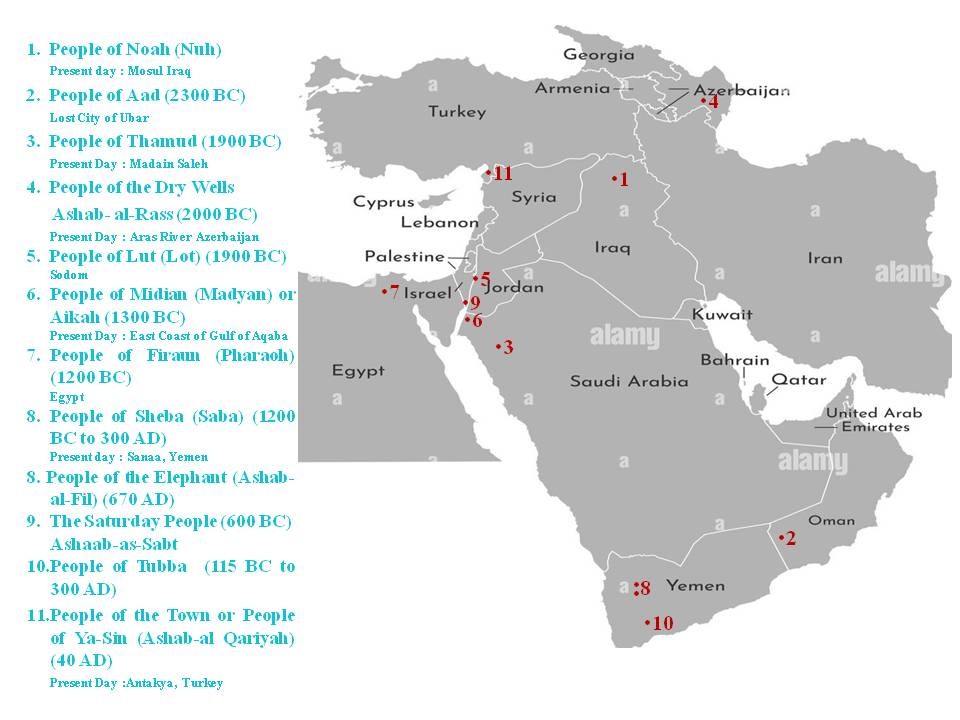
وَعَدَكُمُ ٱللَّهُ مَغَانِمَ كَثِيرَةٗ تَأۡخُذُونَهَا فَعَجَّلَ لَكُمۡ هَٰذِهِۦ وَكَفَّ أَيۡدِيَ ٱلنَّاسِ عَنكُمۡ وَلِتَكُونَ ءَايَةٗ لِّلۡمُؤۡمِنِينَ وَيَهۡدِيَكُمۡ صِرَٰطٗا مُّسۡتَقِيمٗا ٢٠ [الفتح:20-20]
Allah has promised you abundant spoils that you will capture, and He has hastened for you this, and He has restrained the hands of men from you, that it may be a sign for the believers, and that He may guide you to a Straight Path.
Surah 48 Al-Fath Verse 20
- ‘…will capture’ – This refers to the other victories that the Muslims achieved successively after Khaibar.
- ‘...this’ – this implies the treaty of Hudaibiyah which has been described as a ‘manifest victory’ for the Muslims.
- ‘restrained the hands of men’ – that is, Allah restrained the disbelieving Quraysh from attacking the Muslims at Hudaibiyah although from all appearences they were in a much better position and Muslims’ were a much weaker side militarily. Furthermore, it also implies that no enemy power could muster courage to attack Madinah in those days, whereas after the departure of 1400 soldiers the Madinah front had become very weak, and the Jews, the polytheists and hypocrites could take advantage of the situation.
- ‘…sign for the believers’ – as to how Allah helps the one who remains steadfast on obedience to Allah and His Messenger and comes out to support and defend the truth and righteousness with his trust and faith in Allah.
إِنَّ ٱلَّذِينَ يُحَآدُّونَ ٱللَّهَ وَرَسُولَهُۥ كُبِتُواْ كَمَا كُبِتَ ٱلَّذِينَ مِن قَبۡلِهِمۡۚ وَقَدۡ أَنزَلۡنَآ ءَايَٰتِۢ بَيِّنَٰتٖۚ وَلِلۡكَٰفِرِينَ عَذَابٞ مُّهِينٞ ٥ [الـمجادلـة:5-5]
Verily, those who oppose Allah and His Messenger (Muhammad, pbuh), will be disgraced as those before them (among the past nations) were disgraced. And We have sent down clear Ayat. And for the disbelievers is a disgraceful torment.
Surah 58 Al-Mujadilah Verse 5
ذَرۡنِي وَمَنۡ خَلَقۡتُ وَحِيدٗا ١١ وَجَعَلۡتُ لَهُۥ مَالٗا مَّمۡدُودٗا ١٢ وَبَنِينَ شُهُودٗا ١٣ وَمَهَّدتُّ لَهُۥ تَمۡهِيدٗا ١٤ ثُمَّ يَطۡمَعُ أَنۡ أَزِيدَ ١٥ كَلَّآۖ إِنَّهُۥ كَانَ لِأٓيَٰتِنَا عَنِيدٗا ١٦ سَأُرۡهِقُهُۥ صَعُودًا ١٧ [الـمّـدّثّـر:11-17]
Leave Me Alone (to deal) with whom I created lonely. And then granted him resources in abundance. And children to be by his side. And made his life smooth and comfortable for him. After all that he desires that I should give more. Nay! Verily, he has been opposing Our Ayat. I shall oblige him to face a severe torment!
Surah 74 Al-Muddaththir Verses 11-17
- ‘whom I created lonely’ – After the advent of Islam, the Quraish chiefs decided in a conference to start a powerful propaganda campaign to dissuade the outsiders, who came to visit the Kabah, from the Quran and the Prophet (pbuh). The person referred to here is Walid bin al-Mughirah who in the disbelievers’ conference proposed that Muhammad (pbuh) should be branded as a sorcerer among the pilgrims.
- ‘…lonely’ – this can have two meanings:
- That when Allah created him, he was not at that time born with any wealth and children and position of authority and chieftainship,
- That Allah alone was his Creator.
- ‘…children’ – Walid bin al-Mughirah had ten or twelve sons of whom Hazrat Khalid bin Walid became most famous.
- ‘more’ – refers to good things of this life or the Paradise (as opined by Hasan Basri)
- ‘…opposing Our Ayat’ – Walid in his heart has become fully convinced of the Quran being the Divine Word, but in order to save his position as a chief of his people, he was not prepared to affirm faith. Ibn Abbas said, ‘Al Walid bin Al-Mughirah entered the house of Abu Bakr bin Abi Quhafah and asked him about the Quran. When Abu Bakr informed him about it, he left and went to the Quraysh, saying “what a great thing this is that Ibn Abi Kabshah (meaning the Prophet, pbuh) is saying. I swear by Allah that it is not poetry, nor magic, nor the prattling of insanity. Verily, his speech is from the Word of Allah!” So when a group of Quraysh heard this they gathered and said, “By Allah, if Al-Walid converts (to Islam) all of the Quraysh will convert”. When Abu Jahl bin Hisham heard this he said, “By Allah, I will deal with him for you”. So he went to Al-Walid’s house and entered upon him. He said to Al-Walid, “Don’t you see that your people are collecting charity for you?” Al-Walid replied. “Don’t I have more wealth and children than they do?” Abu Jahl answered, “They are saying that you only went to Ibn Abi Quhafa’s house so that you can get some of his food”. Al-Walid then said, “Is this what my tribe is saying? Nay, by Allah, I am not seeking to be close to Ibn Abi Quhafa, nor Umar, nor Ibn Abi Kabshah. And this speech is only inherited magic of old”’.
B
۞يَٰٓأَيُّهَا ٱلرَّسُولُ بَلِّغۡ مَآ أُنزِلَ إِلَيۡكَ مِن رَّبِّكَۖ وَإِن لَّمۡ تَفۡعَلۡ فَمَا بَلَّغۡتَ رِسَالَتَهُۥۚ وَٱللَّهُ يَعۡصِمُكَ مِنَ ٱلنَّاسِۗ إِنَّ ٱللَّهَ لَا يَهۡدِي ٱلۡقَوۡمَ ٱلۡكَٰفِرِينَ ٦٧ [المائدة:67-67]
O Messenger (Muhammad, pbuh)! Proclaim (the message) which has been sent down to you from your Lord. And if you do not, then you have not conveyed His Message. Allah will protect you from mankind. Allah guides not the people who disbelieve.
Surah 5 Al-Maidah Verse 67
- Allah will protect you from mankind means you should convey My Message to mankind; I will protect, guard and support you against your enemies and will give you victory over them. Do not fear nor be distressed. None of them will be able to touch you with any harm. And never will you be killed. Rather, you will die on your bed.
Before the revelation of this Verse, the Prophet, pbuh, was being guarded. According to what is reported by Imam Ahmad on the authority of A'isha, that one night the Prophet, pbuh, was unable to sleep while she was beside him and he said, ‘Would that a righteous man from my Companions guard me tonight’. Suddenly they heard the clatter of arms, whereupon the Prophet, pbuh, enquired, ‘Who is it?’ A voice said, “I am Sa'd Ibn Malik!” The Prophet, pbuh, said: ‘What brought you here?’ He said: "I have come to guard you, Messenger of Allah”. A'ishah then said: “The Prophet then slept so soundly that I heard him snoring”. (The Hadith is also reported by Al-Bukhari and Muslim). According to At-Tirmidhi's version, 'A'ishah said: “The Prophet, pbuh, was being guarded until the Verse, Allah will protect you from mankind was revealed. The Prophet, pbuh, then tucked out his head from the tent and said (to his guards): ‘O you people, go. Allah has protected us’”.
- It was also a manifestation of Allah's protection for His Messenger that He guarded him against the evil plans of the people of Makkah and its leaders who bore strong animosity against him and ferociously fought him day and night. So Allah protected him through means brought about by His great wisdom. At the start of his mission, He protected him with his uncle, Abu Talib. Abu Talib was a great leader of the Quraish who was highly respected. Allah created in his heart love for Muhammad, pbuh, and this love was natural and not based on Islam. Had he embraced Islam, the pagans of Makkah could have dared attack him. But since there was a common factor between Abu Talib and these Quraishi leaders, they respected him (and, as a result, abstained from harming Muhammad, pbuh, whom he deeply loved). It was only after the death of Abu Talib that the disbelievers were able to harm Muhammad, pbuh, somewhat. After this, Allah appointed the Ansar to support him by making them embrace Islam and hosting them in their abodes, the city of Madinah. When he migrated to them, they protected him from the harm of all people. Whenever the polytheists and the People of the Book attempted to harm him, Allah would protect him and cast their evil plans back to them. The Jews attempted to harm him with magic but Allah protected him from that. It was on this occasion that Al Mu’wadaitain (Surah Al-Falaq and Surah An-Nas) were revealed. When some Jews presented him with a poisoned goat arm at Khaibar, Allah informed him about that and protected him. There are many more examples of manifestation of Allah's protection for His Prophet, pbuh.
وَٱذۡكُرُوٓاْ إِذۡ جَعَلَكُمۡ خُلَفَآءَ مِنۢ بَعۡدِ عَادٖ وَبَوَّأَكُمۡ فِي ٱلۡأَرۡضِ تَتَّخِذُونَ مِن سُهُولِهَا قُصُورٗا وَتَنۡحِتُونَ ٱلۡجِبَالَ بُيُوتٗاۖ فَٱذۡكُرُوٓاْ ءَالَآءَ ٱللَّهِ وَلَا تَعۡثَوۡاْ فِي ٱلۡأَرۡضِ مُفۡسِدِينَ ٧٤ [الأعراف:74-74]
And remember when He made you (Thamud) successors after Ad (people) and gave you habitations in the land, you build yourselves palaces in plains, and carve out homes in the mountains. So remember the graces (bestowed upon you) from Allah, and do not go about making mischief on the earth.
Surah 7 Al-Araf Verse 74
- And remember when He made you successors… - Of those nations mentioned in the Quran, Thamud are some of the people about whom we have the most extensive knowledge today. Historical resources reveal that a people called Thamud indeed existed. The community of Al-Hijr mentioned in the Quran are thought to be the same people as Thamud. The other name of Thamud is “Ashab al-Hijr”. So, the word "Thamud" is the name of a people, while the city of al-Hijr is one of those cities founded by these people. The Greek geographer Pliny’s descriptions agree with this. Pliny wrote that Domatha and Hegra were the locations where Thamud resided, and this latter makes up the city of Hijr today. The oldest sources known referring to Thamud are the victory annals of the Babylonian King, Sargon II (eighth Century BC), who defeated these people in a campaign in northern Arabia. The Greeks also refer to this people as “Tamudaei”, i.e. “Thamud”, in the writings of Aristo, Ptolemy, and Pliny. Before the Prophet Muhammad (pbuh), between 400-600 AD, they totally disappeared. In the Quran, ‘Ad and Thamud are always mentioned together. Moreover, the verses advise Thamud to take warning from the destruction of ‘Ad. This shows that Thamud had detailed information on ‘Ad. As understood from this verse, there is a relationship between ‘Ad and Thamud, and ‘Ad may even have been a part of Thamud’s history and culture. Salih (pbuh) ordered Thamud to remember the example of ‘Ad and to take warning from them. ‘Ad were shown the example of Nuh’s (pbuh) people who had lived before them. Just as ‘Ad had an historical importance for Thamud, Nuh’s (pbuh) people also had an historical importance for ‘Ad. These people were aware of each other and possibly came from the same lineage. However, the places where ‘Ad and Thamud lived were geographically quite far from each other. There does not seem to be a relationship between these two communities; so why is it said in the verse addressed to Thamud for them to remember ‘Ad?
The answer reveals itself after a short investigation. The geographical distance between the ‘Ad and Thamud is deceptive. Historical sources reveal that there is indeed a very strong connection between Thamud and ‘Ad. Thamud knew ‘Ad, because these two peoples most likely came from the same origin. Britannica Micropaedia writes about these people as follows under the title of “Thamud”:
‘In ancient Arabia, tribe or group of tribes that seem to have been prominent. Although the Thamud probably originated in Southern Arabia, a large group apparently moved northward at an early date, traditionally settling on to the slopes of Jabal (Mount) Athlab. Recent archaeological work has revealed numerous Thamudic rock writings and pictures not only on Jabal Athlab, but also throughout Central Arabia’.
A script graphically similar to the Smaitic alpabet (called Thamudic) has been found in southern Arabia and up throughout the Hijaz. The script was first identified in a region in north central Yemen that is known as Thamud, which is bound to the north by the Rub’al Khali, to the south by the Hadramaut and to the west by Shabwah. We know from history that ‘Ad were a people living in South Arabia. It is very significant that some remains of Thamud were found in the region where ‘Ad had lived, especially around the region where the Hadramites, the descendants of ‘Ad, lived and where their capital city stood. This situation explains the ‘Ad-Thamud relationship noted in the Quran when it says that Thamud came to replace ‘Ad.
| From the Quran, it is understood that Thamud were the descendants of ‘Ad. In agreement with that, archaeological finds show that the roots of Thamud, who lived in the north of the Arabian Peninsula, go back to South Arabia where ‘Ad had once lived | 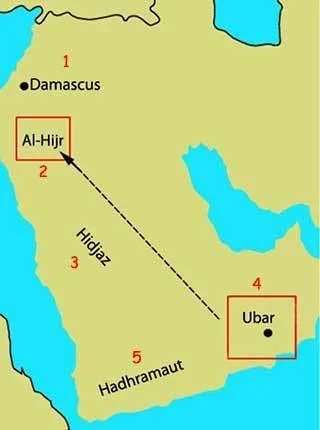 |
وَقَالَ ٱلۡمَلِكُ ٱئۡتُونِي بِهِۦٓ أَسۡتَخۡلِصۡهُ لِنَفۡسِيۖ فَلَمَّا كَلَّمَهُۥ قَالَ إِنَّكَ ٱلۡيَوۡمَ لَدَيۡنَا مَكِينٌ أَمِينٞ ٥٤ [يوسف:54-54]
And the king said: ‘Bring him to me that I may attach him to my person’. Then, when he spoke to him, he said: ‘Verily, this day, you are with us high in rank and fully trusted’.
Surah 12 Yusuf Verse 54
- ‘king’ - Moses was not the only prophet who lived in the lands of Egypt in the history of ancient Egypt. The Prophet Joseph had lived in Egypt long before the time of Moses. We encounter a certain parallel while reading about the stories of Moses and Joseph. While addressing the Egyptian ruler at the time of Joseph, the work malik (the King) is used in the Quran (as in the stated Verse). In contrast, the ruler at Moses' time is referred to as the ‘Pharaoh’ in the Quran (see the next Verse V 28:38).
Historical records available today show us the reason for the different nomenclature of these rulers. The word ‘pharaoh’ was originally the name given to the royal palace in ancient Egypt. The rulers of the old dynasty did not use the title. The use of the word pharaoh as the title of the ruler did not start until the ‘New Kingdom’ era of Egyptian history. This period started with the 18th dynasty (1539-1292 BC), and by the 20th dynasty (945-730 BC) the word ‘Pharaoh’ was adopted as title of respect. Therefore, the miraculous nature of the Quran is manifested here once again: Joseph lived at the time of the Old Kingdom, and hence the word ‘malik’ was used for the Egyptian ruler rather than ‘pharaoh’. On the contrary, since Moses lived at the time of the New Kingdom, the ruler of Egypt is addressed as ‘Pharaoh’.
There is no doubt that one has to have knowledge of the history of Egypt in order to make such a distinction. However, the history of Ancient Egypt was completely forgotten by the 4th century, as hieroglyphics could no longer be understood, and was not rediscovered until the 19th century. Therefore, there was no in-depth knowledge of Egyptian history available when the Quran was revealed. This fact is yet another one of countless pieces of evidence proving that the Quran is the word of Allah.
وَقَالَ فِرۡعَوۡنُ يَٰٓأَيُّهَا ٱلۡمَلَأُ مَا عَلِمۡتُ لَكُم مِّنۡ إِلَٰهٍ غَيۡرِي فَأَوۡقِدۡ لِي يَٰهَٰمَٰنُ عَلَى ٱلطِّينِ فَٱجۡعَل لِّي صَرۡحٗا لَّعَلِّيٓ أَطَّلِعُ إِلَىٰٓ إِلَٰهِ مُوسَىٰ وَإِنِّي لَأَظُنُّهُۥ مِنَ ٱلۡكَٰذِبِينَ ٣٨ [القصص:38-38]
Firaun (Pharaoh) said: ‘O chiefs! I know not that you have an ilah (a god) other than me. So, kindle for me (a fire), O Haman, to bake (bricks out of) clay, and set up for me a Sarhan (a lofty tower, or palace) in order that I may look at (or look for) the Ilah (God) of Musa (Moses); and verily, I think that he is one of the liars’.
Surah 28 Al-Qasas Verse 38
Haman is a character whose name is mentioned in the Quran, along with the Pharaoh. He is recorded in six different places of the Quran as one of the closest men to the Pharaoh. Surprisingly the name of Haman is never mentioned in those sections of the Torah pertaining to the life of Moses. However, the mention of the word Haman can be found in the last chapters of the Old Testament as the helper of a Babylonian king who inflicted many cruelties on the Israelites approximately 1,100 years after Moses. Some non-Muslims, who claim that the Prophet Muhammad (pbuh) wrote the Quran by copying from the Torah and the Bible, also assert that during the process, he transferred some of the subjects related in these books into the Quran incorrectly. The absurdity of these claims was demonstrated only after the Egyptian hieroglyphic alphabet had been deciphered, approximately 200 years ago, and the name “Haman” discovered in the ancient scripts.
Before these discoveries, the writings and inscriptions of ancient Egypt could not be understood. The language of ancient Egypt was hieroglyphic, which survived through the ages. However, with the spread of Christianity and other cultural influences in the 2nd and 3rd centuries AD, Egypt forsook its ancient beliefs as well as hieroglyphic writing. The last known example of the use of hieroglyphic writing was an inscription dated 394 AD. Then that language was forgotten, leaving nobody who could read and understand it. And that was the situation until some 200 years ago. The mystery of ancient Egyptian hieroglyphics was solved in 1799 by the discovery of a tablet called the “Rosetta Stone” dating back to 196 B.C.
The importance of this inscription was that it was written in three different forms of writing: Hieroglyphics, demotic (a simplified form of ancient Egyptian hieratic writing) and Greek. With the help of the Greek script, the ancient Egyptian writings were decoded. The translation of the inscription was completed by a Frenchman named Jean-Françoise Champollion. Hence a forgotten language and the events related in it were brought to light. In this way, a great deal of knowledge about the civilization, religion and social life of ancient Egypt became available.
Through the decoding of hieroglyph, an important piece of knowledge was revealed: the name “Haman” was indeed mentioned in Egyptian inscriptions. This name was referred to in a monument in the Hof Museum in Vienna. In the dictionary of People in the New Kingdom, that was prepared based on the entire collection of inscriptions, Haman is said to be “the head of stone quarry workers”.
Rosetta Stone
The question now arises as to whether the Haman mentioned in the hieroglyph from the Hof Museum is the Haman mentioned in the Quran. May be. Although there are a lot of interesting similarities between the Haman mentioned in the Quran and in the hieroglyph, it is currently not possible to determine with a great degree of certainty whether this hieroglyph refers to the Quranic Haman. What we do know, however, is that the name Haman is attested in ancient Egypt, it is a masculine name, and it dates to the New Kingdom period, the period of history in which Moses is principally associated. Do we want more?
The name “Haman” was not known until the decoding of Egyptian hieroglyphics in the 19th century. When the hieroglyphics were decoded, it was understood that Haman was a close helper of the Pharaoh, and was “the head of the stone quarries”. (Above are shown ancient Egyptian construction workers). The really important point here is that Haman is mentioned in the Quran as the person who directed construction work under the command of the Pharaoh. This means that information that could not have been known by anybody else at that time was given by the Quran.
In conclusion, the existence of the name Haman in the ancient Egyptian inscriptions not only rendered the fabricated claims of the opponents of the Quran worthless, but also confirmed one more time the fact that the Quran comes from Allah. In a miraculous way, the Quran conveys to us historical information that could not have been possessed or understood at the time of the Prophet.
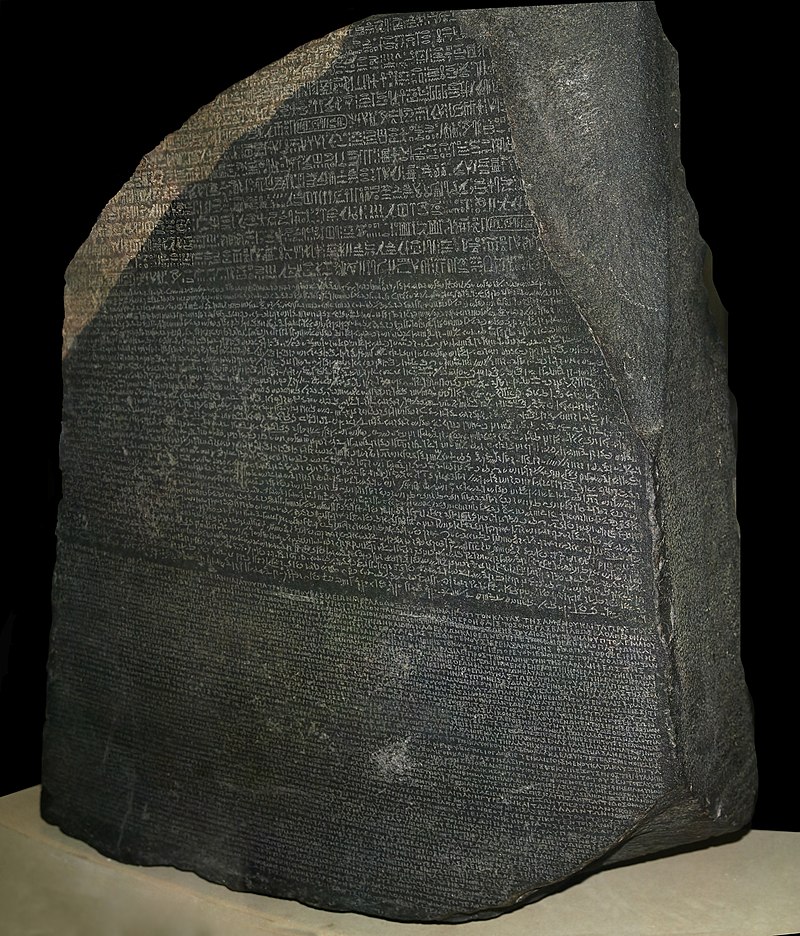
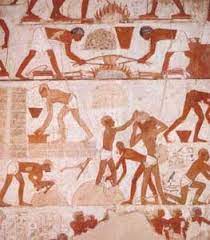
إِنَّ ٱلَّذِي فَرَضَ عَلَيۡكَ ٱلۡقُرۡءَانَ لَرَآدُّكَ إِلَىٰ مَعَادٖۚ قُل رَّبِّيٓ أَعۡلَمُ مَن جَآءَ بِٱلۡهُدَىٰ وَمَنۡ هُوَ فِي ضَلَٰلٖ مُّبِينٖ ٨٥ [القصص:85-85]
Verily, He Who has given you (O Muhammad, pbuh) the Quran, will surely bring you back to Ma’ad. Say (O Muhammad, pbuh): ‘My Lord is Aware of him who brings guidance, and of him who is in manifest error’.
Surah 28 Al-Qasas Verse 85
- The word Ma’ad in the original means the place to which one has to return ultimately. Its use as a common noun implies that it is a place of eminence and glory. Some commentators think it refers to Paradise. However, the context also requires that it should be looked upon as a promise to bestow the highest glory and eminence on the Holy Prophet ultimately not only in the Hereafter but in this world too. In the saying of the disbelievers of Makkah, which has been the theme of the discourse from preceding verses of the Surah, they had said, “O Muhammad, do you want us also to be doomed with you? If we join you and adopt this Faith, it will become hard for us to live in Arabia”. In response to this, Allah tells His Prophet: “O Muhammad, that God Who has placed the burden of conveying the message of the Quran on you, will not destroy you: rather He will exalt you to the rank which these people cannot even imagine today”. And, in actual fact, in a few years after this, even in this world, Allah granted the Holy Prophet complete authority over the whole of Arabia, and there was no power to resist him, and no religion to stand its ground. There had been no precedent in the history of Arabia that the whole peninsula might have come under the sway of one man so completely that no opponent might be there to challenge him and no soul to dare disobey his orders. Then it was not only a political domination but religious too, for the whole population had been won over to Islam.
- The Verse in question was revealed before Hijra (the Prophet's migration from Mecca to Medina). To predict his return to Mecca before his migration to Medina is in fact a twofold prophecy. In view of the constantly worsening situation which made life progressively impossible for him and his followers in Mecca, migration may seem to some readers a mere logical conclusion. But it should not be forgotten that the element of surprise and wonder in this part of the prophecy is not about the suggestion of migration. The element of wonder is in the open defiance to the will and might of the Meccans who would not permit the predicted migration to take place. Again, the ever-hardening determination of the Meccans not to permit the Prophet to escape are the factors which highlight the unlikelihood of such a prophecy to have been made by the Prophet himself in his state of utter helplessness.
غُلِبَتِ ٱلرُّومُ ٢ فِيٓ أَدۡنَى ٱلۡأَرۡضِ وَهُم مِّنۢ بَعۡدِ غَلَبِهِمۡ سَيَغۡلِبُونَ ٣ فِي بِضۡعِ سِنِينَۗ لِلَّهِ ٱلۡأَمۡرُ مِن قَبۡلُ وَمِنۢ بَعۡدُۚ وَيَوۡمَئِذٖ يَفۡرَحُ ٱلۡمُؤۡمِنُونَ ٤ بِنَصۡرِ ٱللَّهِۚ يَنصُرُ مَن يَشَآءُۖ وَهُوَ ٱلۡعَزِيزُ ٱلرَّحِيمُ ٥ وَعۡدَ ٱللَّهِۖ لَا يُخۡلِفُ ٱللَّهُ وَعۡدَهُۥ وَلَٰكِنَّ أَكۡثَرَ ٱلنَّاسِ لَا يَعۡلَمُونَ ٦ [الروم:2-6]
The Romans have been defeated. In the nearest land, and they, after their defeat, will be victorious. Within three to nine years. The decision of the matter, before and after (these events) is only with Allah. And on that day, the believers (i.e. Muslims) will rejoice – With the help of Allah. He helps whom He wills, and He is All-Mighty, the Most Merciful. (It is) a Promise of Allah. And Allah fails not in His Promise, but most of men know not.
Surah 30 Ar-Rum Verses 2-6
- The period of the revelation of this Surah is determined absolutely by the historical event that has been mentioned at the outset. It says: ‘The Romans have been defeated. In the nearest land’. In those days the Byzantine occupied territories adjacent to Arabia were Jordan, Syria and Palestine, and in these territories the Romans were completely overpowered by the Iranians in 615 A. D. Therefore, it can be said with absolute certainty that this Surah was sent down in the same year, and this was the year in which the migration to Habasha (Abyssinia) took place.
Eight years before the Holy Prophet’s advent as a Prophet the Byzantine Emperor Maurice was overthrown by Phocus, who captured the throne and became king. Phocus first got the emperor’s five sons executed in front of him, and then got the emperor also killed and hung their heads in a thoroughfare in Constantinople. A few days after this he had the empress and her three daughters also put to death. The event provided Khusrau Parvez, the Sassanid king of Iran; a good moral excuse to attack Byzantium. For Emperor Maurice had been his benefactor; with his help he had got the throne of Iran. Therefore, he declared that he would avenge his godfather’s and his children’s murder upon Phocus, the usurper. So, he started war against Byzantium in 603 A. D. and within a few years, putting the Phocus armies to rout in succession, he reached Edessa (modern, Urfa) in Asia Minor, on the one hand, and Aleppo and Antioch in Syria, on the other. When the Byzantine ministers saw that Phocus could not save the country, they sought the African governor’s help, who sent his son, Heraclius, to Constantinople with a strong fleet. Phocus was immediately deposed and Heraclius made emperor. He treated Phocus as he had treated Maurice. This happened in 610 A. D., the year the Holy Prophet was appointed to Prophethood.
The moral excuse for which Khusrau Parvez had started the war was no more valid after the deposition and death of Phocus. Had the object of his war really been to avenge the murder of his ally on Phocus for his cruelty, he would have come to terms with the new Emperor after the death of Phocus. But he continued the war, and gave it the color of a crusade between Zoroastrianism and Christianity. The sympathies of the Christian sects (i.e. Nestorians and Jacobians etc.) which had been excommunicated by the Roman ecclesiastical authority and tyrannized for years also went with the Magian (Zoroastrian) invaders, and the Jews also joined hands with them; so much so that the number of the Jews who enlisted in Khusrau’s army rose up to 26,000.
Heraclius could not stop this storm. The very first news that he received from the East after ascending the throne was that of the Iranian occupation of Antioch. After this Damascus fell in 613 A. D. Then in 614 A.D. the Iranians occupying Jerusalem played havoc with the Christian world. Ninety thousand Christians were massacred and the Holy Sepulcher was desecrated. The Original Cross on which, according to the Christian belief, Jesus had died was seized and carried to Mada’in. The chief priest Zacharia was taken prisoner and all the important churches of the city were destroyed. How puffed up was Khusrau Parvez at this victory can be judged from the letter that he wrote to Heraclius from Jerusalem. He wrote: “From Khusrau, the greatest of all gods, the master of the whole world: To Heraclius, his most wretched and most stupid servant: You say that you have trust in your Lord. Why didn’t then your Lord save Jerusalem from me?”
Within a year after this victory the Iranian armies over-ran Jordan, Palestine and the whole of the Sinai Peninsula, and reached the frontiers of Egypt. In those very days another conflict of a far greater historical consequence was going on in Makkah. The believers in One God, under the leadership of the Prophet Muhammad (may Allah’s peace be upon him), were fighting for their existence against the followers of shirk under the command of the chiefs of the Quraish, and the conflict had reached such a stage that in 615 A. D., a substantial number of the Muslims had to leave their homes and take refuge with the Christian kingdom of Habash, which was an ally of the Byzantine Empire. In those days the Sassanid victories against Byzantium were the talk of the town, and the pagans of Makkah were delighted and were taunting the Muslims to the effect: “Look the fire worshipers of Iran are winning victories and the Christian believers in Revelation and Prophethood are being routed everywhere. Likewise, we, the idol worshipers of Arabia, will exterminate you and your religion.”
These were the conditions when this Surah of the Quran was sent down, and in it a prediction was made, saying that the Romans have been vanquished in the neighboring land and within a few years after their defeat, they shall be victorious. And it will be the day when the believers will rejoice in the victory granted by Allah. It contained not one but two predictions: First, the Romans shall be victorious; and second, the Muslims also shall win a victory at the same time. Apparently, there was not a remote chance of the fulfillment of the either prediction in the next few years. On the one hand, there were a handful of the Muslims, who were being beaten and tortured in Makkah, and even till eight years after this prediction there appeared no chance of their victory and domination. On the other, the Romans were losing more and more ground every next day. By 619 A. D. the whole of Egypt had passed into Sassanid hands and the Magian armies had reached as far as Tripoli. In Asia Minor they beat and pushed back the Romans to Bosporus, and in 617 A. D. they captured Chalcedon (modern, Kalikow) just opposite Constantinople. The emperor sent an envoy to Khusrau, praying that he was ready to have peace on any terms, but he replied, “I shall not give protection to the emperor until he is brought in chains before me and gives up obedience to his crucified god and adopts submission to the fire god.” At last, the emperor became so depressed by defeat that he decided to leave Constantinople and shift to Carthage (modern, Tunis). In short, as the British historian Gibbon says, “Even seven to eight years after this prediction of the Quran, the conditions were such that no one could even imagine that the Byzantine Empire would ever gain an upper hand over Iran. Not to speak of gaining domination, no one could hope that the Empire, under the circumstances, would even survive”.
Meanwhile in Arabia, Ubayy bin Khalaf was one of those who could not fathom the possibility of this situation (that Romans shall be victorious), so he said to Abu Bakr: “You are lying. Come on; choose a time frame so that I can bet against you”. Abu Bakr accepted. They betted ten camels and agreed on three years. Abu Bakr came and informed the Prophet (pbuh) about the situation. The Prophet (pbuh) said, ‘What is meant by the word bid`a (bid`i sinin) in the verse is from three to nine. Increase the number of camels and extend the length of time’. So, Abu Bakr spoke to Ubayy again and bet a hundred camels for nine years.
In 622 A. D. as the Holy Prophet migrated to Madinah, the Emperor Heraclius set off quietly for Trabzon from Constantinople via the Black Sea and started preparations to attack Iran from rear. For this he asked the Church for money and Pope Sergius lent him the Church collections on interest, in a bid to save Christianity from Zoroastrianism. Heraclius started his counter attack in 623 A. D. from Armenia. Next year, in 624 A. D., he entered Azerbaijan and destroyed Clorumia, the birthplace of Zoroaster, and ravaged the principal fire temple of Iran. Great are the powers of Allah, this was the very year when the Muslims achieved a decisive victory at Badr for the first time against the mushriks. Thus, both the predictions made in Surah Rum were fulfilled simultaneously within the stipulated period of nine years.
Thus, the prediction made in the initial verses of this Surah is one of the most outstanding pieces of evidence of the Quran’s being the Word of Allah and the Holy Prophet Muhammad’s being a true Messenger of Allah.
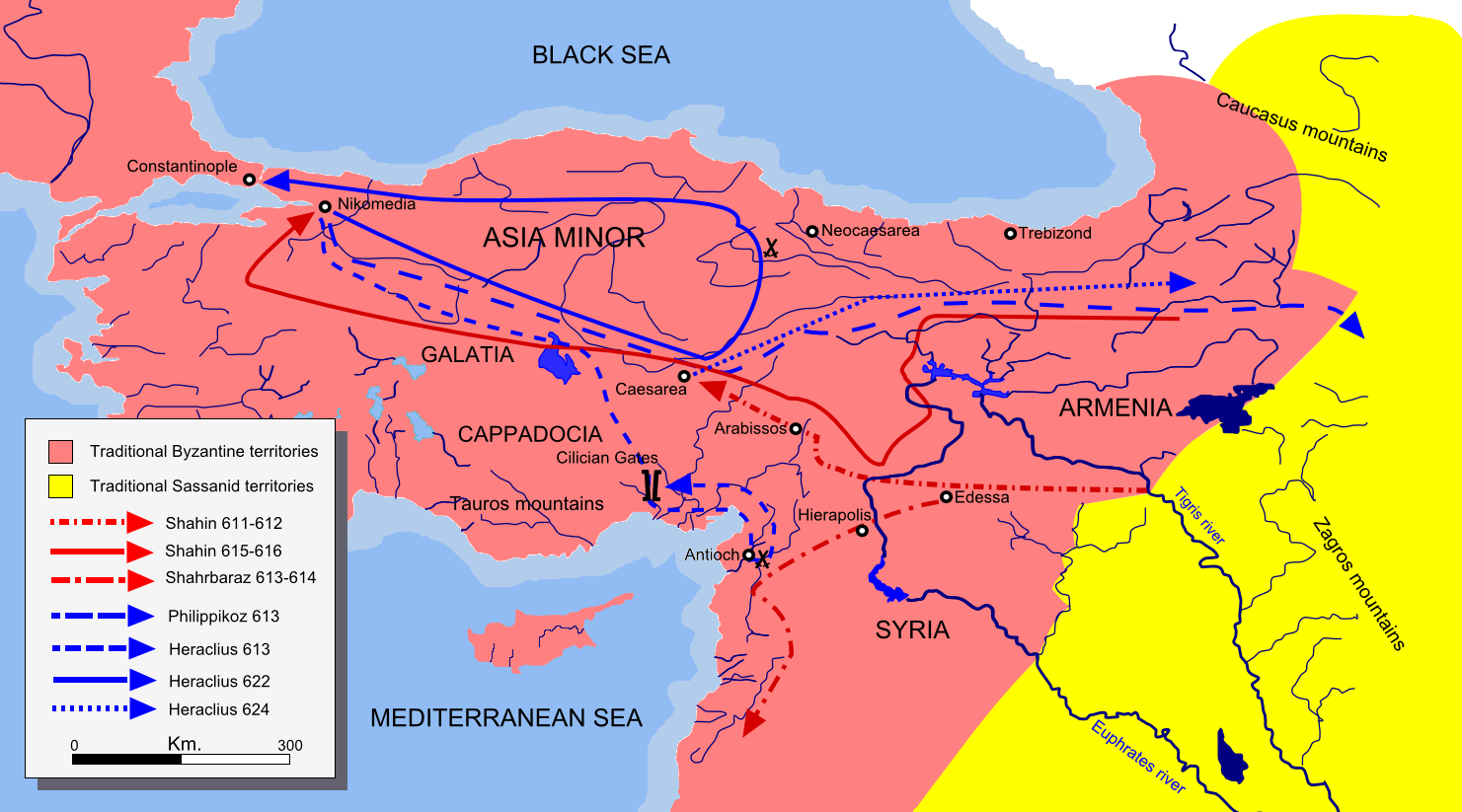
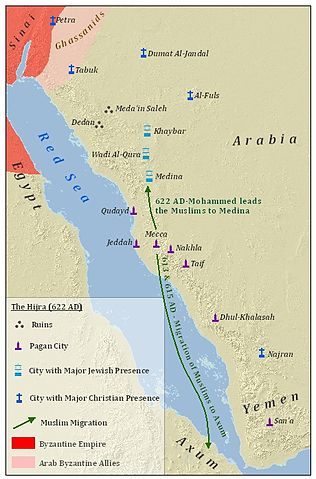
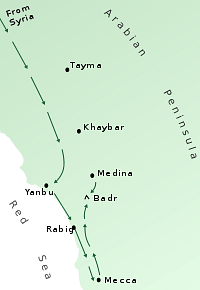
جُندٞ مَّا هُنَالِكَ مَهۡزُومٞ مِّنَ ٱلۡأَحۡزَابِ ١١ [ص:11-11]
They (the Arab pagans) will be a defeated host like the Confederates of the old times (who were defeated).
Surah 38 Sad Verse 11
- Among other encounters with the enemies of Islam which occurred precisely as they were foretold, the Battle of the Ditch is of outstanding importance. The prediction of the Battle of the Ditch was first made in Surah Sad which was definitely revealed in Mecca and according to most scholars, during the early period of the Prophet’s Messengership. It is to this prophecy that the Holy Quran refers to in the following verse:
And when the believers saw Al-Ahzab (the Confederates), they said: ‘This is what Allah and His Messenger (Muhammad, pbuh) had promised us; and Allah and His Messenger (pbuh) had spoken the truth”. And it only added to their Faith and to their submissiveness (to Allah). (Surah 33 Al-Ahzab Verse 22)
Of all the battles fought during the lifetime of the Holy Prophet of Islam, the Battle of the Ditch stands out for the maximum possible dangers and extreme trials of adversity which it brought to the Muslims in Medina. There was many a time when the odds were heavy against the survival of the Muslims. This battle has earned the title The Battle of the Ditch, because when the news reached Prophet Muhammad (pbuh) that almost all the Arab tribes had colluded to invade Medina for a final conclusive encounter to finish off Islam once and for all, the building of a barrier on the open side of Medina became an absolute must. The number of Muslims in Medina at that time, by comparison to the invading hosts, was so small that it was absolutely impossible for them to prevent the enemy from entering Medina in an open battle. Hence, after consultation it was decided that the digging of a ditch was the only option. A one-mile-long ditch was required to be dug in extremely difficult rocky terrain. The estimates as to the number of Muslims involved in this task differ. The minimum mentioned is seven hundred and the maximum three thousand. According to reasonable estimate it was around one thousand eight hundred at the most, because the one thing on which the authorities are agreed is that to every group of ten persons, ten yards of the ditch were allocated. As it was not longer than one mile, the number of Muslims could not have been more than one thousand seven hundred and sixty. The task was hard and exacting. An overall state of poverty and deprivation further compounded the problems of the Muslim camp. At times they had to work for days on end on empty stomachs. It was during this state of extreme adversity that the Holy Prophet was once informed that despite the best efforts of the sappers, a hard rock stubbornly refused to yield. The Prophet proceeded forthwith to visit the troubled spot. Having reached there he took up the pickaxe in his own hands and struck the rock three times before it yielded and broke into fragments. Each time he struck, sparks flew from the rock and he exclaimed out loud ‘Allah-o-Akbar!’ (Allah is the Greatest). At the end the Companions inquired from him why he had shouted ‘Allah-o-Akbar!’ with such a triumphant note. The Holy Prophet answered: 'In the sparks which flew at the first strike, I saw the Syrian Palaces of the Byzantine Empire and their key was given to me. The second time I was shown the illuminated palaces of Persia at Madain and to me the key was handed. Again, I was granted the key of the palaces of San'a as they appeared in the sparks when I struck the rock for the third time.' History bears witness that this is exactly what followed but the wonder lies not in their fulfilment alone. The very making of these prophecies at the time they were made is in itself a miracle. Seldom can history present such examples of a defending few, as powerless and vulnerable as the Muslims were while they were engaged in the digging of the trench, day in and day out, borne down with hunger and fatigue. That was the time when the adversity of the Muslim cause could sink no further. It was then that Muhammad (pbuh) spoke the historic words which history could not create, they created history.
To predict such victories at a time such as this could only be the proclamation of Allah from the lips of a great Prophet.
قُل لِّلۡمُخَلَّفِينَ مِنَ ٱلۡأَعۡرَابِ سَتُدۡعَوۡنَ إِلَىٰ قَوۡمٍ أُوْلِي بَأۡسٖ شَدِيدٖ تُقَٰتِلُونَهُمۡ أَوۡ يُسۡلِمُونَۖ فَإِن تُطِيعُواْ يُؤۡتِكُمُ ٱللَّهُ أَجۡرًا حَسَنٗاۖ وَإِن تَتَوَلَّوۡاْ كَمَا تَوَلَّيۡتُم مِّن قَبۡلُ يُعَذِّبۡكُمۡ عَذَابًا أَلِيمٗا ١٦ [الفتح:16-16]
Say (O Muhammad, pbuh) to the Bedouins who lagged behind: ‘You shall be called to fight against a people given to great warfare, then you shall fight them, or they shall surrender. Then if you obey, Allah will give you a fair reward; but if you turn away as you did turn away before, He will punish you with a painful torment’.
Surah 48 Al-Fath Verse 16
- the words, ‘a people given to great warfare’ may refer to the mighty forces of the Byzantine and Iranian Empires which were far superior in material means and numbers than any other enemy, the Muslims had met so far. The verse constituted a forecast warning that the Muslims would come into conflict those mighty foes and would have to wage prolonged wars with them till the latter would be completely defeated and brought to their knees. The laggards (Bedouins) are here told that though they cannot be allowed to march against the Jews of Khaibar and partake of the booty, yet in the near future they would be called upon to fight against a much more powerful enemy and that, if they then responded to the call, they would receive a good reward. The verse also foretells that wars with the Byzantine and Iranian Empires would be fierce and long.
لَّقَدۡ صَدَقَ ٱللَّهُ رَسُولَهُ ٱلرُّءۡيَا بِٱلۡحَقِّۖ لَتَدۡخُلُنَّ ٱلۡمَسۡجِدَ ٱلۡحَرَامَ إِن شَآءَ ٱللَّهُ ءَامِنِينَ مُحَلِّقِينَ رُءُوسَكُمۡ وَمُقَصِّرِينَ لَا تَخَافُونَۖ فَعَلِمَ مَا لَمۡ تَعۡلَمُواْ فَجَعَلَ مِن دُونِ ذَٰلِكَ فَتۡحٗا قَرِيبًا ٢٧ [الفتح:27-27]
Indeed, Allah shall fulfill the true vision which He showed to His Messenger (pbuh) in very truth. Certainly, you shall enter Al-Masjid Al-Haram, if Allah wills, secure, (some) having their heads shaved, and (some) having your head hair cut short, having no fear. He knew what you knew not, and He granted before that a near victory.
Surah 48 Al-Fath Verse 27
- ‘you shall enter Al-Masijid Al-Haram’ - Traditions concur that the Surah was sent down (revealed) in Dhu al-Qadah, A.H. 6 (Feb-March 628 AD) at a time when the Prophet (pbuh) was on his return journey to Madinah after concluding the Truce of Hudaibiyah with the disbelievers of Makkah. These predictions were made at a time when no military expert or adviser could have predicted the occurrence, given the difficult circumstances of the Muslims and the unfavorable situation in which they found themselves. It is pertinent to note that the entry into Mecca referred in the verse happened in A.H. 8 (630 AD).
- ‘…before that a near victory’ - The same verse also mentions the future occurrence of another historical event, namely the triumph of the Muslim warriors at Khaybar, and their conquest of its formidable fortresses. Hard blows had been inflicted upon the Muslims from Khaybar, but in the end the army of Islam triumphed over the Jews (in Aug 628 AD, AH 7) and the predictions of the Quran were completely fulfilled. Can we ascribe this precise knowledge of the future to the knowledge and speculation of the Prophet?
أَمۡ يَقُولُونَ نَحۡنُ جَمِيعٞ مُّنتَصِرٞ ٤٤ سَيُهۡزَمُ ٱلۡجَمۡعُ وَيُوَلُّونَ ٱلدُّبُرَ ٤٥ [الـقمـر:44-45]
Or say they (Quraysh): ‘We are a great multitude, victorious?’ Their multitude will be defeated, and they will show their backs.
Surah 54 Al-Qamar Verse 44-45
This is a specific prophecy that was made five years before the hijrah, saying that the hosts of the Quraish who waxed proud of their strength would soon be put to rout by the Muslims. At that time no one could imagine how such a revolution would take place in the near future. Such was the helplessness of the Muslims that a group of them had already left the country and taken refuge in Habash and the rest of the believers lay besieged in Shiab Abi Talib, and were being starved by the Quraish boycott and siege. Under such conditions no one could imagine that only within next seven years the tables were going to turn. A pupil of Ahdullah bin Abbas has related that Umar used to say: “When this verse of Surah Al-Qamar was sent down. I wondered what hosts it is that would be routed. But when in the Battle of Badr the pagan Quraish were routed and they were fleeing from the battlefield, I saw the Messenger of Allah in his armor rushing forward and reciting this verse: سَيُهۡزَمُ ٱلۡجَمۡعُ وَيُوَلُّونَ ٱلدُّبُرَ [Their multitude will be defeated, and they will show their backs] (V 54:45). Then only did I realize that this was the defeat that had been foretold”.
During this first serious encounter of the Muslims with a formidable, professionally organized army of Meccans, the invading hosts were completely routed and put to a most humiliating flight by a comparatively much smaller body of Muslim defenders. The very pick of the chieftains, the sworn enemies of Islam, who were also renowned for their hatred of the Holy Prophet, fell one after the other and were made to bite the dust in the field of Badr. Abu-Jahl was slain by two young Muslim lads, so also Shaibah and 'Utbah met their fated hour and were put to sword within a few hours. The night fell upon the gloomy hearts of the Meccans like Doomsday. They were put to flight in utter disarray. The devastating defeat inflicted upon the Meccan army was clearly predicted in the verses quoted above.
إِنۡ هَٰذَآ ٢٦ [الـمّـدّثّـر:26-26]
I will cast him into Hell-Fire.
Surah 74 Al-Muddaththir Verse 26
- The verse was revealed about Al-Waleed, who was alive at the time of the revelation of the verse. In a similar fashion another verse of the Quran speaks about Abu Lahab:
He will be burnt in a Fire of blazing flames! (Surah 111 Al-Masad Verse 3)
It was possible that one of these men should embrace Islam so that the Quran could be proved wrong but the Quran established it that they did not accept Islam and that they would never accept Islam. So, their abode would be hellfire. As predicted, both of them died without accepting Islam.
COMMENTS FROM VARIOUS SCHOLARS
‘Here, therefore, its merits as a literary production should perhaps not be measured by some preconceived maxims of subjective and aesthetic taste, but by the effects which it produced in [Prophet] Muhammad's [pbuh] contemporaries and fellow countrymen. If it spoke so powerfully and convincingly to the hearts of his hearers as to weld hitherto centrifugal and antagonistic elements into one compact and well-organized body, animated by ideas far beyond those which had until now ruled the Arabian mind, then its eloquence was perfect, simply because it created a civilized nation out of savage tribes…’
(A statement of Dr. Steingass, quoted in T. P. Hughes' Dictionary of Islam)
‘The Koran admittedly occupies an important position among the great religious books of the world. Though the youngest of the epoch-making works belonging to this class of literature, it yields to hardly any in the wonderful effect which it has produced on large masses of men. It has created an all but new phase of human thought and a fresh type of character. It first transformed a number of heterogeneous desert tribes of the Arabian Peninsula into a nation of heroes, and then proceeded to create the vast politico-religious organizations of the Muhammadan world which are one of the great forces with which Europe and the East have to reckon today’.
(From G. Margoliouth's introduction to The Koran, translated from the Arabic by Rev. J. M. Rodwell)
‘I am not a Muslim in the usual sense, though I hope I am a “Muslim” as “one surrendered to God”, but I believe that embedded in the Quran and other expressions of the Islamic vision are vast stores of divine truth from which I and other occidentals have still much to learn, and “Islam is certainly a strong contender for the supplying of the basic framework of the one religion of the future”’.
(W Montgomery Watt, from the book Islam and Christianity Today)