AYAT THROUGH MESSENGERS
A
۞تِلۡكَ ٱلرُّسُلُ فَضَّلۡنَا بَعۡضَهُمۡ عَلَىٰ بَعۡضٖۘ مِّنۡهُم مَّن كَلَّمَ ٱللَّهُۖ وَرَفَعَ بَعۡضَهُمۡ دَرَجَٰتٖۚ وَءَاتَيۡنَا عِيسَى ٱبۡنَ مَرۡيَمَ ٱلۡبَيِّنَٰتِ وَأَيَّدۡنَٰهُ بِرُوحِ ٱلۡقُدُسِۗ وَلَوۡ شَآءَ ٱللَّهُ مَا ٱقۡتَتَلَ ٱلَّذِينَ مِنۢ بَعۡدِهِم مِّنۢ بَعۡدِ مَا جَآءَتۡهُمُ ٱلۡبَيِّنَٰتُ وَلَٰكِنِ ٱخۡتَلَفُواْ فَمِنۡهُم مَّنۡ ءَامَنَ وَمِنۡهُم مَّن كَفَرَۚ وَلَوۡ شَآءَ ٱللَّهُ مَا ٱقۡتَتَلُواْ وَلَٰكِنَّ ٱللَّهَ يَفۡعَلُ مَا يُرِيدُ ٢٥٣ [البقرة:253-253]
Those Messengers! We preferred some of them to others; to some of them Allah spoke (directly); others He raised to degrees (of honour); and to Isa (Jesus), the son of Maryam (Mary), We gave clear proofs and evidences, and supported him with Ruh-ul-Quds (Jibrail/Gabriel). If Allah had willed, succeeding generations would not have fought against each other, after clear verses of Allah had come to them, but they differed – some of them believed and others disbelieved. If Allah had willed, they would not have fought against one another, but Allah does what He wills.
Surah 2 Al-Baqarah Verse 253
- Those Messengers – The Quran mentions twenty-five prophets, most of who are mentioned in the Bible as well. Before we begin, we must understand two matters:
In Arabic two different words are used, Nabi and Rasool. A Nabi is a prophet and a Rasool is a messenger or an apostle. The two words are close in meaning for our purpose.
There are four men mentioned in the Quran about whom Muslim scholars are uncertain whether they were prophets or not: Dhul-Qarnain (Verse 18:83), Luqman (Surah 31), Uzair (Verse 9:30), and Tubba (Verse 44:37, 50:14).
- Aadam or Adam is the first prophet in Islam. He is also the first human being according to traditional Islamic belief. Adam is mentioned in 25 verses and 25 times in the Quran. Allah created Adam with His hands and created his wife, Hawwa or Eve from Adam’s rib. He lived in Paradise and was expelled from there to earth for disobedience. The story of his two sons is mentioned once in Chapter 5 (Al-Maidah).
Idrees or Enoch is mentioned twice in the Quran. Other than that, little is known about him. He is said to have lived in Babylon, Iraq and migrated to Egypt and that he was the first one to write with the pen.
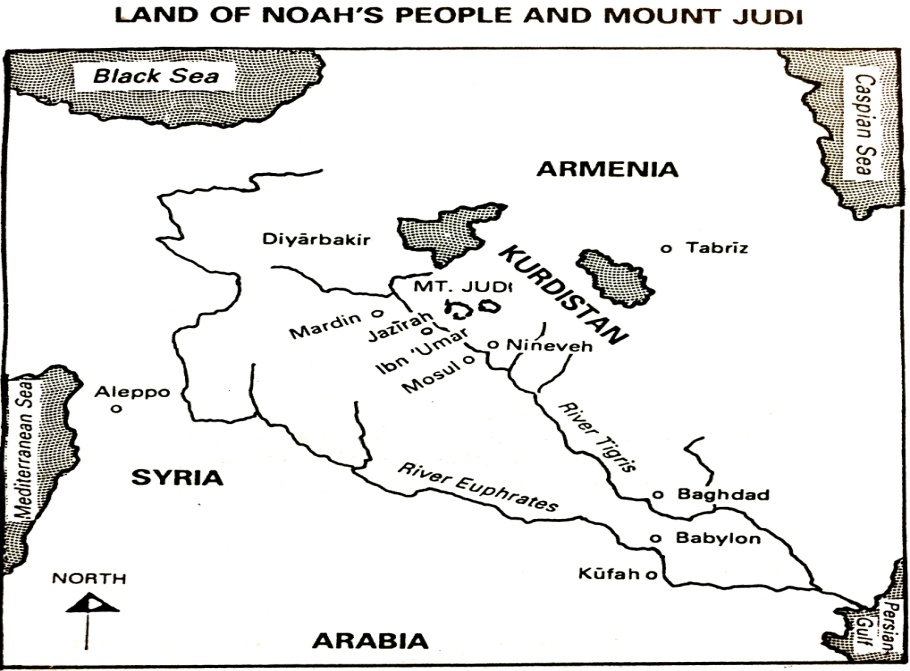
Nuh or Noah is mentioned 43 times in the Quran. He is said to be from Kirk, Iraq. Polytheism (shirk) appeared for the first time among his people who lived close to the present-day city of Kufa, in the south of Iraq. His wife was an unbeliever as mentioned in Chapter 66 (At-Tahrim). His son also chooses disbelief and was drowned in the flood. The story is found in Chapter 11 (Hud). One of his great miracles was the Arc which he built on Allah’s command that rested on Mt. Judi which is said to be between the Syrian-Turkish border today near the city of Ayn Diwar.
Hud is said to be Heber in English. He is mentioned 7 times in the Quran. Hud is the first person to have spoken Arabic and was the first Arab prophet. He was definitely sent to the people of Ad in the area known as Al-Ahqaf which is around Hadramaut in Yemen and the Ar-Rub al-Khali (the Empty Quarter). Allah destroyed them by a fierce wind that blew for 8 days and seven nights.
Salih is mentioned 9 times in the Quran. He was an Arab prophet send to the people of Thamud who lived in an area known as Al-Hijr between Hijaz and Tabuk. Al-Hijr was the ancient name. Today, the place is known as “Madain Salih” in Saudi Arabia and is a UNESCO world heritage site. They are magnificent structures literally carved into rocks. The people demanded he produce a female camel out of the rocks to prove his claim to being a prophet. He did, and warned them not to harm her, but they killed her despite the warning of Salih. A loud shriek – saihah - killed them all.
- Ibrahim or Abraham is mentioned 69 times in 25 chapters of the Quran. His father’s name was Aazar. They lived in the city of Ur in the Chaldean kingdom. He escaped Ur to Harran, in the north of the Arabian Peninsula, in today’s Syria, when Nimrod, the king tried to burn him alive. From Harran he went to Palestine with his wife Sarah and the son of his brother, Lot (Loot in Arabic) and his wife. Due to a famine, they were forced to move to Egypt. He later returned with Lot to the south of Palestine, Ibrahim settling in Bir Sab’a and Lot settled close to the Dead Sea. Abraham then moved his second wife, Hagar, to Mecca with his son Ishmael and left them there at Allah’s command. Mecca was a barren land and the well of zamzam was provided by Allah for their survival. The ancient tribe of Jurhum settled their due to zamzam. Abraham is said to be buried in Hebron, Palestine.
7, 8. Abraham had two sons: Ishaq or Issac and Ismael or Ishmael. Issac is mentioned 16 times in the Quran whereas Ishmael is mentioned 12 times. Issac lived with his father, Abraham, and died in Hebron, Palestine. Allah ordered Abraham to sacrifice Ishmael. He went to Mecca with his parents and was left there with his mother. Abraham visited Ishmael several times in Mecca, one of those times, Allah ordered Abraham and Ishmael to build the Ka’bah (the Holy House). Ishmael died in Mecca and was buried there. Issac is the fore-father of the Jews and Ishmael is the forefather of the Arabs.
- Lot or Loot is mentioned 17 times in the Quran. He is the nephew of Abraham, the son of Abraham’s brother. Lot lived towards the southern tip of the Dead Sea. His people were from Sodom and Gomorrah. Lot believed in Abraham and after their return from Egypt, they settled in separate locations. People of Sodom were the first to commit homosexuality. That is why homosexuals are sometimes called sodomites. His wife was not a believer. She did not commit the sin, but accepted it. Rocks were rained down on the people of Sodom and Gomorrah that crushed them.
Yaqub or Jacob, the son of Issac and the grandson of Abraham is mentioned 16 times in the Quran. Jacob’s other name was Israel. The “Bani Israel,” Children of Israel, or Israelites are named after him. All the Hebrew prophets came from him, the last of whom was Eesa or Jesus. Jacob is the father of the twelve tribes known as Al-Asbaat (Verse 7:160) in the Quran. He is said to have traveled to north of Iraq, returned to Palestine and then settled in Egypt and died there. He was buried in Hebron, Palestine, along with his father according to his last will. The Bible mentions that Issac married Rebecca and his son Jacob married Rachel (Rahil in Arabic).
Yusuf or Joseph, the son of Jacob or Israel is mentioned 17 times in the Quran. He was left in a Jerusalem well by his brothers, and then taken to Egypt where he attained a high rank in the government. Later, his father, Jacob, and brothers settled in Egypt.
Shuaib or Jethro, mentioned 11 times in the Quran, was send to the people of Madyan. Shuaib lived between the time of Lot and Moses and was an Arab prophet. His people worshipped a tree called Al-Aykah (Verse 15:78, 26:176, 38:13, and 50:14). They were highway robbers, and cheated in business dealings. Several punishments came down upon them: an awful cry combined with an earthquake that destroyed them.
Ayyub or Job is mentioned 4 times in the Quran. He is said to have lived close to either the Dead Sea or Damascus. He was an affluent prophet who was tested by Allah with poverty and sickness, but he was patient and was helped by his loyal wife who stayed by him in every hardship. Eventually, they are immensely rewarded by Allah for their patience.
Yunus or Jonah, also known as “Dhun-Noon,” is mentioned 4 times in the Quran. He lived in Nineveh, close to Mosul, in Iraq. He left his people before Allah allowed him to, headed towards modern day Tunisia, but possibly ended up in Yafa. He was swallowed by the whale, repented to Allah and went back to his people in Iraq where all 100,000 of them repented and believed in him.
Dhul-Kifl is mentioned twice in the Quran. Some scholars say he was the son of Job, others say he is Ezekiel of the Bible.
Musa or Moses is the most frequently mentioned prophet in the Quran, appearing 136 times. Before Moses, Joseph had started spreading the message of monotheism (tawhid: worship of One, true Allah) among the people of Egypt. His mission was strengthened when his father, Jacob, and his brothers also settled in Egypt, slowly converting all of Egypt. After Yusuf, the Egyptians turned back into polytheism (shirk) and the children of Jacob, the Israelites, multiplied and gained prominence in the society. Moses was the first prophet sent to the Israelites at a time when the Pharaoh of Egypt was enslaving them. Moses fled to Madyan to flee persecution. Allah made him a prophet at Mt. Toor, situated in the Sinai and he was given nine great miracles.
Haroon or Aaron is the brother of Moses and is mentioned 20 times in the Quran.
18,19. Ilyas or Elijah and Yas’a are mentioned two times each in the Quran and lived in Baalbek (in Lebanon).
20,21. Dawud or David is mentioned in the Quran 16 times. He led the Israelites in war and won, and had many miracles. His son, Suleiman or Solomon is mentioned 17 times and was also a king with great miracles. Both are buried in Jerusalem.
Zakariyyah or Zechariah is mentioned 7 times. He was a carpenter. He raised Mary, the mother of Jesus.
Yahya or John is the son of Zechariah and is mentioned 5 times. He was killed in Jerusalem, and his head was taken to Damascus.
The name Isa or Jesus is mentioned 25 times, Messiah 11 times, and the ‘son of Mary’ 23 times. He was born in Bethlehem, Palestine. He is said to have visited Egypt with his mother. He is the last prophet among the Children of Israel.
Five prophets were Arabs: Hud, Salih, Shuaib, Ismail, and Muhammad. Four of them were send to the Arabs, whereas Muhammad was sent to all human beings.
وَرَسُولًا إِلَىٰ بَنِيٓ إِسۡرَٰٓءِيلَ أَنِّي قَدۡ جِئۡتُكُم بَِٔايَةٖ مِّن رَّبِّكُمۡ أَنِّيٓ أَخۡلُقُ لَكُم مِّنَ ٱلطِّينِ كَهَيَۡٔةِ ٱلطَّيۡرِ فَأَنفُخُ فِيهِ فَيَكُونُ طَيۡرَۢا بِإِذۡنِ ٱللَّهِۖ وَأُبۡرِئُ ٱلۡأَكۡمَهَ وَٱلۡأَبۡرَصَ وَأُحۡيِ ٱلۡمَوۡتَىٰ بِإِذۡنِ ٱللَّهِۖ وَأُنَبِّئُكُم بِمَا تَأۡكُلُونَ وَمَا تَدَّخِرُونَ فِي بُيُوتِكُمۡۚ إِنَّ فِي ذَٰلِكَ لَأٓيَةٗ لَّكُمۡ إِن كُنتُم مُّؤۡمِنِينَ ٤٩ [آل عمران:49-49]
And will make him (Isa/Jesus) a Messenger to the Children of Israel (saying): ‘I have come to you with a sign from your Lord, that I design for you out of clay, a figure like that of the bird, and breathe into it, and it becomes a bird by Allah’s Leave; and I heal him who was born blind, and the leper, and I bring the dead to life by Allah’s Leave. And I inform you of what you eat, and what you store in your houses. Surely, in that is a sign for you, if you are believers’.
Surah 3 Al-Imran Verse 49
- Many scholars stated that Allah sent every Prophet with a miracle suitable to his time. For instance, in the time of Musa, magic was the trade of the time, and magicians held a high position. So Allah sent Musa with a miracle that captured the eyes and bewildered every magician. When the magicians realized that Musa's miracle came from the Almighty, Most Great, they embraced Islam and became pious believers. As for `Isa, he was sent during a time when medicine and knowledge in physics were advancing. `Isa brought them the types of miracles that could not be performed, except by one sent by Allah. How can any physician bring life to clay, cure blindness and leprosy and bring back to life those entrapped in the grave. Muhammad (pbuh) was sent during the time of eloquent people and proficient poets. He brought them a Book from Allah; if mankind and the Jinn tried to imitate ten chapters, or even one chapter of it, they will utterly fail in this task, even if they tried to do it by collective cooperation. This is because the Quran is the Word of Allah and is nothing like that of the creatures.
- Jesus in the Quran holds one of the highest statures amongst the Prophets. Unlike other Prophets who performed miracles, Jesus himself was a miracle, as he was born of a virgin mother, and Allah describes him and his mother Mary as such:
…and We made her (Mary) and her son (Jesus) a sign for the worlds. (Verse 21:91)
Nonetheless, in the Quran, Jesus is described as having many miracles not bestowed upon other prophets. The following is a brief description of the miracles performed by Jesus mentioned in the Quran.
1. A Table Laden with Food - In the fifth chapter of the Quran, "The Table Laden with Food" – named after this miracle of Jesus; Allah narrates how the disciples of Jesus requested him to ask Allah to send down a table laden with food, and for it to be a special day of commemoration for them in the future.
Isa (Jesus), son of Maryam (Mary) said: ‘O Allah, our Lord! Send us from heaven a table spread (with food) that there may be for us – for the first and the last of us – a festival and a sign from you; and provide us with sustenance, for You are the Best of Sustainers’. (Verse 5:114)
Several commentators of the Quran have translated the Arabic word for festival as ever-recurring festival. Since the occasion was to be "for us a recurring festival," it is likely the Last Supper, also called the Lord's Supper, Breaking of Bread, Eucharist, or Communion. The Eucharist has always been at the center of Christian worship. Encyclopedia Britannica says:
"Eucharist is a Christian sacrament commemorating the action of Jesus at his Last Supper with his disciples … The letters of Paul and the Acts of the Apostles makes it clear that early Christianity believed that this institution included a mandate to continue the celebration… The Eucharist has formed a central rite of Christian worship."
2. While Still in the Cradle - One of the miracles mentioned in the Quran, although not mentioned in the Bible, is that fact that Jesus, while still in the cradle, spoke out to protect his mother Mary from any accusations people may have placed on her due to having a child without a father. When she was approached about this strange incident after her childbirth, Mary merely pointed to Jesus, and he miraculously spoke, just as Allah had promised her upon annunciation.
He shall speak to people while still in the cradle, and in manhood, and he shall be from the righteous. (Verse 3:46)
3. And It Becomes a Bird - Allah mentions a miracle given to none other in the Quran but Jesus, one which is quite parallel to how Allah himself created Adam. This miracle is not found in the New Testament, but it is found in the non-canonical ‘Infancy Gospel of Thomas,’ “When this boy, Jesus, was five years old, he was playing at the ford of a rushing stream… he then made soft clay and shaped it into twelve sparrows… but Jesus simply clapped his hands and shouted to the sparrows: "Be off, fly away, and remember me, you who are now alive!" And the sparrows took off and flew away noisily." (Infancy Gospel of Thomas: 2)
4. Healing the Blind and the Leper – The New Testament mentions this fact. The Jews during the time of Jesus were quite advanced in the science of medicine and were quite proud of their achievements. For this reason, miracles of this nature were given by Allah to Jesus, ones which the Jews could well understand that no force in nature could perform its like.
5. The Resurrection of the Dead - This, like the creation of a bird, was a miracle of incomparable nature, one which should have caused the Jews to believe in the Prophethood of Jesus without doubt. In the New Testament, we read three cases where Jesus brought the dead back to life by Allah’s permission - the daughter of Jairus (Matt 9:18, 23; Mark 5:22, 35; Luke 8:40, 49), the widow's son at Nain (Luke 7:11), and Lazarus (John 11:43).
6. The Provisions of Today and Tomorrow - Jesus was given the miracle of knowing what people had just eaten, as well as what they had in store for the coming days.
The fact remains that indeed it was not through his own will that Jesus or any other Prophet performed miracles. Rather, they were performed only by Will of Allah Almighty - a fact also explicitly stated in the Bible:
"A man (Jesus) attested to you by God with miracles and wonders and signs which Allah performed through him in your midst." (Acts 2:22)
إِذۡ قَالَ ٱللَّهُ يَٰعِيسَى ٱبۡنَ مَرۡيَمَ ٱذۡكُرۡ نِعۡمَتِي عَلَيۡكَ وَعَلَىٰ وَٰلِدَتِكَ إِذۡ أَيَّدتُّكَ بِرُوحِ ٱلۡقُدُسِ تُكَلِّمُ ٱلنَّاسَ فِي ٱلۡمَهۡدِ وَكَهۡلٗاۖ وَإِذۡ عَلَّمۡتُكَ ٱلۡكِتَٰبَ وَٱلۡحِكۡمَةَ وَٱلتَّوۡرَىٰةَ وَٱلۡإِنجِيلَۖ وَإِذۡ تَخۡلُقُ مِنَ ٱلطِّينِ كَهَيَۡٔةِ ٱلطَّيۡرِ بِإِذۡنِي فَتَنفُخُ فِيهَا فَتَكُونُ طَيۡرَۢا بِإِذۡنِيۖ وَتُبۡرِئُ ٱلۡأَكۡمَهَ وَٱلۡأَبۡرَصَ بِإِذۡنِيۖ وَإِذۡ تُخۡرِجُ ٱلۡمَوۡتَىٰ بِإِذۡنِيۖ وَإِذۡ كَفَفۡتُ بَنِيٓ إِسۡرَٰٓءِيلَ عَنكَ إِذۡ جِئۡتَهُم بِٱلۡبَيِّنَٰتِ فَقَالَ ٱلَّذِينَ كَفَرُواْ مِنۡهُمۡ إِنۡ هَٰذَآ إِلَّا سِحۡرٞ مُّبِينٞ ١١٠ [المائدة:110-110]
(Remember) when Allah will say (on the Day of Resurrection): ‘O Isa (Jesus), son of Maryam (Mary)! Remember My favour to you and to your mother when I supported you with Ruh-ul-Quds (Jibrail/Gabriel) so that you spoke to the people in the cradle and in maturity; and when I taught you writing, Al-Hikmah (the power of understanding), the Taurah (Torah) and the Injil (Gospel); and when you made out of the clay, a figure like that of a bird, by My permission and you breathed into it, and it became a bird by My permission and you healed those born blind, and the lepers by My permission, and when you brought forth the dead by My permission; and when I restrained the Children of Israel from you (when they resolved to kill you) as you came to them with clear proofs, and the disbelievers among them said: ‘This is nothing but evident magic’.
Surah 5 Al-MAidah Verse 110
قَالَ عِيسَى ٱبۡنُ مَرۡيَمَ ٱللَّهُمَّ رَبَّنَآ أَنزِلۡ عَلَيۡنَا مَآئِدَةٗ مِّنَ ٱلسَّمَآءِ تَكُونُ لَنَا عِيدٗا لِّأَوَّلِنَا وَءَاخِرِنَا وَءَايَةٗ مِّنكَۖ وَٱرۡزُقۡنَا وَأَنتَ خَيۡرُ ٱلرَّٰزِقِينَ ١١٤ [المائدة:114-114]
Isa (Jesus), son of Maryam (Mary) said: ‘O Allah, our Lord! Send us from heaven a table spread (with food) that there may be for us – for the first and the last of us – a festival and a sign from you; and provide us with sustenance, for You are the Best of Sustainers’.
Surah 5 Al-Maidah Verse 114
- Kindly refer Verse 3:49 earlier.
وَإِلَىٰ ثَمُودَ أَخَاهُمۡ صَٰلِحٗاۚ قَالَ يَٰقَوۡمِ ٱعۡبُدُواْ ٱللَّهَ مَا لَكُم مِّنۡ إِلَٰهٍ غَيۡرُهُۥۖ قَدۡ جَآءَتۡكُم بَيِّنَةٞ مِّن رَّبِّكُمۡۖ هَٰذِهِۦ نَاقَةُ ٱللَّهِ لَكُمۡ ءَايَةٗۖ فَذَرُوهَا تَأۡكُلۡ فِيٓ أَرۡضِ ٱللَّهِۖ وَلَا تَمَسُّوهَا بِسُوٓءٖ فَيَأۡخُذَكُمۡ عَذَابٌ أَلِيمٞ ٧٣ [الأعراف:73-73]
And to Thamud (people, We sent) their brother Salih. He said: ‘O my people! Worship Allah! You have no other Ilah (Allah) but Him. Indeed, there has come to you a clear sign (the miracle of the coming of a huge she-camel from the midst of a rock) from your Lord. This she-camel of Allah is a sign to you; so you leave her to graze in Allah’s earth, and touch her not with harm, lest a painful torment should seize you’.
Surah 7 Al-Araf Verse 73
وَإِلَىٰ مَدۡيَنَ أَخَاهُمۡ شُعَيۡبٗاۚ قَالَ يَٰقَوۡمِ ٱعۡبُدُواْ ٱللَّهَ مَا لَكُم مِّنۡ إِلَٰهٍ غَيۡرُهُۥۖ قَدۡ جَآءَتۡكُم بَيِّنَةٞ مِّن رَّبِّكُمۡۖ فَأَوۡفُواْ ٱلۡكَيۡلَ وَٱلۡمِيزَانَ وَلَا تَبۡخَسُواْ ٱلنَّاسَ أَشۡيَآءَهُمۡ وَلَا تُفۡسِدُواْ فِي ٱلۡأَرۡضِ بَعۡدَ إِصۡلَٰحِهَاۚ ذَٰلِكُمۡ خَيۡرٞ لَّكُمۡ إِن كُنتُم مُّؤۡمِنِينَ ٨٥ [الأعراف:85-85]
And to (the people of) Madyan (Midian), (We sent) their brother Shuaib. He said: ‘O My people! Worship Allah! You have no other Ilah but Him. Verily, a clear proof (sign) from your Lord has come to you; so give full measure and full weight and wrong not men in their things, and do not do mischief on the earth after it has been set in order, that will be better for you, if you are believers’.
Surah 7 Al-Araf Verse 85
ثُمَّ بَعَثۡنَا مِنۢ بَعۡدِهِم مُّوسَىٰ بَِٔايَٰتِنَآ إِلَىٰ فِرۡعَوۡنَ وَمَلَإِيْهِۦ فَظَلَمُواْ بِهَاۖ فَٱنظُرۡ كَيۡفَ كَانَ عَٰقِبَةُ ٱلۡمُفۡسِدِينَ ١٠٣ وَقَالَ مُوسَىٰ يَٰفِرۡعَوۡنُ إِنِّي رَسُولٞ مِّن رَّبِّ ٱلۡعَٰلَمِينَ ١٠٤ حَقِيقٌ عَلَىٰٓ أَن لَّآ أَقُولَ عَلَى ٱللَّهِ إِلَّا ٱلۡحَقَّۚ قَدۡ جِئۡتُكُم بِبَيِّنَةٖ مِّن رَّبِّكُمۡ فَأَرۡسِلۡ مَعِيَ بَنِيٓ إِسۡرَٰٓءِيلَ ١٠٥ قَالَ إِن كُنتَ جِئۡتَ بَِٔايَةٖ فَأۡتِ بِهَآ إِن كُنتَ مِنَ ٱلصَّٰدِقِينَ ١٠٦ فَأَلۡقَىٰ عَصَاهُ فَإِذَا هِيَ ثُعۡبَانٞ مُّبِينٞ ١٠٧ وَنَزَعَ يَدَهُۥ فَإِذَا هِيَ بَيۡضَآءُ لِلنَّٰظِرِينَ ١٠٨ [الأعراف:103-108]
Then after them We sent Musa (Moses) with Our Signs to Firaun (Pharaoh) and his chiefs, but they wrongfully reject them. So see how was the end of the Mufsidun (mischief makers, corrupters). And Musa said: ‘O Firaun! Verily, I am a Messenger from the Lord of the Alamin (mankind, jinn and all that exists). Proper it is for me that I say nothing concerning Allah but the truth. Indeed, I have come to you from your Lord with a clear proof. So let the children of Israel depart along with me’. (Firaun) said: ‘If you have come with a sign, show it forth, if you are one of those who tell the truth’. Then (Musa) threw his stick and behold! It was a serpent, manifest! And he drew out his hand, and behold! It was white (with radiance) for the beholders.
Surah 7 Al-Araf Verses 103-108
لَّقَدۡ كَانَ فِي يُوسُفَ وَإِخۡوَتِهِۦٓ ءَايَٰتٞ لِّلسَّآئِلِينَ ٧ [يوسف:7-7]
Verily, in Yusuf (Joseph) and his brethren, there are Ayat for those who ask.
Surah 12 Yusuf Verse 7
- There are numerous signs of Allah’s Omnipotence at work in the life history of Yusuf (pbuh), each of which is an advice and a didactic lesson for the seeker of tuth. Among these signs, we can cite:
- Yusuf’s very sophisticated dream
- The science of interpretation of dreams
- Yaqub’s awareness of the future of his son
- Yusuf’s remaining safe at the bottom of the well
- Becoming blind and then regaining sight by Yaqub
- From being abandoned to becoming high, exalted
- Being put in prison and then to acceding power and government
- Being cleared of all accusations of corruption
- Parting and reunion
- Chosing prison over being polluted with sin
- Having the upper hand yet impelled to forgive the wrong done to oneself
- Most importantly, the domination of the divine power over man-made conspiracies. None amongst the well, servitude, prison or palace life exert the slightest influence on Allah’s Will.
سُبۡحَٰنَ ٱلَّذِيٓ أَسۡرَىٰ بِعَبۡدِهِۦ لَيۡلٗا مِّنَ ٱلۡمَسۡجِدِ ٱلۡحَرَامِ إِلَى ٱلۡمَسۡجِدِ ٱلۡأَقۡصَا ٱلَّذِي بَٰرَكۡنَا حَوۡلَهُۥ لِنُرِيَهُۥ مِنۡ ءَايَٰتِنَآۚ إِنَّهُۥ هُوَ ٱلسَّمِيعُ ٱلۡبَصِيرُ ١ [الإسراء:1-1]
Glorified (and Exalted) is He (Allah) [above all that (evil) they associate with Him] Who took His slave (Muhammad, pbuh) for a journey by night from Al-Masjid Al-Haram (at Makkah) to Al-Masjid Al-Aqsa (in Jerusalem), the neighbourhood whereof We have blessed, in order that We might show him (Muhammad, pbuh) of Our Ayat. Verily, He is the All-Hearer, the All-Seer.
Surah 17 Al-Isra Verse 1
- According to the Hadith reports, Gabriel (Jibreel) took the Prophet (pbuh) at night from the Kabah to the mosque in Jerusalem on a Buraq (a heavenly steed). On reaching Jerusalem, the Prophet (pbuh) along with other Prophets offered prayers; Gabriel then took him to the heavens and the Prophet (pbuh) met several great Prophets in different heavenly spheres. Finally, he reached the highest point in heavens and was graced with an experience of Divine Presence. On that occasion the Prophet (pbuh) received a number of directives including that Prayers were obligatory five times a day. Thereafter, the Prophet (pbuh) returned from the heavens to Jerusalem and from there to the Holy Mosque in Mecca. Numerous reports on the subject reveal that the Prophet (pbuh) was also enabled on this occasion to observe Heaven and Hell.
- Narrated Jabir bin Abdullah that he heard Allah’s Messenger (pbuh) say: ‘When the people of Quraysh did not believe me (in the story of my Isra – Night Journey), I stood up in Al-Hijr and Allah displayed Jerusalem in front of me, and I began describing it to them while I was looking at it’
وَلَقَدۡ ءَاتَيۡنَا مُوسَىٰ تِسۡعَ ءَايَٰتِۢ بَيِّنَٰتٖۖ فَسَۡٔلۡ بَنِيٓ إِسۡرَٰٓءِيلَ إِذۡ جَآءَهُمۡ فَقَالَ لَهُۥ فِرۡعَوۡنُ إِنِّي لَأَظُنُّكَ يَٰمُوسَىٰ مَسۡحُورٗا ١٠١ [الإسراء:101-101]
And indeed, We gave Musa (Moses) nine clear signs. Ask then the Children of Israel, when he came to them, then Firaun (Pharaoh) said to him: ‘O Musa! I think you are indeed bewitched’
Surah 17 Al-Isra Verse 101
- The nine clear signs of Allah which the verse alludes are:
- The rod of Moses which turned into serpent
- Moses’ bright hand which shone like a sun
- The defeat, in public, of the magicians’ sorcery
- The countrywide famine
- The flood
- The locusts
- The frogs
- The lice
- The rain of blood
All these calamities (referred to in above) smote Pharaoh’s people in succession.
- Musa (pbuh) was also given many other signs, such as:
- Parting of the sea
- Striking of the rock with his staff and water flowing from it
- Their being shaded with clouds
- Manna and quail, and
- Other signs bestowed upon the Children of Israel after they had left Egypt
But here Allah mentions the nine signs which were witnessed by his people in Egypt. These became evidence against them because they stubbornly rejected them out of disbelief.
قَالَ رَبِّ ٱجۡعَل لِّيٓ ءَايَةٗۖ قَالَ ءَايَتُكَ أَلَّا تُكَلِّمَ ٱلنَّاسَ ثَلَٰثَ لَيَالٖ سَوِيّٗا ١٠ فَخَرَجَ عَلَىٰ قَوۡمِهِۦ مِنَ ٱلۡمِحۡرَابِ فَأَوۡحَىٰٓ إِلَيۡهِمۡ أَن سَبِّحُواْ بُكۡرَةٗ وَعَشِيّٗا ١١ [مريم:10-11]
[Zakariyya (Zechariah)] said: ‘My Lord! Appoint for me a sign’ He said: ‘Your sign is that you shall not speak to mankind for three nights, though having no bodily defect’. Then he came out to his people from Al-Mihrab (a praying place or a private room) and he told them by signs to glorify Allah’s Praises in the morning and in the afternoon.
Surah 19 Maryam Verses 10-11
- Zakariya (Zachariah) was an illustrious Prophet of the Israelites. He was one of the descendants of Prophet Sulaiman (pbuh). The name of his wife was al-Yashbi' who belonged to the family of Prophet Harun (pbuh). The Prophet Zakariya (pbuh) was the patron of Mary, the mother of Prophet Isa (pbuh). He was the trustee of Hekal. He worked as a carpenter and earned his livelihood. The Quran tells his story in Chapters 3 and 19, and it is similar to the story told in the Christian Gospel of Luke.
Prophet Zakariya was a member of the family of Imran, a blessed family whose members also included Jesus and his mother Mary. When the young Mary went into the House of Prayer in Jerusalem, Allah, by His wisdom and grace appointed Zakariya her guardian. Each day he would visit Mary to be certain that all her needs were met. Mary’s devotion to Allah impressed Zakariya and he was amazed by the provisions he would find in her room. It is said that she would have the fruits of winter in the summer and the fruits of summer in the winter. When Zakariya inquired about how Mary obtained the fruits she replied that Allah, the Sustainer, was indeed the One who had provided her sustenance. Mary said:
It is from Allah. Verily, Allah provides sustenance to whom He wills without limit. (Verse 3:37)
When Zakariya observed Mary’s total submission to Allah and her unwavering faith in Him as the Provider, it opened his eyes to a new concept. No matter how overwhelming, or insignificant our needs may feel to us, Allah is always there to listen and to respond. This is a very important idea to contemplate. Allah will give to His righteous slaves without limit. Mary had received fruits out of season; Zakariya made supplication for something that according to human standards was not possible, for he and his wife were very old and the time for them to conceive a child had passed. The bounties of Allah are not constrained by worldly limitations, however, and anything is possible. Zakariya learned this important lesson from his ward Mary.
So Zakariya called out to his Lord in secret, saying that he was old, his hair was grey and his wife was also old and barren; yet he desired an heir who was pleasing to Allah. Zakariya asked for a son to inherit from him; he was not thinking in terms of wealth, for he was a poor man. He desired a son to continue the Prophethood and to spread the knowledge that Zakariya had acquired over his life time. Allah responded immediately, and said:
Then the angels called him, while he was standing in prayer in a praying place, saying: Allah gives you glad tidings of John (Yahya), confirming the Word from Allah, noble, celibate, a Prophet from among the righteous. (Verse 3:39)
In this verse from Quran the “Word from Allah” has a specific meaning: Jesus, because he was created by a word from Allah - “Be” (and he was). Zakariya’s son, John, was to be amongst those who believed in and followed the Message of Jesus.
When Zakariya received this astounding news, he was standing in prayer. He responded by asking how this could possibly happen, considering his old age and the barreness of his wife. Allah then confirmed the lesson Mary had understood. Thus, Allah does what He wills. (Verse 3:40). Zakariya asked for a sign, wondering how he would know that this miracle was really happening to him, and to his wife. Allah replied that he (Zakariya) would loose the power of speech and not be able to communicate, except with signals. Zakariya was instructed to spend time remembering and glorifying Allah, and he emerged from his praying place unable to speak.
The Quran tells us that Prophet Zakariya and his wife performed good deeds, called on Allah with fear and with hope, and were humble, so Allah rewarded them, in their old age, with a son.
So We answered his call, and We bestowed upon him Yahya (John), and cured his wife (to bear a child) for him. Verily, they used to hasten on to good deeds, and they used to call on Us with hope and fear, and used to humble themselves before Us. (Verse 21:90)
This was no ordinary child. John was granted wisdom while still a child and was instructed by Allah to hold fast to the Torah. He was sympathetic and able to display compassion and mercy towards mankind. Allah created John, righteous, and free from sin. The sincere supplication of an old man and his barren wife was accepted by Allah, and a valuable lesson was taught to all of mankind. The bounties of Allah are limitless. He is the Provider, The Sustainer, The One!
قَالَتۡ أَنَّىٰ يَكُونُ لِي غُلَٰمٞ وَلَمۡ يَمۡسَسۡنِي بَشَرٞ وَلَمۡ أَكُ بَغِيّٗا ٢٠ قَالَ كَذَٰلِكِ قَالَ رَبُّكِ هُوَ عَلَيَّ هَيِّنٞۖ وَلِنَجۡعَلَهُۥٓ ءَايَةٗ لِّلنَّاسِ وَرَحۡمَةٗ مِّنَّاۚ وَكَانَ أَمۡرٗا مَّقۡضِيّٗا ٢١ [مريم:20-21]
She (Maryam/Mary) said: ‘How can I have a son, when no man has touched me, nor I am unchaste?’ He (Jibrail/Gabriel) said: ‘So (it will be), your Lord said: “That is easy for Me (Allah). And (We wish) to appoint him as a sign to mankind and a mercy from Us (Allah), and it is a matter (already) decreed (by Allah)”’.
Surah 19 Maryam Verses 20-21
- The Divine angel, in the guise of a man, appeared before Mary and blew on her so that she became pregnant. Then, Mary went to a distant place for she was worried about the accusation of people who did not know of the matter, or because a pregnant woman needs comfort and a quiet environment. The opinions recorded in most commentaries are divided and abundant about the place and that how Mary became pregnant, or who was the first person that was informed of the matter, but since the Quran has not stated anything in this regard, we, too, do not offer any discussion concerning these subjects, because they are not so functional in the development of our understanding.
Some of the difficulties and hardships that Mary tolerated are as follows:
A. The accusation and suspicion of people.
B. Pregnancy and childbirth in solitude and isolation.
C. The lack of a resting place and taking refuge beside a palm tree.
D. Maintaining a child with no father and being among some people who looked at her with revulsion.
However, when the angel saw Mary’s surprise at hearing that glad tidings, he told her that Allah’s command was exactly what he had said to her, and that her Lord announced that creating a child out of a virgin was not difficult for Him. Allah intended for that extraordinary occurrence to be evidence of the child’s Prophethood and a proof of the immunity of his mother, and that it might also be a bounty from Him upon mankind for their guidance by means of this Prophet.
وَمَا تِلۡكَ بِيَمِينِكَ يَٰمُوسَىٰ ١٧ قَالَ هِيَ عَصَايَ أَتَوَكَّؤُاْ عَلَيۡهَا وَأَهُشُّ بِهَا عَلَىٰ غَنَمِي وَلِيَ فِيهَا مََٔارِبُ أُخۡرَىٰ ١٨ قَالَ أَلۡقِهَا يَٰمُوسَىٰ ١٩ فَأَلۡقَىٰهَا فَإِذَا هِيَ حَيَّةٞ تَسۡعَىٰ ٢٠ قَالَ خُذۡهَا وَلَا تَخَفۡۖ سَنُعِيدُهَا سِيرَتَهَا ٱلۡأُولَىٰ ٢١ وَٱضۡمُمۡ يَدَكَ إِلَىٰ جَنَاحِكَ تَخۡرُجۡ بَيۡضَآءَ مِنۡ غَيۡرِ سُوٓءٍ ءَايَةً أُخۡرَىٰ ٢٢ لِنُرِيَكَ مِنۡ ءَايَٰتِنَا ٱلۡكُبۡرَى ٢٣ ٱذۡهَبۡ إِلَىٰ فِرۡعَوۡنَ إِنَّهُۥ طَغَىٰ ٢٤ [طه:17-24]
‘And what is that in your right hand, O Musa (Moses)?’ He said: ‘This is my stick, whereon I lean, and where with I beat down branches for my sheep, and wherein I find other uses’. (Allah) said: ‘Cast it down, O Musa!’ He cast it down, and behold! It was a snake, moving quickly. Allah said: ‘Grasp it and fear not; We shall return it to its former state, And press your (right) hand to your (left) side; it will come forth white (and shining), without any disease as another sign, That We may show you (some) of Our Greater Signs; Go to Firaun (Pharaoh)! Verily, he has transgressed’.
Surah 20 Ta Ha Verses 17-24
- …without any disease – Although Moses’ hand would become as bright as the sun, this would happen without causing him any harm.
ٱذۡهَبۡ أَنتَ وَأَخُوكَ بَِٔايَٰتِي وَلَا تَنِيَا فِي ذِكۡرِي ٤٢ ٱذۡهَبَآ إِلَىٰ فِرۡعَوۡنَ إِنَّهُۥ طَغَىٰ ٤٣ فَقُولَا لَهُۥ قَوۡلٗا لَّيِّنٗا لَّعَلَّهُۥ يَتَذَكَّرُ أَوۡ يَخۡشَىٰ ٤٤ [طه:42-44]
‘Go you and your brother with My Ayat, and do not you both, slacken and become weak in My remembrance. Go both of you to Firaun (Pharaoh), Verily, he has transgressed. And speak to him mildly, perhaps he may accept admonition or fear (Allah)’.
Surah 20 Ta Ha Verses 42-44
- The Ayah contains a great lesson. Even though Firaun was the most insolent and arrogant of people and Musa was the Messenger of Allah, Musa was still commanded to speak to Firaun with mildness and softness. Therefore, their invitation to him was with gentle, soft and easy speech that is used by one who is a close friend. This is so that the message may have more effect on the souls, and so it would have deeper and more beneficial results. Also, Allah instructed that they both should remember Allah during their meeting with Firaun so that the remembrance of Allah can be an aid for them against him. The remembrance of Allah would be their strength and their power that would defeat him.
وَٱلَّتِيٓ أَحۡصَنَتۡ فَرۡجَهَا فَنَفَخۡنَا فِيهَا مِن رُّوحِنَا وَجَعَلۡنَٰهَا وَٱبۡنَهَآ ءَايَةٗ لِّلۡعَٰلَمِينَ ٩١ [الأنبياء:91-91]
And she who guarded her chastity (Virgin Maryam/Mary), We breathed into (the sleeves of) her (shirt or garment) through Our Ruh (Jibrail/Gabriel) and We made her and her son (Isa/Jesus) a sign for the Al-Alamin (mankind and jinn and all that exists).
Surah 21 Al-Anbiya Verses 91
- Kindly refer Verse 19: 20-21 earlier
وَكَذَٰلِكَ أَنزَلۡنَٰهُ ءَايَٰتِۢ بَيِّنَٰتٖ وَأَنَّ ٱللَّهَ يَهۡدِي مَن يُرِيدُ ١٦ [الحج:16-16]
Thus, We have sent it (this Quran) down (to Muhammad, pbuh) as clear signs, evidences and proofs. And surely, Allah guides whom He wills.
Surah 22 Al-Hajj Verse 16
فَأَوۡحَيۡنَآ إِلَىٰ مُوسَىٰٓ أَنِ ٱضۡرِب بِّعَصَاكَ ٱلۡبَحۡرَۖ فَٱنفَلَقَ فَكَانَ كُلُّ فِرۡقٖ كَٱلطَّوۡدِ ٱلۡعَظِيمِ ٦٣ وَأَزۡلَفۡنَا ثَمَّ ٱلۡأٓخَرِينَ ٦٤ وَأَنجَيۡنَا مُوسَىٰ وَمَن مَّعَهُۥٓ أَجۡمَعِينَ ٦٥ ثُمَّ أَغۡرَقۡنَا ٱلۡأٓخَرِينَ ٦٦ إِنَّ فِي ذَٰلِكَ لَأٓيَةٗۖ وَمَا كَانَ أَكۡثَرُهُم مُّؤۡمِنِينَ ٦٧ [الشعراء:63-67]
Then We revealed to Musa (Moses) (saying): ‘Strike the sea with your stick’. And it parted, and each separate part (of that sea water) became like huge mountain. Then We brought near the others (Firaun’s party) to that place. And We saved Musa and all those with him. Then We drowned the others. Verily, in this is indeed a sign (or a proof) yet most of them are not believers.
Surah 26 Ash-Shuara Verses 63-67
وَأَلۡقِ عَصَاكَۚ فَلَمَّا رَءَاهَا تَهۡتَزُّ كَأَنَّهَا جَآنّٞ وَلَّىٰ مُدۡبِرٗا وَلَمۡ يُعَقِّبۡۚ يَٰمُوسَىٰ لَا تَخَفۡ إِنِّي لَا يَخَافُ لَدَيَّ ٱلۡمُرۡسَلُونَ ١٠ إِلَّا مَن ظَلَمَ ثُمَّ بَدَّلَ حُسۡنَۢا بَعۡدَ سُوٓءٖ فَإِنِّي غَفُورٞ رَّحِيمٞ ١١ وَأَدۡخِلۡ يَدَكَ فِي جَيۡبِكَ تَخۡرُجۡ بَيۡضَآءَ مِنۡ غَيۡرِ سُوٓءٖۖ فِي تِسۡعِ ءَايَٰتٍ إِلَىٰ فِرۡعَوۡنَ وَقَوۡمِهِۦٓۚ إِنَّهُمۡ كَانُواْ قَوۡمٗا فَٰسِقِينَ ١٢ [النمل:10-12]
‘And throw down your stick!’ But when he saw it moving as if it were a snake, he turned in flight, and did not look back. (It was said): ‘O Musa! Fear not: verily, the Messengers fear not in front of Me; Except him who has done wrong and afterwards has changed evil for good; then surely, I am Oft-Forgiving, Most-Merciful. And put your hand into your bosom, it will come forth white without hurt. (These are) among the nine signs (you will take) to Firaun (Pharaoh) and his people. Verily, they are a people who are Fasiqun (rebellious, disobedient to Allah)’.
Surah 27 An-Naml Verses 10-12
وَلَقَدۡ أَرۡسَلۡنَا نُوحًا إِلَىٰ قَوۡمِهِۦ فَلَبِثَ فِيهِمۡ أَلۡفَ سَنَةٍ إِلَّا خَمۡسِينَ عَامٗا فَأَخَذَهُمُ ٱلطُّوفَانُ وَهُمۡ ظَٰلِمُونَ ١٤ فَأَنجَيۡنَٰهُ وَأَصۡحَٰبَ ٱلسَّفِينَةِ وَجَعَلۡنَٰهَآ ءَايَةٗ لِّلۡعَٰلَمِينَ ١٥ [العنكبوت:14-15]
And indeed, We sent Nuh (Noah) to his people, and he stayed among them a thousand years less fifty years; so the Deluge overtook them while they were Zalimun (wrongdoers, polytheists, disbelievers). Then We saved him and those with him in the ship, and made it (the ship) an Ayah for the Alamin (mankind and jinn and all that exists).
Surah 29 Al-Ankabut Verses 14-15
- Kindly refer Verse 54:9-15 ahead
وَإِبۡرَٰهِيمَ إِذۡ قَالَ لِقَوۡمِهِ ٱعۡبُدُواْ ٱللَّهَ وَٱتَّقُوهُۖ ذَٰلِكُمۡ خَيۡرٞ لَّكُمۡ إِن كُنتُمۡ تَعۡلَمُونَ ١٦ إِنَّمَا تَعۡبُدُونَ مِن دُونِ ٱللَّهِ أَوۡثَٰنٗا وَتَخۡلُقُونَ إِفۡكًاۚ إِنَّ ٱلَّذِينَ تَعۡبُدُونَ مِن دُونِ ٱللَّهِ لَا يَمۡلِكُونَ لَكُمۡ رِزۡقٗا فَٱبۡتَغُواْ عِندَ ٱللَّهِ ٱلرِّزۡقَ وَٱعۡبُدُوهُ وَٱشۡكُرُواْ لَهُۥٓۖ إِلَيۡهِ تُرۡجَعُونَ ١٧ وَإِن تُكَذِّبُواْ فَقَدۡ كَذَّبَ أُمَمٞ مِّن قَبۡلِكُمۡۖ وَمَا عَلَى ٱلرَّسُولِ إِلَّا ٱلۡبَلَٰغُ ٱلۡمُبِينُ ١٨ [العنكبوت:16-18] فَمَا كَانَ جَوَابَ قَوۡمِهِۦٓ إِلَّآ أَن قَالُواْ ٱقۡتُلُوهُ أَوۡ حَرِّقُوهُ فَأَنجَىٰهُ ٱللَّهُ مِنَ ٱلنَّارِۚ إِنَّ فِي ذَٰلِكَ لَأٓيَٰتٖ لِّقَوۡمٖ يُؤۡمِنُونَ ٢٤ [العنكبوت:24-24]
And (remember) Ibrahim (Abraham) when he said to his people: ‘Worship Allah (alone), and fear Him that is better for you if you did but know. You worship besides Allah only idols, and you only invent falsehood. Verily, those whom you worship besides Allah have no power to give you provision, so seek your provision from Allah (alone) and worship Him, and be grateful to Him. To Him (alone) you will be brought back. And if you deny, then nations before you have denied (their Messengers). And the duty of the Messenger is only to convey (the message) plainly’…So nothing was the answer of (Ibrahim’s) people except that they said: “Kill him or burn him”. Then Allah saved him from the fire. Verily, in this are indeed signs for a people who believe.
Surah 29 Al-Ankabut Verses 16-18/24
- Kindly refer Verse 21:68-69 ahead (Part B).
وَكَذَٰلِكَ أَنزَلۡنَآ إِلَيۡكَ ٱلۡكِتَٰبَۚ فَٱلَّذِينَ ءَاتَيۡنَٰهُمُ ٱلۡكِتَٰبَ يُؤۡمِنُونَ بِهِۦۖ وَمِنۡ هَٰٓؤُلَآءِ مَن يُؤۡمِنُ بِهِۦۚ وَمَا يَجۡحَدُ بَِٔايَٰتِنَآ إِلَّا ٱلۡكَٰفِرُونَ ٤٧ وَمَا كُنتَ تَتۡلُواْ مِن قَبۡلِهِۦ مِن كِتَٰبٖ وَلَا تَخُطُّهُۥ بِيَمِينِكَۖ إِذٗا لَّٱرۡتَابَ ٱلۡمُبۡطِلُونَ ٤٨ بَلۡ هُوَ ءَايَٰتُۢ بَيِّنَٰتٞ فِي صُدُورِ ٱلَّذِينَ أُوتُواْ ٱلۡعِلۡمَۚ وَمَا يَجۡحَدُ بَِٔايَٰتِنَآ إِلَّا ٱلظَّٰلِمُونَ ٤٩ [العنكبوت:47-49]
And thus, We have sent down the Book (i.e. the Quran) to you (O Muhammad, pbuh) and those whom We gave the Scripture (aforetime) believe therein as also do some of these (who are present with you now, like Abdullah bin Salam) and none but the disbelievers reject Our Ayat. Neither did you (O Muhammad, pbuh) read any book before it (the Quran) nor did you write any book (whatsoever) with your right hand. In that case, indeed, the followers of falsehood might have doubted. Nay, but they, the clear Ayat (i.e. the description and qualities of Prophet Muhammad, pbuh, written in the Torah and Injil) are preserved in the breasts of those who have been given knowledge (among the people of the Scripture). And none but the Zalimun (polytheists, wrongdoers) deny Our Ayat.
Surah 29 Al-Ankabut Verses 47-49
- Prophet Muhammad (pbuh) was an unlettered person. His compatriots, his fellow tribesmen, his relatives and those in whose midst he had spent his whole life knew only too well that he had never read a single book, nor had he ever learned to write. After referring to this fact, Allah mentions it as a conclusive proof that the Prophet’s deep knowledge of the teachings of the earlier scriptures, of the events relating to the lives of the Prophets, of the beliefs held by different religions, of the history of ancient nations and of matters relating to culture, morality and economy could have no other source than revelation from Him. Had the Prophet (pbuh) been a literate person, been engaged in academic pursuits and been adept at reading and writing, the unbelievers would at least have some basis to cast doubt on the divine provenance of his teachings. However, the fact that he was unlettered struck at the roots of all such doubts and objections.
وَلَقَدۡ أَرۡسَلۡنَا مُوسَىٰ بَِٔايَٰتِنَا وَسُلۡطَٰنٖ مُّبِينٍ ٢٣ إِلَىٰ فِرۡعَوۡنَ وَهَٰمَٰنَ وَقَٰرُونَ فَقَالُواْ سَٰحِرٞ كَذَّابٞ ٢٤ [غافر:23-24]
And indeed, We sent Musa (Moses) with Our Ayat and a manifest authority. To Firaun (Pharaoh), Haman and Qarun (Korah), but they called (him): ‘A sorcerer, a liar!’
Surah 40 Ghafir Verses 23-24
وَلَقَدۡ أَرۡسَلۡنَا مُوسَىٰ بَِٔايَٰتِنَآ إِلَىٰ فِرۡعَوۡنَ وَمَلَإِيْهِۦ فَقَالَ إِنِّي رَسُولُ رَبِّ ٱلۡعَٰلَمِينَ ٤٦ فَلَمَّا جَآءَهُم بَِٔايَٰتِنَآ إِذَا هُم مِّنۡهَا يَضۡحَكُونَ ٤٧ وَمَا نُرِيهِم مِّنۡ ءَايَةٍ إِلَّا هِيَ أَكۡبَرُ مِنۡ أُخۡتِهَاۖ وَأَخَذۡنَٰهُم بِٱلۡعَذَابِ لَعَلَّهُمۡ يَرۡجِعُونَ ٤٨ [الزخرف:46-48]
And indeed, We did send Musa (Moses) with Our Ayat to Firaun (Pharaoh) and his chiefs. He said: ‘Verily, I am a Messenger of the Lord of the Alamin (mankind and jinn and all that exists)’. But when he came to them with Our Ayat behold, they laughed at them. And not an Ayah We showed them but it was greater than its fellow preceding it, and We seized them with torment, in order that they might turn (from polytheism to Islamic monotheism).
Surah 43 Az-Zukhruf Verses 46-48
وَإِنَّهُۥ لَعِلۡمٞ لِّلسَّاعَةِ فَلَا تَمۡتَرُنَّ بِهَا وَٱتَّبِعُونِۚ هَٰذَا صِرَٰطٞ مُّسۡتَقِيمٞ ٦١ [الزخرف:61-61]
And he [Isa (Jesus), son of Maryam (Mary)] shall be a known sign for (the coming of) the Hour (Day of Resurrection). Therefore, have no doubt concerning it. And follow Me! (Allah) (i.e. be obedient to Allah). This is the Straight Path.
Surah 43 Az-Zukhruf Verse 61
- Jesus’ birth from a virgin mother as well as his raising of the dead are signs for Divine Omnipotence in whose light there can be no room for questions concerning life after death. Some commentators also presume Jesus second coming be one of the pre requisites of the coming of the Hour to be referred here. And Allah knows best.
وَلَمَّا جَآءَ عِيسَىٰ بِٱلۡبَيِّنَٰتِ قَالَ قَدۡ جِئۡتُكُم بِٱلۡحِكۡمَةِ وَلِأُبَيِّنَ لَكُم بَعۡضَ ٱلَّذِي تَخۡتَلِفُونَ فِيهِۖ فَٱتَّقُواْ ٱللَّهَ وَأَطِيعُونِ ٦٣ إِنَّ ٱللَّهَ هُوَ رَبِّي وَرَبُّكُمۡ فَٱعۡبُدُوهُۚ هَٰذَا صِرَٰطٞ مُّسۡتَقِيمٞ ٦٤ [الزخرف:63-64]
And when Isa (Jesus) came with (Our) clear proofs, he said: ‘I have come to you with Al-Hikmah (Prophethood) and in order to make clear to you some of the (points) in which you differ. Therefore, fear Allah and obey me. Verily, Allah! He is my Lord and your Lord. So worship Him (alone). This is the Straight Path.’
Surah 43 Az-Zukhruf Verses 63-64
ٱقۡتَرَبَتِ ٱلسَّاعَةُ وَٱنشَقَّ ٱلۡقَمَرُ ١ وَإِن يَرَوۡاْ ءَايَةٗ يُعۡرِضُواْ وَيَقُولُواْ سِحۡرٞ مُّسۡتَمِرّٞ ٢ [الـقمـر:1-2]
The Hour has drawn near, and the moon has been cleft asunder. And if they see a sign, they turn away and say: ‘This is continuous magic.’
Surah 54 Al-Qamar Verses 1-2
- Anas bin Malik said, “The people of Makkah asked the Messenger of Allah to produce a miracle, and he showed them the splitting of the moon into two parts, until they saw (the mount of) Hira between them”.
- Narrated Ibn Abbas, “The moon was split during the time of the Prophet”.
- Narrated Ibn Masud, “The moon was split in two parts during the time of Allah’s Messenger, and they saw its two parts. Allah’s Messenger said, ‘Be witnesses”.
۞كَذَّبَتۡ قَبۡلَهُمۡ قَوۡمُ نُوحٖ فَكَذَّبُواْ عَبۡدَنَا وَقَالُواْ مَجۡنُونٞ وَٱزۡدُجِرَ ٩ فَدَعَا رَبَّهُۥٓ أَنِّي مَغۡلُوبٞ فَٱنتَصِرۡ ١٠ فَفَتَحۡنَآ أَبۡوَٰبَ ٱلسَّمَآءِ بِمَآءٖ مُّنۡهَمِرٖ ١١ وَفَجَّرۡنَا ٱلۡأَرۡضَ عُيُونٗا فَٱلۡتَقَى ٱلۡمَآءُ عَلَىٰٓ أَمۡرٖ قَدۡ قُدِرَ ١٢ وَحَمَلۡنَٰهُ عَلَىٰ ذَاتِ أَلۡوَٰحٖ وَدُسُرٖ ١٣ تَجۡرِي بِأَعۡيُنِنَا جَزَآءٗ لِّمَن كَانَ كُفِرَ ١٤ وَلَقَد تَّرَكۡنَٰهَآ ءَايَةٗ فَهَلۡ مِن مُّدَّكِرٖ ١٥ [الـقمـر:9-15]
The people of Nuh (Noah) denied (their Messenger) before them. They rejected Our slave, and said: ‘A madman!’ and he was insolently rebuked and threatened. Then he invoked his Lord (saying): ‘I have been overcome, so help (me)!’ So, We opened the gates of the heaven with water pouring forth. And We caused springs to gush forth from the earth. So, the waters met for a matter predestined. And We carried him on a (ship) made of planks and nails; Floating under Our Eyes, a reward for him who had been rejected! And indeed, We have left this as a sign. Then is there any that will remember (or receive admonition)?
Surah 54 Al-Qamar Verses 9-15
- The Ark was left as a sign of warning – it’s resting and existence on a high mountain continued to warn the later generations of the wrath of Allah for thousands of years and kept on reminding them how the people who had disobeyed Allah on this earth had met their fall, and how the believers had been rescued from it. In another verse the Quran mentions of the place where the Ark rested after the deluge:
And it was said: ‘O earth! Swallow up your water, and O sky! Withhold (your rain)’. And the water was made to subside and the Decree (of Allah) was fulfilled. And it (the ship) rested on (Mount) Judi, and it was said: ‘Away with the people who are Zalimun (polytheists and wrongdoers)’. (Verse 11:44)
Thus, according to the Quran, the Ark rested upon Mount Judi, which is situated to the north-east of Jazirah Ibn Umar in Kurdistan. But according to the Bible its resting place was Mount Ararat in Armenia, which is one of the ranges of mountains of the same name that extends from Armenia to southern Kurdistan. Mount Judi is one of the mountains of the Ararat range, and is known by the same name even today. The ancient histories confirm that the resting place of the Ark was Mount Judi. For instance, Berasus, a religious leader of Babylonia, who lived about 250 years before Christ, says in his history of the Chaldeans that Noah’s Ark rested upon Mount Judi. Abydenus, a pupil of Aristotle, not only confirms the same but also says that many people of Iraq of his time possessed pieces of the Ark, which they ground in water and gave to the sick as a medicine.
Imam Bukhari, Ibn Abi Hatim, Abdur Razzaq and Ibn Jarir have related traditions on the authority of Qatadah saying that at the time the Muslims conquered Iraq and Al-Jazirah, this Ark still existed on Mount Judi (and according to a tradition, near the settlement of Baqirda), and the early Muslims had seen it. In the modern times also some people during their flights in the airplanes have sighted an Ark like object on a peak in this region, which is suspected to be the Ark of Noah, and on the basis of the same, expeditions have been sent from time to time to search it out.
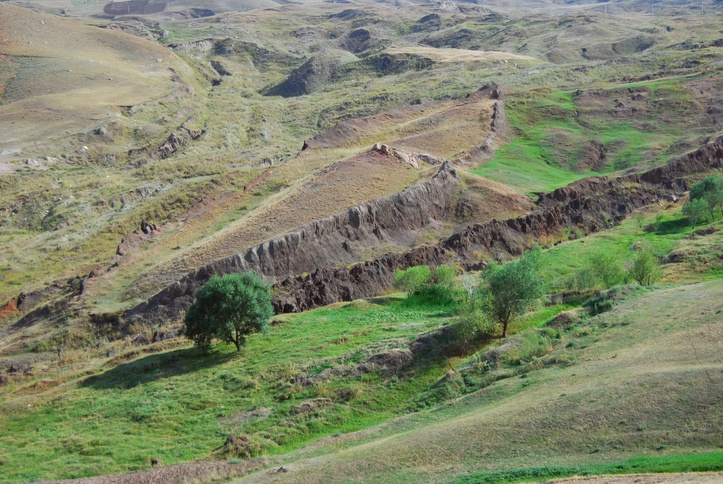
Ark investigators believe they have found traces of a wooden structure on Mount Ararat, also known as Agri Mountain, in Agri, Turkey. And Allah knows best.
هُوَ ٱلَّذِي يُنَزِّلُ عَلَىٰ عَبۡدِهِۦٓ ءَايَٰتِۢ بَيِّنَٰتٖ لِّيُخۡرِجَكُم مِّنَ ٱلظُّلُمَٰتِ إِلَى ٱلنُّورِۚ وَإِنَّ ٱللَّهَ بِكُمۡ لَرَءُوفٞ رَّحِيمٞ ٩ [الحـديد:9-9]
It is He Who sends down manifest Ayat to His slave (Muhammad, pbuh) that He may bring you out from darkness into light. And verily, Allah is to you full of kindness, Most Merciful.
Surah 57 Al-Hadid Verse 9
وَإِذۡ قَالَ عِيسَى ٱبۡنُ مَرۡيَمَ يَٰبَنِيٓ إِسۡرَٰٓءِيلَ إِنِّي رَسُولُ ٱللَّهِ إِلَيۡكُم مُّصَدِّقٗا لِّمَا بَيۡنَ يَدَيَّ مِنَ ٱلتَّوۡرَىٰةِ وَمُبَشِّرَۢا بِرَسُولٖ يَأۡتِي مِنۢ بَعۡدِي ٱسۡمُهُۥٓ أَحۡمَدُۖ فَلَمَّا جَآءَهُم بِٱلۡبَيِّنَٰتِ قَالُواْ هَٰذَا سِحۡرٞ مُّبِينٞ ٦ [الـصّـف:6-6]
And (remember) when Isa (Jesus), son of Maryam (Mary) said: ‘O Children of Israel! I am the Messenger of Allah to you, confirming the Taurah [(Torah) which came] before me, and giving glad tidings of a Messenger to come after me, whose name shall be Ahmad.’ But when he (Ahmad i.e. Muhammad, pbuh) came to them with clear proofs, they said: ‘This is plain magic.’
Surah 61 As-Saff Verse 6
- …Ahmad – It is the second name of Prophet Muhammad, pbuh and it (Ahmad) literally means: ‘One who praises Allah more than others’.
- Narrated Jubair bin Mutim that the Prophet (pbuh) said: ‘I have five names: I am Muhammad and Ahmad; I am Al-Mahi through whom Allah will eliminate Al-Kufr (infidelity); I am Al-Hashir who will be the first to be resurrected, the people being resurrected thereafter; and I am also Al-Aqib (i.e. there will be no Prophet after me)’
B
قَالُواْ حَرِّقُوهُ وَٱنصُرُوٓاْ ءَالِهَتَكُمۡ إِن كُنتُمۡ فَٰعِلِينَ ٦٨ قُلۡنَا يَٰنَارُ كُونِي بَرۡدٗا وَسَلَٰمًا عَلَىٰٓ إِبۡرَٰهِيمَ ٦٩ [الأنبياء:68-69]
They said: ‘Burn him and help your alihah (gods), if you will be doing’. We (Allah) said: ‘O Fire! Be you coolness and safety for Ibrahim (Abraham)!’
Surah 21 Al-Anbiya Verses 68-69
- Burn him and help your alihah, if you will be doing - So they gathered together a huge amount of wood. As-Suddi said, “If a woman was sick, she would make a vow that if she recovered, she would bring wood to burn Ibrahim. Then they made a hole in the ground and set it aflame, and it burned with huge sparks and immense flames. There had never been a fire like it. They put Ibrahim, pbuh, into a catapult, at the suggestion of a nomadic Kurdish man from Persia.”. Shuayb Al-Jabai said, “His name was Hayzan, and Allah caused the earth to swallow him up, and he will remain sinking into it until the Day of Resurrection. When they threw him, he said, ‘Sufficient for me is Allah, and He is the best disposer of affairs’”. Said bin Jubayr reported that Ibn Abbas said: “When Ibrahim was thrown into the fire, the keeper (angel) of the rain said: ‘When will I be commanded to send rain’ But the command of Allah was swifter. Allah said: O fire! Be you coolness and safety for Ibrahim! and there was no fire left on earth that was not extinguished”. Ibn Abbas and Abu Al-Aliyah said: “Were it not for the fact that Allah said, ‘and safety’, Ibrahim would have been harmed by its coldness”. Qatadah said: “On that day there was no creature that did not try to extinguish the fire for Ibrahim, except for the gecko”.
وَدَاوُۥدَ وَسُلَيۡمَٰنَ إِذۡ يَحۡكُمَانِ فِي ٱلۡحَرۡثِ إِذۡ نَفَشَتۡ فِيهِ غَنَمُ ٱلۡقَوۡمِ وَكُنَّا لِحُكۡمِهِمۡ شَٰهِدِينَ ٧٨ فَفَهَّمۡنَٰهَا سُلَيۡمَٰنَۚ وَكُلًّا ءَاتَيۡنَا حُكۡمٗا وَعِلۡمٗاۚ وَسَخَّرۡنَا مَعَ دَاوُۥدَ ٱلۡجِبَالَ يُسَبِّحۡنَ وَٱلطَّيۡرَۚ وَكُنَّا فَٰعِلِينَ ٧٩ وَعَلَّمۡنَٰهُ صَنۡعَةَ لَبُوسٖ لَّكُمۡ لِتُحۡصِنَكُم مِّنۢ بَأۡسِكُمۡۖ فَهَلۡ أَنتُمۡ شَٰكِرُونَ ٨٠ وَلِسُلَيۡمَٰنَ ٱلرِّيحَ عَاصِفَةٗ تَجۡرِي بِأَمۡرِهِۦٓ إِلَى ٱلۡأَرۡضِ ٱلَّتِي بَٰرَكۡنَا فِيهَاۚ وَكُنَّا بِكُلِّ شَيۡءٍ عَٰلِمِينَ ٨١ وَمِنَ ٱلشَّيَٰطِينِ مَن يَغُوصُونَ لَهُۥ وَيَعۡمَلُونَ عَمَلٗا دُونَ ذَٰلِكَۖ وَكُنَّا لَهُمۡ حَٰفِظِينَ ٨٢ [الأنبياء:78-82]
And (remember) Dawud (David) and Sulaiman (Solomon), when they gave judgment in the case of the field in which the sheep of certain people had pastured at night; and We were witness to their judgment. And We made Sulaiman to understand (the case); and to each of them We gave Hukm (right judgment of the affairs, and Prophethood) and knowledge. And We subjected the mountains and the birds to glorify Our Praises along with Dawud. And it was We Who were the doer (of all these things). And We taught him the making of metal coats of mail (for battle) to protect you in your fighting. Are you then grateful? And to Sulaiman (We subjected) the wind strongly raging, running by his command towards the land which We had blessed. And of everything We are All-Knower. And of the Shaytan (devils from the jinn) were some who dived for him, and did other work besides that; and it was We Who guarded them.
Surah 21 Al-Anbiya Verses 78-82
- ...when they gave judgment - There is no mention of this event in the Bible, nor in the Jewish literature. According to the Muslim commentators, it happened like this: The goats of one person entered into the field of another person at night. The latter brought his complaint to Prophet David who decided that the strayed goats should be given to the owner of the field. Prophet Solomon, however, differed with this and opined that the goats should remain with the owner of the field up to the time that the former tilled and prepared the field as before. In regard to this Allah says: We led Solomon to the right decision. As regards the legal aspect of the matter, we cannot say with certainty what the Islamic law in such a case is nor is there any tradition of the Prophet (pbuh) to explain or support it. That is why the jurists have differed about it.
It should, however, be noted that in this context, the incident has been cited to show that the Prophets were after all human beings in spite of their Allah given powers and abilities. In this case, Prophet David committed an error of judgment because he was not guided by Allah as was Prophet Solomon, though both of them were Prophets. In the succeeding passage the wonderful powers of both have been mentioned to show that they were Allah given and did not make anyone God.
Incidentally, we learn from this verse that if two judges give different decisions about one and the same case, both of them will be regarded as righteous, though the decision of only one of them will be correct, provided that both are duly qualified for sitting in judgment on the case. The Prophet (pbuh) has stated the same principle more elaborately. In a tradition of Bukhari, he is reported by Amr bin Aas to have said: ‘If a judge does his very best to arrive at the right decision, he will get a double reward in case of a right judgment and a single reward if his judgment is wrong’. According to another tradition, cited by Abu Daud and Ibn Majah, on the authority of Buraidah, he is reported to have said: ‘Judges are of three kinds and only one of them will go to Paradise: the one who recognizes the truth and decides according to it. On the other hand, the one who recognizes the truth but gives his decision against it, will go to Hell, and he too, who sits in judgment on a case without the necessary knowledge (and competence)’.
- …mountains and birds... - From the wording of the text, it is clear that the mountains and the birds were subjected to join Prophet David (pbuh) with him in glorifying Allah. This is also supported by Surah Sad Verse 19: We had subdued the mountains by Our command so that they praised Us with him (David) in the morning and evening, and the birds too, which gathered together and repeated Our praise with him. And, according to Surah Saba Verse 10: We commanded the mountains to repeat Our praise with him and also the birds to do the same. We are of the opinion that it means this: When Prophet David (pbuh) sang hymns of Allah’s praise and glory, in his rich and sweet voice, the mountains echoed back his melodies and the birds gathered round him and the whole scene became charming. Our interpretation is supported by this tradition: Once when Abu Musa Ashari, who had an extremely sweet voice, was reciting the Quran, the Prophet (pbuh) who was passing by, stood and listened to him for a long time. When he finished the recital, the Prophet (pbuh) remarked: ‘This man has been granted a portion of the melody of David’.
- …the making of metal coats - According to (Surah Saba Verses 10-11), it was like this: And We made the iron soft for him (and commanded him): Make coats of mail complete in every way, and arrange the plates properly. This shows that Allah had made Prophet David an expert in the use of iron, and had especially taught him the art of an armorer for defense purposes. This fact is confirmed by archaeological and historical researches, for according to these the Iron Age in the world started between 1200 and 1000 BC and this was precisely the period of Prophet David. At first the Hittites in Syria and Asia Minor, who flourished between 2000 and 1200 BC, discovered a method of melting and molding iron, but they guarded it as a close secret from the world, and it could not be put to common use. Later on, the Philistines came to know of it, but they too guarded it as a secret. The incessant defeats suffered by the Israelites at the hands of the Hittites and the Philistines before King Saul, were due mainly to the use of chariots of iron in their wars by the latter. In 1020 BC when Saul became ruler over the Israelites by Allah’s command, he subdued the Canaanites and recaptured most of Palestine. After him Prophet David (1004-965 BC) not only annexed the whole of Palestine and Jordan to the Israeli kingdom but a major portion of Syria as well. This was the time when the secret of armor making closely guarded by the Hittites and the Philistines, became well known and cheaper articles of daily use began to be made. The recent archaeological excavations conducted in Edom, to the south of Palestine, which is rich in iron ore, have brought to light furnaces for melting and molding iron. The furnace excavated near Ezion-geber, a port on the Gulf of Aqabah, in the time of Prophet Solomon, seems to have been built on the principles which are used in the modern blast furnaces. It is therefore natural that Prophet David must have first of all utilized this discovery for war purposes, because a little earlier the hostile Canaanites around his kingdom had made life really difficult for his people. The Bible also says that Prophet David was an expert in the art of melting and using iron for war purposes. (See Joshua 17: 16; Judges 1:19 and 4: 2-3).
- …the wind strongly raging - This is also explained in Surah Saba Verse 12: And for Solomon We had subjected the wind which covered a month’s journey in the morning and a month’s journey in the evening, and in Surah Sad Verse 36: So We subjected the wind to him. It blew softly at his bidding wherever he wanted it to blow. Thus, it is clear that the wind was so subjected to Prophet Solomon that the voyages to places at one month’s sea journey could be performed conveniently, because a favorable wind was always blowing for his ships to and from those places. It is confirmed by the Bible that Prophet Solomon had developed sea trade on a large scale (I Kings 10: 22). On the one side, his trade ships sailed from Ezion-geber, through the Red Sea, towards Yaman and other southern and eastern lands, and on the other, his naval fleet called Thar-shish, sailed on the Mediterranean to the western countries. The great furnace which he had built at Eziongeber for melting and molding ores extracted from the copper and iron mines in the Arabah in Edom, has been confirmed by modem archaeological researches as well. This molten iron and copper were used in building ships besides being put to other uses. The Quran refers to this when it says: And We made a fountain of molten copper to flow for him (Solomon) (Surah SabaVerse 12). As regards to the subjection of the wind, it may mean that Allah, by His special favor, had so arranged that the wind, and sea voyages in those days depended entirely on wind, was always favorable for Prophet Solomon’s fleet. But if we take the literal meaning of the verse, there will be no harm, for Allah is able to give such powers to any of His servants He pleases.
- …of the Shaytan - The subjection of Satans has been explained in (Surah Saba Verse 12-13). Incidentally, these verses of the Quran clearly show that the Satans and Jinns who worked for Prophet Solomon belonged to quite a different genus from human beings. It is obvious from the wording of the Quran and the context in which the story of the jinns has been related, that they were not human beings. Had they been so this would have been no special favor to Solomon, because human beings had already built the gigantic monuments like the pyramids of Egypt.
۞وَأَيُّوبَ إِذۡ نَادَىٰ رَبَّهُۥٓ أَنِّي مَسَّنِيَ ٱلضُّرُّ وَأَنتَ أَرۡحَمُ ٱلرَّٰحِمِينَ ٨٣ فَٱسۡتَجَبۡنَا لَهُۥ فَكَشَفۡنَا مَا بِهِۦ مِن ضُرّٖۖ وَءَاتَيۡنَٰهُ أَهۡلَهُۥ وَمِثۡلَهُم مَّعَهُمۡ رَحۡمَةٗ مِّنۡ عِندِنَا وَذِكۡرَىٰ لِلۡعَٰبِدِينَ ٨٤ [الأنبياء:83-84]
And (remember) Ayyub (Job) when he cried to his Lord: ‘Verily, distress has seized me, and You are the Most Merciful of those who show mercy’. So, We answered his call, and We removed the distress that was on him, and We restored his family to him (that he had lost) and the like thereof along with them as a mercy from Ourselves and a Reminder for all those who worship Us.
Surah 21 Al-Anbiya Verses 83-84
- The calamity of Job was not for the sake that he was unthankful of the divine blessings; on the contrary, it was for the thankfulness of the divine blessings to which ’Iblis envied and said to the presence of Allah:
“If Job thanked You so much it would be for the vast and comfortable life You have bestowed on him, and if You take the material merits of this world from him, he will never be grateful to You. Let me dominate over him concerning his affairs of this world so that it may be known that the matter is the same.”
In order that this event was evidence for all the followers of the path of the truth, Allah gave this permission to him. Iblis came and destroyed his wealth and children one after another, but, not only these painful events did not decrease the state of thankfulness of Job, but his gratitude was increased. Satan asked Allah that he would also dominate over his sheep and farming. This permission was given to him. Then he burnt Job’s farming utterly and destroyed his sheep, too. Again, the thankfulness of Job increased. Finally, Satan asked Allah to dominate over the body of Job, and to cause him a terrible sickness. This happened in a manner that Job could not move because of intense disease and suppuration, without the existence of the least infection in his intelligence and understanding. Precisely speaking, the favours of Job were taken one after another, but parallel with it the rank of gratitude increased in him. It happened that a group of monks came to visit him. They asked him what kind of great sin he had committed that he was in too much calamity. Thus, the scorn of people began and this became too much for Job. He replied to them that, by the Lord, he had never consumed a morsel but an orphan or a poor person was sitting at his food table; and there had come no worship of Allah to him but he had chosen its hardest form. It was at this time that Job had passed successfully all his examinations in the rank of patience and gratitude. He began supplicating and, with a very polite manner, and free from any complaint, he asked his Lord to help him mercifully for solving his problems.
It was then when the doors of the Divine mercy started to be opened and very soon his difficulties swiftly disappeared and the divine favours came back to him more than what there were before. As other prophets, at the time of invocation for the removal of his exhausting difficulties, Job was very polite and humble before Allah. He did not say anything to be even like a complaint. He only said that He might solve his problem because he knew that He is the Great and aware of the way of it. How his disease was cured has been explained in Surah Sad Verse 42: Stamp the ground with your foot: here is cool water for you to wash with and to drink. From this it appears that no sooner did he stamp the ground than a spring gushed forth. He took bath and drank the water and was cured of his disease. The nature of the treatment hints that he was suffering from a skin disease. This is confirmed by the Bible as well. Satan smote Job with sore boils from the sole of his foot unto his crown. (Job 2:7).
وَذَا ٱلنُّونِ إِذ ذَّهَبَ مُغَٰضِبٗا فَظَنَّ أَن لَّن نَّقۡدِرَ عَلَيۡهِ فَنَادَىٰ فِي ٱلظُّلُمَٰتِ أَن لَّآ إِلَٰهَ إِلَّآ أَنتَ سُبۡحَٰنَكَ إِنِّي كُنتُ مِنَ ٱلظَّٰلِمِينَ ٨٧ فَٱسۡتَجَبۡنَا لَهُۥ وَنَجَّيۡنَٰهُ مِنَ ٱلۡغَمِّۚ وَكَذَٰلِكَ نُۨجِي ٱلۡمُؤۡمِنِينَ ٨٨ [الأنبياء:87-88]
And (remember) Dhun-Nun (Yunus/Jonah) when he went off in anger, and imagined that We shall not punish him! But he cried through the darkness (saying): ‘La ilaha illa anta (none has the right to be worshipped but You, Allah), Glorified are You! Truly, I have been of the wrongdoers’. So, We answered his call, and delivered him from the distress. And thus, We do deliver the believers.
Surah 21 Al-Anbiya Verse 87-88
- …when he went off in anger - Prophet Jonah was sent to a community in Iraq. Renowned Islamic scholar, Ibn Kathir calls it Nineveh. As is the case with all the Prophets of Allah Jonah came to Nineveh to call the people to worship One Allah. He spoke of an Allah free from any partners, sons, daughters or co-equals and implored the people to stop worshipping idols and engaging in evil behaviour. However, the people refused to listen, and tried to ignore Jonah and his words of admonishment. They found Prophet Jonah irritating. The conduct of his people exasperated Jonah and he decided to leave. He gave a final warning that Allah would punish their arrogant behaviour but the people jeered and claimed that they were not afraid. Jonah’s heart filled with anger towards his foolish people. He decided to leave them to their inevitable misery. Jonah gathered a few meager belongings and decided to put as much distance as possible between himself and the people he had come to despise.
Ibn Kathir describes the scene in Nineveh immediately after Jonah left. The sky began to change colour, it turned as red as fire. The people were filled with fear and understood that they were only moments from destruction. The entire population of Nineveh gathered on a mountaintop and begged for Allah’s forgiveness. Allah accepted their repentance and removed the wrath that was hanging ominously over their heads. The sky returned to normal, and the people returned to their homes. They prayed that Jonah would come back to them and guide them to the straight path.
In the meantime, Jonah had boarded a ship in the hope that it would take him as far away from his heedless people as possible. The ship and its many passengers sailed into the calm seas. As the darkness fell around them, the sea suddenly changed. The wind began to blow violently and whipped up a storm of great magnitude. The boat shuddered and felt as if it were about to split into pieces. The people huddled in the dark and decided to throw their luggage overboard but it made no difference. The wind blew and the boat trembled. The passengers decided the weight was contributing to their dilemma so decided to cast lots to throw one of the passengers overboard. The waves were as high as mountains and the wild storm plunged the boat up and down as if it were as light as a matchstick. It was a sea faring tradition to cast lots by writing down all the names and drawing one person to be cast overboard. The name was drawn and it was Jonah, but the people were appalled. Jonah was known to be a pious and righteous man and they did not want to throw him into the angry sea. They cast again and yet again, but both times the name drawn was Jonah’s.
Jonah, the Prophet of Allah knew that this was not random. He understood that this was in destiny as predetermined by Allah so he looked at his fellow passengers and flung himself over the side of the boat. The passengers gasped in horror as Jonah fell into the water to be scooped up in the enormous jaws of a giant fish. When Jonah awoke from unconsciousness, he thought that he was dead and was lying in the darkness of his grave. He felt around him and realised that this was not a grave but the belly of the giant fish. He was afraid. He felt his heart beating deep in his chest and lurching towards his throat with every ragged breath he took. Jonah was sitting in strong, acidic, digestive juices that were eating away at his skin and he cried out to Allah. In the darkness of the fish, in the darkness of the sea and in the darkness of the night Jonah raised his voice and called out his distress to Allah. Jonah continued praying and repeating his supplication to Allah. He realized his wrongdoing and begged for Allah’s forgiveness. Prophet Muhammad (pbuh) tells us that the angels are drawn to humankind remembering Allah. This is what happened to Prophet Jonah; the angels heard his cry in the darkness and recognized his voice. They knew of Prophet Jonah and his honorable behaviour in the face of adversity. The angels approached Allah saying, “Isn’t that the sound of your righteous servant?” Allah answered yes. Allah heard Jonah’s call and saved him from his distress. Jonah remembered Allah in times of ease, so Allah remembered Jonah in his time of distress.
- …We removed the distress that was on him - At Allah’s command the giant fish surfaced and ejected Jonah onto the shore. Jonah’s body had been burned by the digestive juices; his skin could not protect him from the sun and the wind. Jonah was in pain and continued to cry out for protection. He continued to repeat his supplication and Allah caused a vine/tree to grow over him offering protection from the elements and providing Jonah with food.
And, verily, Jonah was one of the Messengers. When he ran to the laden ship, he agreed to cast lots and he was among the losers, then a big fish swallowed him and he had done an act worthy of blame. Had he not been of them who glorify Allah, he would have indeed remained inside its belly (the fish) until the Day of Resurrection. But We cast him forth on the naked shore while he was sick and We caused a plant of gourd to grow over him. And We sent him to a hundred thousand people or even more, and they believed, so We gave them enjoyment for a while. (Quran 37:139-148)
As Jonah slowly became well again, he realized that he needed to return to his people and continue the work Allah had proscribed for him. When Jonah recovered, he returned to Nineveh and was amazed at the change in his people. They informed Jonah of their fear when the sky had turned blood red and how they had gathered on the mountain to beg Allah’s forgiveness. Jonah lived amongst his people and taught them to worship One Allah and to live lives of piety and righteousness and more than 100,000 people living in Nineveh lived in tranquility...for a while.
- And thus do We deliver the believers - Allah said in Quran that He saved Jonah, and thus He will save the believers.
- The story of Prophet Jonah teaches us to have patience, especially in the face of adversity. It teaches us to remember Allah in the good times and the bad. It teaches us to remember Allah in this life so that He will remember us when we die. If we remember Allah when we are young, He will remember us when we are old and if we remember Allah when we are healthy, He will remember us when we are sick, sad, or tired. Distress can be relieved only, by turning to Allah with sincerity.
وَزَكَرِيَّآ إِذۡ نَادَىٰ رَبَّهُۥ رَبِّ لَا تَذَرۡنِي فَرۡدٗا وَأَنتَ خَيۡرُ ٱلۡوَٰرِثِينَ ٨٩ فَٱسۡتَجَبۡنَا لَهُۥ وَوَهَبۡنَا لَهُۥ يَحۡيَىٰ وَأَصۡلَحۡنَا لَهُۥ زَوۡجَهُۥٓۚ إِنَّهُمۡ كَانُواْ يُسَٰرِعُونَ فِي ٱلۡخَيۡرَٰتِ وَيَدۡعُونَنَا رَغَبٗا وَرَهَبٗاۖ وَكَانُواْ لَنَا خَٰشِعِينَ ٩٠ [الأنبياء:89-90]
And (remember) Zakariyya (Zechariah), when he cried to his Lord: ‘O My Lord! Leave me not single (childless), though You are the Best of the Inheritors’ So We answered his call, and We bestowed upon him Yahya (John), and cured his wife (to bear a child) for him. Verily, they used to hasten on to good deeds, and they used to call on Us with hope and fear, and used to humble themselves before Us.
Surah 21 Al-Anbiya Verse 89-90
- Kindly refer Verse 19:10-11earlier (Part A).
COMMENTS FROM VARIOUS SCHOLARS ABOUT THE QURAN
(about its linguistic excellence)
‘Whenever [Prophet] Muhammad [pbuh] was asked a miracle, as a proof of the authenticity of his mission, he quoted the composition of the Qur'an and its incomparable excellence as proof of its divine origin. And, in fact, even for those who are non-Muslims nothing is more marvellous than its language with such apprehensible plenitude and a grasping sonority. The ampleness of its syllables with a grandiose cadence and with a remarkable rhythm has been of much moment in the conversion of the most hostile and the most skeptic’.
(From Paul Casanova's article, "L'Enseignement de I'Arabe au College de France" [The Arab Teaching at the College of France])
‘It [the Qur'an] is a literal revelation of Allah, dictated to [Prophet] Muhammad [pbuh] by Gabriel, perfect in every letter. It is an ever-present miracle witnessing to itself and to [Prophet] Muhammad [pbuh], the Prophet of Allah. Its miraculous quality resides partly in its style, so perfect and lofty that neither men nor Jinn could produce a single chapter to compare with its briefest chapter, and partly in its content of teachings, prophecies about the future, and amazingly accurate information such as [Prophet] Muhammad [pbuh] could never have gathered of his own accord’.
(From Harry Gaylord Dorman's book, Towards Understanding Islam)
‘... We have a book absolutely unique in its origin, in its preservation… on the Substantial authority of which no one has ever been able to cast a serious doubt’.
(From Rev. Bosworth Smith's book, Muhammad and Muhammadanism)
‘I have read the Sacred Scriptures of every religion; nowhere have I found what I encountered in Islam: perfection. The Holy Qur'an, compared to any other scripture I have read, is like the Sun compared to that of a match. I firmly believe that anybody who reads the Word of Allah with a mind that is not completely closed to Truth will become a Muslim.
(Saifuddin Dirk Walter Mosig)
‘As a literary monument the Koran thus stands by itself, a production unique to the Arabic literature, having neither forerunners nor successors in its own idiom. Muslims of all ages are united in proclaiming the inimitability not only of its contents but also of its style’.
(Well-known Arabist Hamilton Gibb)
‘The influence of the Koran on the development of Arabic Literature has been incalculable, and exerted in many directions. Its ideas, its language, its rhymes pervade all subsequent literary works in greater or less measure. Its specific linguistic features were not emulated, either in the chancery prose of the next century or in the later prose writings, but it was at least partly due to the flexibility imparted by the Koran to the High Arabic idiom that the former could be so rapidly developed and adjusted to the new needs of the imperial government and an expanding society’.
(Well-known Arabist Hamilton Gibb)
‘All those who are acquainted with the Qur'an in Arabic agree in praising the beauty of this religious book; its grandeur of form is so sublime that no translation into any European language can allow us to appreciate it’.
(From Edward Montet's Traduction Francaise du Coran [French Translation of the Qur'an])
‘The Qur’an in its original Arabic dress has a ... beauty and charm of its own. Couched in concise and exalted style, its brief pregnant sentences, often rhymed, possess an expressive force and explosive energy which it is extremely difficult to convey by literal word for word translation’.
(From John Naish's book, The Wisdom of the Qur'an)
‘The Koran is universally allowed to be written with the utmost elegance and purity of language, in the dialect of Koreish, the most noble and polite of all Arabians… The style of the Koran is generally beautiful and fluent… and in many places, specifically where the majesty and attributes of God are described, sublime and magnificent… He succeeded so well, and so strangely captivated the minds of his audience, that several of his opponents thought it the effect of witchcraft and enchantment’.
(From George Sale's book, The Koran: The Preliminary Discourse)
‘It [the Qur'an] has a rhythm of peculiar beauty and a cadence that charms the ear. Many Christian Arabs speak of its style with warm admiration, and most Arabists acknowledge its excellence… indeed it may be affirmed that within the literature of the Arabs, wide and fecund as it is both in poetry and in elevated prose, there is nothing to compare with it’.
(From Alfred Guillaume's book, Islam)
‘In making the present attempt… to produce something which might be accepted as echoing however faintly the sublime rhetoric of the Arabic Koran, I have been at pains to study the intricate and richly varied rhythms which-apart from the message itself-constitute the Koran's undeniable claim to rank amongst the greatest literary masterpieces of mankind… This very characteristic feature... has been almost totally ignored by previous translators; it is therefore not surprising that what they have wrought sounds dull and flat indeed in comparison with the splendidly decorated original’.
(From Arthur J. Arberry's book, The Koran Interpreted)
‘However often we turn to it [the Qur’an] …, it soon attracts, astounds, and in the end enforces our reverence… Its style, in accordance with its contents and aim is... ever and truly sublime-Thus this book will go on exercising through all ages a most potent influence’.
(A saying of Goethe quoted in T. P. Hughes' book, Dictionary of Islam)