AYAT IN EARTHLY AND HEAVENLY CALAMITIES
A
وَقَالُواْ مَهۡمَا تَأۡتِنَا بِهِۦ مِنۡ ءَايَةٖ لِّتَسۡحَرَنَا بِهَا فَمَا نَحۡنُ لَكَ بِمُؤۡمِنِينَ ١٣٢ فَأَرۡسَلۡنَا عَلَيۡهِمُ ٱلطُّوفَانَ وَٱلۡجَرَادَ وَٱلۡقُمَّلَ وَٱلضَّفَادِعَ وَٱلدَّمَ ءَايَٰتٖ مُّفَصَّلَٰتٖ فَٱسۡتَكۡبَرُواْ وَكَانُواْ قَوۡمٗا مُّجۡرِمِينَ ١٣٣ [الأعراف:132-133]
They said (to Musa): ‘Whatever Ayat you may bring to us, to work there with your sorcery on us, we shall never believe in you’. So, We sent on them: the flood, the locusts, the lice, the frogs, and the blood (as a succession of) manifest signs, yet they remained arrogant and they were of those people who were Mujrimun (criminals, polytheists and sinners).
Surah 7 Al-Araf Verses 132-133
- The following Ayat were shown by Musa (Moses, pbuh) to Firaun (Pharaoh):
- The rod and the shining hand – in Pharaoh’s court.
- Pharaoh’s magicians were publicly defeated in the tournament and Allah’s Prophet prevailed. Once defeated, these magicians embraced the faith.
- Exactly as forewarned by Prophet Moses, Egypt was overtaken by a severe famine, one which ended only when Moses prayed to Allah for its end.
- Moses’ other prediction also came true. For the whole of Egypt was successively afflicted by a series of heavy downpours, hailstorms and thunder and lightning which came to an end only as a result of Moses’ prayer to Allah.
- As foretold by Moses, swarm of locusts hung over the entire country. When Moses prayed to Allah, the disaster ended.
- In accord with Moses’ prediction, lice and bugs infested the whole country, putting men and animals to enormous inconvenience. Worse, these pets destroyed food stores. The Egyptians beseeched Prophet Moses to pray to Allah to bring an end to these.
- As Moses had warned, every nook and corner of Egypt was infested with frogs. This great nuisance for the Egyptians only ended after Moses’ prayer.
- As foretold by Moses, the Egyptians were facing a scourge of blood. Well water, springs, canals and pools all turned into blood. As a result, fish died, and water supplies came to a standstill - for a whole week drinking water becoming too foul to use. It was only after Moses prayed that Allah that they were delivered from this scourge and clean drinking water became available to them.
فَٱنتَقَمۡنَا مِنۡهُمۡ فَأَغۡرَقۡنَٰهُمۡ فِي ٱلۡيَمِّ بِأَنَّهُمۡ كَذَّبُواْ بَِٔايَٰتِنَا وَكَانُواْ عَنۡهَا غَٰفِلِينَ ١٣٦ [الأعراف:136-136]
So, We took retribution from them. We drowned them in the sea, because they denied Our Ayat and were heedless about them.
Surah 7 Al-Araf Verse 136
- Allah states that when the people of Firaun (Pharaoh) rebelled and transgressed, even though He inflicted them with consecutive signs, one after another, He took retribution from them by drowning them in the sea, that Musa parted by Allah’s Power, and he and the Children of Israel passed through. In their pursuit, Firaun and his soldiers went in the sea chasing Musa and his people. When they all had gone inside the water, the sea closed in on them and they all drowned, because they belied the Ayat of Allah.
وَيَٰقَوۡمِ هَٰذِهِۦ نَاقَةُ ٱللَّهِ لَكُمۡ ءَايَةٗۖ فَذَرُوهَا تَأۡكُلۡ فِيٓ أَرۡضِ ٱللَّهِۖ وَلَا تَمَسُّوهَا بِسُوٓءٖ فَيَأۡخُذَكُمۡ عَذَابٞ قَرِيبٞ ٦٤ فَعَقَرُوهَا فَقَالَ تَمَتَّعُواْ فِي دَارِكُمۡ ثَلَٰثَةَ أَيَّامٖۖ ذَٰلِكَ وَعۡدٌ غَيۡرُ مَكۡذُوبٖ ٦٥ فَلَمَّا جَآءَ أَمۡرُنَا نَجَّيۡنَا صَٰلِحٗا وَٱلَّذِينَ ءَامَنُواْ مَعَهُۥ بِرَحۡمَةٖ مِّنَّا وَمِنۡ خِزۡيِ يَوۡمِئِذٍۚ إِنَّ رَبَّكَ هُوَ ٱلۡقَوِيُّ ٱلۡعَزِيزُ ٦٦ وَأَخَذَ ٱلَّذِينَ ظَلَمُواْ ٱلصَّيۡحَةُ فَأَصۡبَحُواْ فِي دِيَٰرِهِمۡ جَٰثِمِينَ ٧ [هود:64-67]
‘And O my people! This she-camel of Allah is a sign to you, so leave her to feed (graze) in Allah’s land, and touch her not with evil, lest a near torment should seize you’. But they killed her. So, he said: ‘Enjoy yourselves in your homes for three days. This is a promise that will not be belied’. So, when Our Command came, We saved Salih and those who believed with him by a mercy from Us, and from the disgrace of that Day. Verily, your Lord – He is All-Strong, the All-Mighty. And As-Saihah (torment – awful cry) overtook the wrong doers, so they lay (dead), prostrate in their homes.
Surah 11 Hud Verses 64-67
- The story of Salih’s she-camel has also been reiterated in Surahs Ash-Shuara and Al-Qamar as well. Salih (pbuh) said to the people that he would ask their idols something and they also should ask something from His Lord. Whoever, provides the right answer, could be the object of his and their worship. The idol worshippers accepted and their request was for a pregnant she-camel to come out of the mountain just then and there. Allah accepted their request and a camel, meeting all those requirements, came out of the mountain. This she-camel of Salih was extraordinary in many respects:
1. It came out of the innermost part of the mountain.
2. It was pregnant without having any contact with a male camel.
3. For one full day, she had drunk of the water of that village.
4. It provided a daily supply of milk that was sufficient for meeting the needs of the people of the area.
5. The people had no responsibilities towards her.
6. It served as a reason and as a miracle which was quite tangible and understandable for the people.
Through traditional narrations we are informed that only one person had killed the she-camel. Despite this, the Quran says: ‘aqaruha’ which means that all of them killed her. This indication signifies that there had been a consensus of opinion among them about the killing. From the Islamic point of view, the ideological bond between individuals causes them to be responsible for the sins of single individuals within the context of that ideology.
وَلَقَدۡ كَذَّبَ أَصۡحَٰبُ ٱلۡحِجۡرِ ٱلۡمُرۡسَلِينَ ٨٠ وَءَاتَيۡنَٰهُمۡ ءَايَٰتِنَا فَكَانُواْ عَنۡهَا مُعۡرِضِينَ ٨١ وَكَانُواْ يَنۡحِتُونَ مِنَ ٱلۡجِبَالِ بُيُوتًا ءَامِنِينَ ٨٢ فَأَخَذَتۡهُمُ ٱلصَّيۡحَةُ مُصۡبِحِينَ ٨٣ فَمَآ أَغۡنَىٰ عَنۡهُم مَّا كَانُواْ يَكۡسِبُونَ ٨٤ [الحجر:80-84]
And verily, the Dwellers of Al-Hijr (the rocky tract) denied the Messengers. And We gave them Our signs, but they were averse to them. And they used to hew out dwellings from the mountains, (feeling themselves) secure. But As-Saihah (torment - awful cry) overtook them in the early morning (of the fourth day of their promised punishment days). And all that they used to earn availed them not.
Surah 15 Al-Hijr Verses 80-84
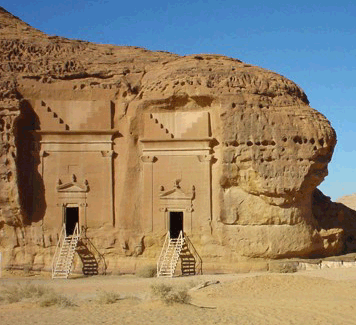
- The Thamud are another ancient Arab people, next only to the 'Ad in fame. Legends relating to them were quite popular in pre-Islamic Arabia. In fact, poetry and orations of the pre-Islamic (Jahiliyah) period abound with references to them. They are also mentioned in the Assyrian inscriptions and in the Greek, Alexandrian and Roman works of history and geography. Some descendants of the Thamud survived to a little before the birth of Jesus. The Roman historians mention that they entered into the Roman army and fought against the Nabateans, their arch-enemy. The Thamud lived in the north-western part of Arabia which is still called al-Hijr. In the present time there is a station on the Hijaz railway, between Madina and Tabuk. This is called Mada'in Salih, which was the capital town of Thamud and was then known as al-Hijr, the rock-hewn city. This has survived to this day and is spread over thousands of acres. It was once inhabited by no less than half a million people. At the time of the revelation of the Quran Arab trade caravans passed through the ruins of this city. (Kindly refer to Verse 26:153-158 ahead).
While the Prophet (pbuh) was on his way, to Tabuk, he directed the Muslims to look upon these monuments and urged them to learn the lessons which sensible persons ought to learn from the ruins of a people that had been destroyed because of their evil-doing. The Prophet (pbuh) also pointed to the well from which the she-camel of the Prophet Salih used to drink. He instructed the Muslims to draw water from that well alone and to avoid all other wells. The mountain pass through which that she-camel came to drink was also indicated by the Prophet (pbuh). The pass is still known as Fajj al-Naqah. The Prophet (pbuh) then gathered all the Muslims who had been directed to look around that city of rocks, and addressed them. He drew their attention to the tragic end of the Thamud, who by their evil ways had invited Allah's punishment upon themselves. The Prophet (pbuh) asked them to hastily move ahead for the place was a grim reminder of Allah's severe punishment and he hence called for reflection and repentance.
When Ibn Batutah reached there in the eighth century of Hijrah on his way to Makkah, he wrote: ‘I have seen the buildings of Thamud hewed into red mountains; the paintings look so bright as if they have been put on only recently, and rotten bones of human beings are found in them even today’.
وَنُوحًا إِذۡ نَادَىٰ مِن قَبۡلُ فَٱسۡتَجَبۡنَا لَهُۥ فَنَجَّيۡنَٰهُ وَأَهۡلَهُۥ مِنَ ٱلۡكَرۡبِ ٱلۡعَظِيمِ ٧٦ وَنَصَرۡنَٰهُ مِنَ ٱلۡقَوۡمِ ٱلَّذِينَ كَذَّبُواْ بَِٔايَٰتِنَآۚ إِنَّهُمۡ كَانُواْ قَوۡمَ سَوۡءٖ فَأَغۡرَقۡنَٰهُمۡ أَجۡمَعِينَ ٧٧ [الأنبياء:76-77]
And (remember) Nuh (Noah) when he cried (to Us) aforetime. We answered to his invocation and saved him and his family from the great distress. We helped him against the people who denied Our Ayat. Verily, they were a people given to evil. So, We drowned them all.
Surah 21 Al-Anbiya Verses 76-77
- Kindly refer Verse 26:119-121 ahead
فَقُلۡنَا ٱذۡهَبَآ إِلَى ٱلۡقَوۡمِ ٱلَّذِينَ كَذَّبُواْ بَِٔايَٰتِنَا فَدَمَّرۡنَٰهُمۡ تَدۡمِيرٗا ٣٦ وَقَوۡمَ نُوحٖ لَّمَّا كَذَّبُواْ ٱلرُّسُلَ أَغۡرَقۡنَٰهُمۡ وَجَعَلۡنَٰهُمۡ لِلنَّاسِ ءَايَةٗۖ وَأَعۡتَدۡنَا لِلظَّٰلِمِينَ عَذَابًا أَلِيمٗا ٣٧ وَعَادٗا وَثَمُودَاْ وَأَصۡحَٰبَ ٱلرَّسِّ وَقُرُونَۢا بَيۡنَ ذَٰلِكَ كَثِيرٗا ٣٨ وَكُلّٗا ضَرَبۡنَا لَهُ ٱلۡأَمۡثَٰلَۖ وَكُلّٗا تَبَّرۡنَا تَتۡبِيرٗا ٣٩ وَلَقَدۡ أَتَوۡاْ عَلَى ٱلۡقَرۡيَةِ ٱلَّتِيٓ أُمۡطِرَتۡ مَطَرَ ٱلسَّوۡءِۚ أَفَلَمۡ يَكُونُواْ يَرَوۡنَهَاۚ بَلۡ كَانُواْ لَا يَرۡجُونَ نُشُورٗا ٤٠ [الفرقان:36-40]
And indeed, We gave Musa (Moses) the Scripture (Torah) and placed his brother Harun (Aaron) with him as a helper. And We said: ‘Go you both to the people who have denied Our Ayat’. Then We destroyed them with utter destruction. And Nuh’s (Noah’s) people, when they denied the Messengers, We drowned them, and We made them as a sign for mankind. And We have prepared a painful torment for the Zalimun (wrongdoers). And (also) Ad and Thamud, and the dwellers of Ar-Rass, and many generations in between. And for each (of them) We put forward examples (as proofs and lessons) and each (of them) We brought to utter ruin. And indeed they have passed by the town (of Prophet Lut) on which was rained the evil rain. Did they (disbelievers) not then see it? Nay! But they used not to expect any resurrection.
Surah 25 Al-Furqan Verses 36-40
- Kindly refer Verse 29:40 ahead (Part B).
فَأَنجَيۡنَٰهُ وَمَن مَّعَهُۥ فِي ٱلۡفُلۡكِ ٱلۡمَشۡحُونِ ١١٩ ثُمَّ أَغۡرَقۡنَا بَعۡدُ ٱلۡبَاقِينَ ١٢٠ إِنَّ فِي ذَٰلِكَ لَأٓيَةٗۖ وَمَا كَانَ أَكۡثَرُهُم مُّؤۡمِنِينَ ١٢١ [الشعراء:119-121]
And We saved him (Nuh/Noah) and those with him in the laden ship. Then We drowned the rest (disbelievers) thereafter. Verily, in this is indeed a sign, yet most of them are not believers.
Surah 26 Ash-Shuara Verses 119-121
- The details of the Flood that overtook the people of Nuh (Noah) bring forth the following scenario: Water rose from cracks in the earth; there was not a crack from which water did not rise. Rain poured from the sky in quantities never seen before on the earth. Water continued pouring from the sky and rising from the cracks; hour after hour level rose. The seas and waves invaded the land. The interior of the earth moved in a strange way, and the ocean floor lifted suddenly, flooding the dry land.
- Archaeological Evidence for the Flood - If a natural disaster, sudden migration or war, for example, should result in the destruction of a civilisation, traces of that civilisation are well-protected. The houses people lived in and the objects people used in their daily lives are quickly buried under the earth. These are thus conserved for long periods without being touched by human hands. For students of the past, they provide invaluable clues when they are finally brought to light. In recent times, the discovery of a large amount of evidence concerning Nuh's Flood has come to the attention of the world's most prominent archaeologists and historians. The Flood, believed to have occurred around 3000 B.C., destroyed an entire civilization and allowed an entirely new one to be founded in its place. That evidence of the Flood was preserved for thousands of years provides a deterrent to those people who have come after this punishment of the wicked.
Many excavations have been carried out to study the flood, which was localized on and around the Mesopotamian Plains. Digs in the region have encountered traces of a flood in four main cities on the Mesopotamian Plain: Ur, Erech, Kish and Shuruppak. Excavations in these cities have shown that these cities were hit by flooding around 3000 B.C. The oldest of the remains of the civilization in the city of Ur-today known as Tell al Muqqayar-date back to 7000 B.C. The city of Ur, one of the oldest human civilizations, was a settlement region in which consecutive civilizations were born and died. The archaeological discoveries which came from study of Ur unearthed information which clearly informs us that a civilization there was interrupted by a terrible flood and that new civilizations gradually sprang up in its place.
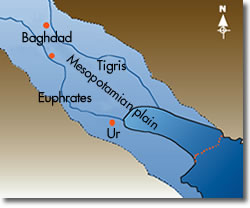
According to the archaeological findings, Nuh’s Flood took place on the Mesopotamian Plain, the shape of which was very different to that of today. The present-day limits of the plain are shown with a dotted red line in the above diagram. The wide region beyond that line is known to have been part of the sea at that time.
Leonard Woolley led a joint excavation by the British Museum and the University of Pennsylvania in the desert area between Baghdad and the Persian Gulf. When after several days some of Woolley's workmen called out to him, “We are on ground level”, he let himself down onto the floor of the shaft to satisfy himself. Woolley's first thought was “This is it at last”. It was sand, pure sand of a kind that could only have been deposited by water. They decided to dig on and make the shaft deeper. Deeper and deeper went the spades into the ground: three feet, six feet - still pure mud. Suddenly, at ten feet, the layer of mud stopped as abruptly as it had started. Under this clay deposit of almost ten feet thick, they had struck fresh evidence of human habitation…The Flood - that was the only possible explanation of this great clay deposit beneath the hill at Ur, which quite clearly separated two epochs of settlement…
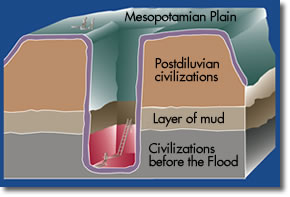
Excavations in the Mesopotamian Plain revealed the presence of a layer of mud and clay at a depth of 2.5 metres (8 feet). This stratum in all probability consisted of clay carried by the waters of the Flood, and is to be found only under the Mesopotamian Plain.
Microscopic analysis revealed that this great clay deposit beneath the hill at Ur had accumulated here as a result of a flood, one so large and powerful as to annihilate ancient Sumerian civilization. The epic of Gilgamesh and the story of Nuh were united in this shaft dug deep under the Mesopotamian desert. Max Mallowan related the thoughts of Leonard Woolley, who said that such a huge mass of alluvium formed in a single time-slice, could only be the result of a huge flood disaster. Woolley also described the flood layer, which separated the Sumerian city of Ur from the city of Al-Ubaid whose inhabitants used painted pottery, as the remains of the Flood. These facts demonstrated that the city of Ur was one of those places affected by the Flood. The German archaeologist Werner Keller also described the importance of the excavation in question. He has gone on record to say that the yield of city-remains beneath a muddy layer in the archaeological excavations made in Mesopotamia proves that there was indeed a flood in the region.
Another Mesopotamian city to bear the traces of the Flood is the “Kish of the Sumerians”, the present-day Tall Al-Uhaimer. Ancient Sumerian records describe this city as the “seat of the first post diluvian dynasty”.
The southern Mesopotamian city of Shuruppak, the present-day Tall Fa'rah, also bears evident traces of the Flood. Archaeological investigations were carried out in this city between 1920 and 1930 by Erich Schmidt of the University of Pennsylvania. These excavations uncovered three layers of habitation which stretched from the late prehistoric period to the 3rd dynasty of Ur (2112-2004 B.C.). The most distinctive finds were ruins of well-built houses along with cuneiform tablets of administrative records and lists of words, indicating a highly developed society already in existence toward the end of the 4th millennium B.C. When one examines the opinions of these learned scientists, it is clear that they believe that the evidence which supports the Flood account is overwhelming. According to this opinion, this terrible flood took place in or around 3000-2900 B.C. According to Mallowan's account, 4-5 metres below the earth, Schmidt had reached a yellow soil layer (formed by flood) made up of a mixture of clay and sand. This layer was closer to the plain level than the tumulus profile and it could be observed all around the tumulus. Schmidt defined this layer made up of a mixture of clay and sand, which remained from the time of Ancient Kingdom of Cemdet Nasr, as “a sand with its origins in the river” and associated it with Nuh's Flood. In short, the excavations in the city of Shuruppak once again revealed the traces of a flood around 3000-2900 B.C. Together with the other cities Shuruppak was in all probability struck by the Flood.
The last settlement containing evidence of being struck by the Flood is the city of Erech, south of Shuruppak. Today, it is known as Tall Al-Warka. As in the other cities, a flood layer was also discovered here. Like the other cities, this flood layer has been dated to 3000-2900 B.C.
The Euphrates and Tigris rivers divide Mesopotamia from one end to the other. It appears that in the era in question, these two rivers overflowed, together with all other water sources, great and small, combining with rainwater to create an enormous flood. This phenomenon is reported in these terms in the Quran:
So, We opened the gates of heaven with water pouring forth. And We caused the springs to gush forth from the earth. So, the waters (of the heaven and the earth) met for a matter predestined. (Surah 54:11-12)
When the clues obtained from the research are evaluated, they indicate that the Flood covered all of the Mesopotamian plains. When we look at the succession of cities-Ur, Erech, Shuruppak and Kish-that bear the traces of the Flood, we see that they all lie in a line. In addition, the geographical structure of the Mesopotamian Plain was very different in around 3000 B.C. compared to its constitution today. At that time, the bed of the river Euphrates was much further to the east than it is today, lying on a line passing through Ur, Erech, Shuruppak and Kish. It therefore appears that the Euphrates burst its banks in this region and destroyed the four cities. (Allah knows best.)
Allah imparted the news of Nuh's Flood in order that it should act as a deterrent for those of that time and a valuable lesson to those who were to come after, people like us. By means of the Prophets and books, He sent guidance to different societies. However, each time the texts which were brought to the people by Allah's Prophets were corrupted from their original forms. Men added cultural, mystical or mythological elements to the true account of the Flood. The Quran, because it is from Allah and because He preserves it eternally, is the only source compatible with the archaeological findings of the past.
قَالُواْ سَوَآءٌ عَلَيۡنَآ أَوَعَظۡتَ أَمۡ لَمۡ تَكُن مِّنَ ٱلۡوَٰعِظِينَ ١٣٦ إِنۡ هَٰذَآ إِلَّا خُلُقُ ٱلۡأَوَّلِينَ ١٣٧ وَمَا نَحۡنُ بِمُعَذَّبِينَ ١٣٨ فَكَذَّبُوهُ فَأَهۡلَكۡنَٰهُمۡۚ إِنَّ فِي ذَٰلِكَ لَأٓيَةٗۖ وَمَا كَانَ أَكۡثَرُهُم مُّؤۡمِنِينَ ١٣٩ [الشعراء:136-139]
They (Ad) said: ‘It is the same to us whether you preach or be not of those who preach. This is no other than the false tales and religion of the ancients. And we are not going to be punished’. So, they denied him (Hud, pbuh), and We destroyed them. Verily, in this is indeed a sign, yet most of them are not believers.
Surah 26 Ash-Shuara Verses 136-139
- The details of the destruction that overtook this nation, as mentioned in the Quran bring forth the following scenario: a sudden windstorm rises at a distance; people see it coming towards their valley and think it is a cloud which promises them rainfall. They even begin to celebrate, expecting that there will be a downpour. But it is Allah’s wrath which descends upon them. For eight days and seven nights, tempestuous winds play havoc with everything. These winds are so scorching and dry that they destroy all that stands in their path. The tempest raged until every single inhabitant of that iniquitous nation was done away with and only the ruins of this hapless area remained to tell the story of the catastrophe that overtook them; today even these ruins have disappeared. The whole territory of Ahqaf has been reduced to a desert.
- According to Ibn Ishaq, the Ad were settled in a region extending from Oman to Yemen. According to the Quran, al-Ahqaf was their homeland. They then moved out from their land and established control over neighboring lands. Ahqaf was used as a special term for the Empty Quarter in the Arabian Desert which to this day has remained unsuitable for habitation. While looking at al-Ahqaf region, it is hard to believe that a mighty and glorious civilization once flourished there. In 1843, a Bavarian German soldier managed to reach its southern edge. He pointed out that if one looks at it from Hadramawt’s northern plateau, the desert appears to be one thousand feet deep valley. The Arab Bedouins are mortally afraid of this desert and are not prepared to go there at all. According to the above-mentioned traveler, no local person was willing to escort him there, so he went there alone. According to him, the sand is like fine powder and anything dropped into it sinks and is decomposed in no time. When he threw a plummet into the desert from a distance, it sank into it within five minutes and the end of the rope with which it was attached also decomposed.
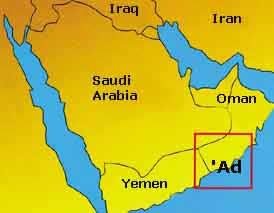
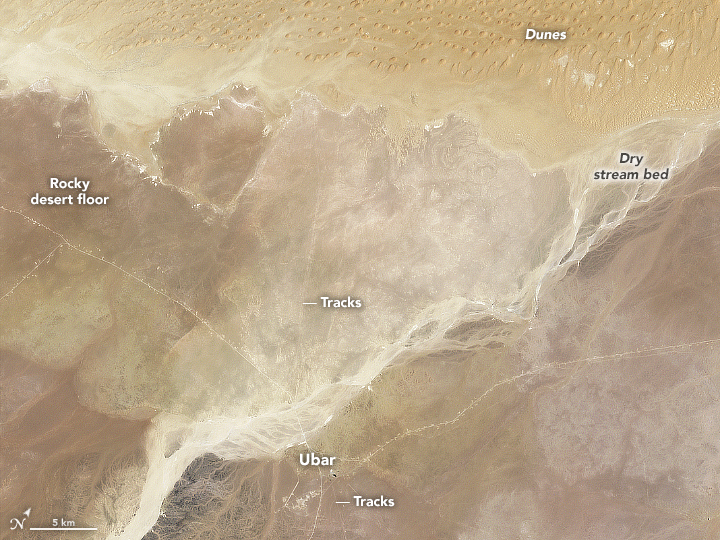
The remains of the city of Ubar, where 'Ad lived, were found somewhere near to the coasts of Oman.
- Quran emphasizes that these people had built a significant city with very huge pillars in Al-Ahqaf region:
Saw you (O Muhammad, pbuh) not how your Lord dealt with Ad (people), Of Iram (who were very tall) like (lofty) pillars, The like of which were not created in the land? (Surah 89 Verse 6-8)
But at the time of Quran’s revelation from 1400 years there was no sign to this city, so some people have questioned this city and said it was a legendary city, but from about two decades there was a breakthrough in proving the facts mentioned by Quran about this amazing city.
It was Nicholas Clapp, a noted documentary filmmaker and a lecturer on archaeology, who found this legendary city mentioned in the Quran. Being an Arabophile and a winning documentary film maker, Clapp had come across a very interesting book during his research on Arabian history. This book was Arabia Felix, written by the English researcher Bertram Thomas in 1932. Arabia Felix was the Roman designation for the southern part of the Arabian Peninsula which today includes Yemen and much of Oman. The Greeks called this area “Eudaimon Arabia” and medieval Arab scholars called it “Al-Yaman as-Saeed”. All of these names mean “Happy Yemen”, because the people living in that region used to serve as middlemen in the lucrative spice trade between India and places north of the Arabian Peninsula. In addition, the people living in this region produced and distributed “frankincense”, an aromatic resin from rare trees. The English researcher Thomas described these tribes at length and claimed that he found the traces of an ancient city founded by one of these tribes. This was the city known as “Ubar” by the Bedouins. In one of the trips, he made to the region, the Bedouins living in the desert had shown him well-worn tracks and stated that these tracks led toward the ancient city of Ubar. Thomas, who showed great interest in the subject, died before being able to complete his research.
Clapp, who examined what the English researcher Thomas wrote, was convinced of the existence of the lost city described in the book. He quickly started his research, attempting to carry on from where Thomas had left the project. Clapp took two different approaches in his mission to prove the existence of Ubar. First, he found the tracks which the Bedouins said existed and in order to aid his work, he applied to NASA to provide the satellite images of the area. After a long struggle, he succeeded in persuading the authorities to take the pictures of the region he so craved.
Clapp went on to study the ancient manuscripts and maps in the Huntington library in California. Here, he quickly found a map covering the region he was studying so intensely. He found a map drawn by the Greek-Egyptian geographer Ptolemy in 200, which showed the location of an old city found in the region and the paths which actually led up to this city. Meanwhile, his research received a further boost when he received the news that satellite photographs had been taken by members of NASA. In the pictures, caravan trails, which were virtually invisible to the naked eye, caught Clapp's attention. They could only be seen as a whole from the sky. Comparing these pictures with the old map he had in hand, Clapp immediately realized that the trails in the old map corresponded with the trails in the pictures taken from the satellite. The final destination of these trails was a broad site understood to have once been a city.
Finally, thanks to the work of Clapp and Thomas before him-along with a helping hand from NASA researchers-the location of this legendary city, which had been subject of the stories told orally by the Bedouins, was discovered. After a short while, excavations began and remains of an old city were brought to light. This lost city was dubbed “Ubar, the Atlantis of the Sands”.
But let us ask: What was it that proved this to be the city of the people of 'Ad mentioned in the Quran? From the very beginning of the study of the site, it was understood that this ruined city belonged to 'Ad. Researchers discovered Iram's pillars, which were specifically mentioned in the Quran, in the form of towers in the land of the people of 'Ad. Dr. Juris Zarins, a member of the research team leading the excavation, said that since the towers were alleged to be the distinctive feature of Ubar and since Iram was mentioned as having towers or pillars, this then was the strongest proof so far that the site they had unearthed was Iram, the city of 'Ad described in the Quran.
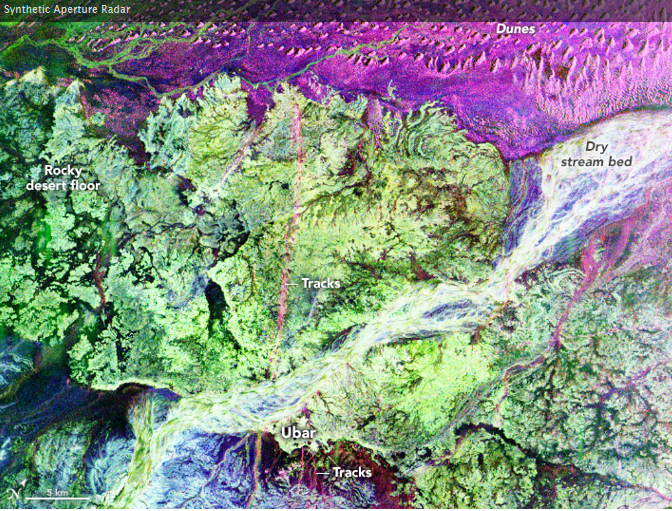
The location of the city of ‘Ad was discovered by photographs taken from the Space Shuttle. On the photograph, the place where caravan trails intersect is marked, and it points towards Ubar.
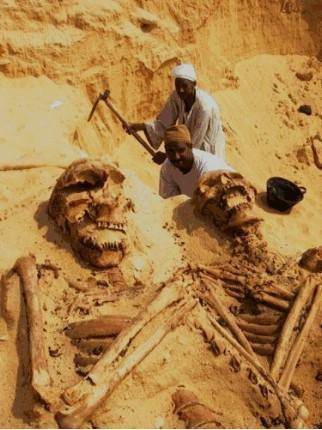
As Allah states in the Quran (Verse 89:6-8) that He had created people of phenomenal size the like of which He has not created since. It is believed that they were very tall, big, and very powerful, such that they could put their arms around a tree trunk and uproot it. Recent gas exploration activity in the south east region of the Arabian Desert uncovered skeletal remains of a human of phenomenal size. Scholars of Saudi Arabia believe these to be the remains of the people of Ad. See the picture and note the size of the two men standing in the picture in comparison to the size of the skeleton.
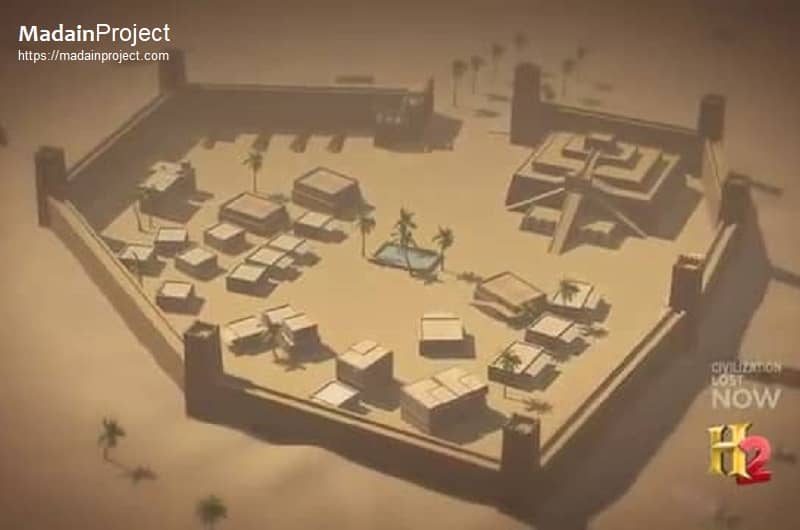
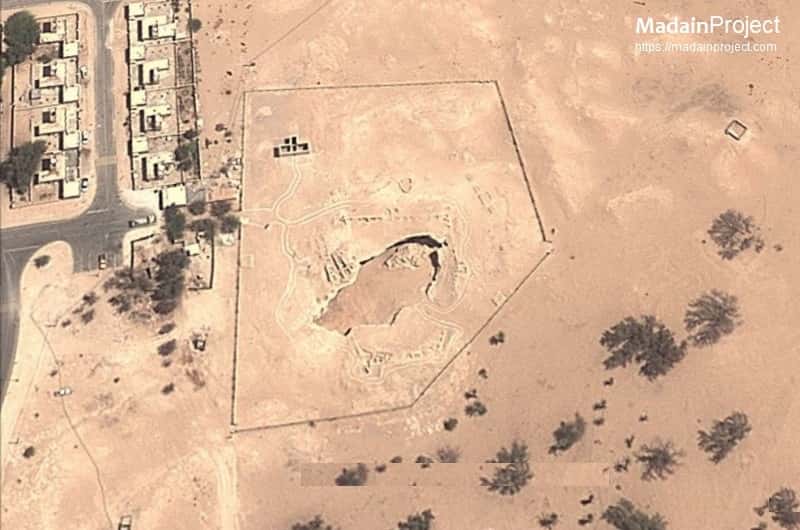
- In the Quran, ‘Ad are said to have perished through a “furious wind”. Thought to be the remains of ‘Ad, “The Atlantis of the Sands, Ubar” has been recovered from under a layer of sand meters thick. It seems that the furious wind lasting for “seven nights and eight days” by the Quran’s description, accumulated tons of sand on top of the city and buried people under the earth alive. Excavations made in Ubar point to the same possibility. The French magazine, Ça M’Interesse states the following: “Ubar was buried under a sand of twelve meters thickness as a result of a storm”.
|
- In the Quran, interesting information is given in one of the verses recounting Ad. While warning his people, Prophet Hud (pbuh) draws their attention to the springs and gardens with which Allah had endowed them:
‘He has aided you with cattle and children. And gardens and springs’ (Surah 26 Verses 133-134)
But as we have noted before, Ubar, which has been identified with the city of Iram or any other place which is likely to have been the residence of ‘Ad, is totally covered with desert today. So, why did Hud (pbuh) use such an expression while warning his people? The answer is hidden in the climatic changes of history. Historical records reveal that these areas which have turned into desert now, had once been very productive and green lands. A great part of the region was covered with green areas and springs as stated in the Quran, less than a few thousand years ago, and the people of the region made use of these endowments. The forests softened the harsh climate of the region and made it more habitable. Deserts existed, but did not cover such a vast area as today. In Southern Arabia, important clues have been acquired in the regions where ‘Ad lived, which could cast a light upon this subject. These show that the inhabitants of that region used a highly developed irrigation system. This irrigation most probably served a single purpose: agriculture. In those regions, which are not appropriate for life today, people once cultivated the land. Satellite imaging has also revealed an extensive system of ancient canals and dams used in irrigation around Ramlat as Sab’atayan which is estimated to have been able to support 200,000 people in the associated cities. As Doe, one of the researchers conducting the research, said; “So fertile was the area around Ma’rib that one might conceive that the whole region between Ma’rib and Hadhramaut was once under cultivation”.
The Greek classical writer Pliny had described this region as being very fertile, and mist-covered with forested mountains, rivers and unbroken tracts of forests. In the inscriptions found in some ancient temples close to Shabwah, the capital city of the Hadramites, it was written that animals were hunted in this region and that some were sacrificed. All these reveal that this region was once covered with fertile lands as well as desert.
The speed with which the desert can encroach can be seen in some recent research done by the Smithsonian Institute in Pakistan where an area known to be fertile in the Middle Ages has turned into sandy desert, with dunes six metres high. The sands can swallow even the highest buildings, and cover them as if they had never existed. Thus, excavations at Timna in Yemen in the 1950’s have been almost completely covered up again. The Egyptian pyramids were also entirely under sands once and were only brought to light after very long-lasting excavations. Briefly, it is very clear that regions known to be desert today could have had different appearances in the past.
قَالُوٓاْ إِنَّمَآ أَنتَ مِنَ ٱلۡمُسَحَّرِينَ ١٥٣ مَآ أَنتَ إِلَّا بَشَرٞ مِّثۡلُنَا فَأۡتِ بَِٔايَةٍ إِن كُنتَ مِنَ ٱلصَّٰدِقِينَ ١٥٤ قَالَ هَٰذِهِۦ نَاقَةٞ لَّهَا شِرۡبٞ وَلَكُمۡ شِرۡبُ يَوۡمٖ مَّعۡلُومٖ ١٥٥ وَلَا تَمَسُّوهَا بِسُوٓءٖ فَيَأۡخُذَكُمۡ عَذَابُ يَوۡمٍ عَظِيمٖ ١٥٦ فَعَقَرُوهَا فَأَصۡبَحُواْ نَٰدِمِينَ ١٥٧ فَأَخَذَهُمُ ٱلۡعَذَابُۚ إِنَّ فِي ذَٰلِكَ لَأٓيَةٗۖ وَمَا كَانَ أَكۡثَرُهُم مُّؤۡمِنِينَ ١٥٨ [الشعراء:153-158]
They (people of Thamud) said (to Salih, pbuh): ‘You are only of those bewitched! You are but human being like us. Then bring us a sign if you are of the truthful’. He said: ‘Here is a She-camel: it has a right to drink (water), and you have a right to drink (water) (each) on a day, known. And touch her not with harm, lest the torment of a Great Day should seize you’. But they killed her, and then they became regretful. So, the torment overtook them. Verily, in this is indeed a sign, yet most of them are not believers.
Surah 26 Ash-Shuara Verses 153-158
- The details of the destruction that overtook this nation as mentioned in the Quran bring forth the following scenario: At the end of the three days period (as warned by Salih, pbuh), there was a fierce blast, at dawn, followed by an earthquake which annihilated the whole nation. When the light of the day spread, corpses lay scattered like the dry twigs of a fence-hedge, or the pastures trampled by animals. Neither their stone castles nor their rocky, cave homes could save them.
- The sites of the people of Prophet Salih are referred to as Madain Salih. The sites are not only mentioned in the Quran but they continue to exist today in remote areas of Saudi-Arabia. Madain Salih (translated as cities of Salih) is located near a city called “Ula”, about 400 kilometers north of Madina in Saudi-Arabia. Madain Salih was also referred to as “Al-Hjr”. Muslims believe that Madain Salih was once inhabited by the people of Thamud, who are mentioned in the Quran. The name “Al-Hijr” is also mentioned in the Quran.
The ruins of this city are now discovered near the modern city of Al Ula, which lies on the route from Madina to Tabuk in Saudi Arabia. Ibn Batuta, the great Muslim explorer and the famous traveler of the eighth century, visited this place and noted: “I have seen the buildings of Thamud carved into red mountains. Their painting looked so bright as if they had been put there only recently…and the rotten bones of the inhabitants are still present in their ruins”.
فَنَجَّيۡنَٰهُ وَأَهۡلَهُۥٓ أَجۡمَعِينَ ١٧٠ إِلَّا عَجُوزٗا فِي ٱلۡغَٰبِرِينَ ١٧١ ثُمَّ دَمَّرۡنَا ٱلۡأٓخَرِينَ ١٧٢ وَأَمۡطَرۡنَا عَلَيۡهِم مَّطَرٗاۖ فَسَآءَ مَطَرُ ٱلۡمُنذَرِينَ ١٧٣ إِنَّ فِي ذَٰلِكَ لَأٓيَةٗۖ وَمَا كَانَ أَكۡثَرُهُم مُّؤۡمِنِينَ ١٧٤ [الشعراء:170-174]
So, We saved him (Lut) and his family, all; Except an old woman (his wife) among those who remained behind. Then afterwards We destroyed the others. And We rained on them a rain (of torment). And how evil was the rain of those who had been warned! Verily, in this indeed a sign, yet most of them are not believers.
Surah 26 Ash-Shuara Verses 170-174
- The details of the destruction that overtook this nation as mentioned in the Quran brings forth the following scenario: After Lut and his family’s departure in the final hours of the night a violent blast was heard; this was followed by an earthquake which ‘turned the town upside down’; this was followed by a volcanic eruption causing a rain of baked clay to fall on them.
- Kindly refer to Verse 15: 74-79 Part III
فَكَذَّبُوهُ فَأَخَذَهُمۡ عَذَابُ يَوۡمِ ٱلظُّلَّةِۚ إِنَّهُۥ كَانَ عَذَابَ يَوۡمٍ عَظِيمٍ ١٨٩ إِنَّ فِي ذَٰلِكَ لَأٓيَةٗۖ وَمَا كَانَ أَكۡثَرُهُم مُّؤۡمِنِينَ ١٩٠ [الشعراء:189-190]
But they (the dwellers of Al-Aikah, near Madyan) denied him (Shuaib), so that torment of the Day of Shadow seized them. Indeed, that was the torment of a Great Day. Verily, in this is indeed a sign, yet most of them are not believers.
Surah 26 Ash-Shuara Verse 189-190
- …the dwellers of Al-Aikah - these were the people of Shuaib, according to Ishaq bin Bishr; some said that the dwellers of Al-Aikah and the people of Madyan are one and the same. Although there is another opinion that they were different nations with two identities. However, according to Ibn Kathir, the correct view is that they were one nation, but they are described differently in different places. And Allah knows best.
[The Arabic word ‘aykah’ originally means a place with condensed trees, usually called forest. The land which was near Madyan, because of having enough water and many trees was named ‘Aykah’]
- …torment of the Day of Shadow – Muhammad bin Jarir narrated from Yazid Al-Bahili: “I asked Ibn Abbas about his Ayah, He said: ‘Allah sent upon them thunder and intense heat, and it terrified them (so they entered their houses and it pursued them to the innermost parts of their houses and terrified them further). And they ran fleeing from their houses into the fields. Then Allah sent upon them clouds which shaded them from the sun, and they found it cool and pleasant, so they called out to one another until they all gathered beneath the cloud; then Allah sent fire upon them’.
[Others believe that after this torment, Allah caused the earth to convulse beneath them, and He sent against them a mighty Saihah (awful cry) which destroyed their souls]
وَكَانَ فِي ٱلۡمَدِينَةِ تِسۡعَةُ رَهۡطٖ يُفۡسِدُونَ فِي ٱلۡأَرۡضِ وَلَا يُصۡلِحُونَ ٤٨ قَالُواْ تَقَاسَمُواْ بِٱللَّهِ لَنُبَيِّتَنَّهُۥ وَأَهۡلَهُۥ ثُمَّ لَنَقُولَنَّ لِوَلِيِّهِۦ مَا شَهِدۡنَا مَهۡلِكَ أَهۡلِهِۦ وَإِنَّا لَصَٰدِقُونَ ٤٩ وَمَكَرُواْ مَكۡرٗا وَمَكَرۡنَا مَكۡرٗا وَهُمۡ لَا يَشۡعُرُونَ ٥٠ فَٱنظُرۡ كَيۡفَ كَانَ عَٰقِبَةُ مَكۡرِهِمۡ أَنَّا دَمَّرۡنَٰهُمۡ وَقَوۡمَهُمۡ أَجۡمَعِينَ ٥١ فَتِلۡكَ بُيُوتُهُمۡ خَاوِيَةَۢ بِمَا ظَلَمُوٓاْۚ إِنَّ فِي ذَٰلِكَ لَأٓيَةٗ لِّقَوۡمٖ يَعۡلَمُونَ ٥٢ [النمل:48-52]
And there were in the city nine men (from the sons of their chiefs) who made mischief in the land, and would not reform. They said: ‘Swear one to another by Allah that we shall make a secret night attack on him and his household, and thereafter we will surely say to his near relatives: “we witnessed not the destruction of his household, and verily, we are telling the truth”’. So, they plotted a plot, and We planned a plan, while they perceived not. Then we see how was the end of their plot! Verily, We destroyed them and their nation all together. These are their houses in utter ruin, for they did wrong. Verily, in this is indeed an Ayah for a people who know.
Surah 27 An-Naml Verses 48-52
- Allah tells us about the evildoers of Thamud and their leaders who used to call their people to misguidance and disbelief, and to deny Salih. Abdur Rahman bin bi Hatim said: ‘When they killed the she-camel, Salih said to them that they can enjoy themselves for three days in their homes after which the punishment will befall them. They said: “Salih claims that he will finish with us in three days, but we will finish him and his family before the three days are over” Salih had a place of worship in a rocky tract in a valley, where he used to pray. So, they set out to go to a cave there one night, and said, “When he comes to pray, we will kill him, then we will return. When we have finished him off, we will go to his family and finish them off too” Then Allah sent down a rock upon them from the mountains round about; they feared that it would crush them, so they ran into the cave and the rock covered the mouth of the cave while they were inside. Their people did not know where they were or what happened to them. So Allah punished some of them here, and some of them there, and He saved Salih and the people who were with him. Then he recited [V 27:50-52]’
- It is interesting to note that the plot for Salih (pbuh) was exactly the kind of plot which the Makkan unbelievers hatched against the Prophet Muhammad (pbuh) on the eve of his Hijrah from Makkah.
- …for they did wrong – The ignorant would say that there is no relationship between Salih, the She-camel and the earthquake which destroyed Thamud. However, those who know the reality of things see that there is a law of retribution which operates at all levels. The decisions of Allah are based on grounds of justice and wisdom. According to the law of retribution, the wicked are punished even in this world if they are guilty of grave infarctions of morality.
۞وَإِذَا وَقَعَ ٱلۡقَوۡلُ عَلَيۡهِمۡ أَخۡرَجۡنَا لَهُمۡ دَآبَّةٗ مِّنَ ٱلۡأَرۡضِ تُكَلِّمُهُمۡ أَنَّ ٱلنَّاسَ كَانُواْ بَِٔايَٰتِنَا لَا يُوقِنُونَ ٨٢ وَيَوۡمَ نَحۡشُرُ مِن كُلِّ أُمَّةٖ فَوۡجٗا مِّمَّن يُكَذِّبُ بَِٔايَٰتِنَا فَهُمۡ يُوزَعُونَ ٨٣ حَتَّىٰٓ إِذَا جَآءُو قَالَ أَكَذَّبۡتُم بَِٔايَٰتِي وَلَمۡ تُحِيطُواْ بِهَا عِلۡمًا أَمَّاذَا كُنتُمۡ تَعۡمَلُونَ ٨٤ وَوَقَعَ ٱلۡقَوۡلُ عَلَيۡهِم بِمَا ظَلَمُواْ فَهُمۡ لَا يَنطِقُونَ ٨٥ [النمل:82-85]
And when the Word (of torment) is fulfilled against them, We shall bring out from the earth a beast for them, to speak to them because mankind believed not with certainty in Our Ayat. And (remember) the Day when We shall gather out every nation a troop of those who denied Our Ayat and (then) they shall be driven (to the place of reckoning). Till, when they come (before their Lord at the place of reckoning). He will say: ‘Did you deny My Ayat whereas you comprehended them not by knowledge (of their truth and falsehood), or what (else) was it that you used to do?’ And the Word (of torment) will be fulfilled against them, because they have done wrong, and they will be unable to speak (in order to defend themselves).
Surah 27 An-Naml Verses 82-85
- …beast… - Imam Ahmad recorded that Hudayfah bin Asid Al-Ghifari said, “The Messenger of Allah (pbuh) came out from his room while we were discussing the matter of the Hour. He said: ‘The Hour will not come until you see ten signs: the rising of the sun from the west; the smoke (Ad-Dhukan); emergence of the beast; the emergence of Yajuj and Majuj; the appearance of Isa bin Maryam, upon him be peace; the Dajjal; and three land cave-ins, one in the west, one in the east and one in the Arabian peninsula; and a fire which will emerge from the midst of Yemen, and will drive or gather the people, stopping with them whenever they stop for the night or to rest during the day’”
- Muslim bin Hajjaj recorded that Abdullah bin Amr said “I memorised a Hadith from the Messenger of Allah (pbuh) which I never forgot afterwards. I heard the Messenger of Allah (pbuh) say: ‘The first of the signs to appear will be the rising of the sun from the west, and the emergence of the beast to mankind in the forenoon. Whichever of them appears first, the other will follow close behind’”.
- Ibn Jurayj reported that Ibn Az-Zubayr described the beast and said, “Its head is like the head of a bull, its eyes are like the eyes of a pig, its ears are like the ears of an elephant, its horns are like the horns of a stag, its neck is like the neck of an ostrich, its chest is like the chest of a lion, its colour is like the colour of a tiger, its haunches are like the haunches of a cat, its tail is like the tail of a ram, and its legs are like the legs of a camel. Between each pair of its joints is a distance of twelve ambits. It will bring out with it the staff of Musa and the ring of Sulayman. There will be no believer left without it making a white spot on his face, which will spread until all his face is shining white as a result; and there will be no disbeliever left without it making a black spot on his face, which will spread until all his face is black as a result, then when the people trade with one another in the market place, they will say, ‘How much is this, O believer?’ ‘How much is this, O disbeliever?’ And when the members of one household sit together to eat, they will know who is a believer and who is a disbeliever. Then the beast will say: ‘O so and so, enjoy yourself, for you are among the people of Paradise’. And it will say: ‘O so and so, you are among the people of Hell’”.
- …comprehend them not by knowledge – The reason for the disbelievers calling the lie to Allah’s signs was not that they had come to know of it through scientific means that those signs were false. In fact, they had rejected them quite arbitrarily, there being no worthwhile reason in doing so. Also, if that was not so, could they prove that they had discovered, after thorough research, that what had been expressed in these verses was contrary to reality.
وَلَمَّآ أَن جَآءَتۡ رُسُلُنَا لُوطٗا سِيٓءَ بِهِمۡ وَضَاقَ بِهِمۡ ذَرۡعٗاۖ وَقَالُواْ لَا تَخَفۡ وَلَا تَحۡزَنۡ إِنَّا مُنَجُّوكَ وَأَهۡلَكَ إِلَّا ٱمۡرَأَتَكَ كَانَتۡ مِنَ ٱلۡغَٰبِرِينَ ٣٣ إِنَّا مُنزِلُونَ عَلَىٰٓ أَهۡلِ هَٰذِهِ ٱلۡقَرۡيَةِ رِجۡزٗا مِّنَ ٱلسَّمَآءِ بِمَا كَانُواْ يَفۡسُقُونَ ٣٤ وَلَقَد تَّرَكۡنَا مِنۡهَآ ءَايَةَۢ بَيِّنَةٗ لِّقَوۡمٖ يَعۡقِلُونَ ٣٥ [العنكبوت:33-35]
And when Our Messengers came to Lut (Lot), he was grieved because of them, and felt straitened on their account. They said: ‘Have no fear, and do not grieve! Truly, we shall save you and your family – except your wife, she will be of those who remain behind. Verily, we are about to bring down on the people of this town a great torment from the sky, because they have been rebellious’. And indeed, We have left thereof an evident Ayah for a folk who understand.
Surah 29 Al-Ankabut Verses 33-35
- …evident Ayah – ‘A Clear sign’ here refers to the Dead Sea which, owing to its association with Lot (pbuh), is called the Sea of Lot. Time and again the Quran impressed on the Makkan unbelievers that a sign of the chastisement that had visited those wicked people could still be seen. This was observable both in the morning and night along the highway in the course of people’s commercial journeys to Syria. The relevant Quranic Verses are as follows:
The place (where the rain of stones occurred) lies along a known route. (Surah 15 Al-Hijr Verse 76)
You pass by their desolate habitations in the morning and at night. (Surah 37 Al-Saffat Verses 137-138)
It is now almost universally recognized that what is presently the southern part of Dead Sea became so transformed as a result of a terrible earthquake, which caused the land mass to cave in. It was in this part that the capital of Prophet Lot’s people, Sodom, was located. One can still find ruins of some submerged town in the sea. Details about this Ayah have been given in Verses 15: 74-79 in Part III.
فَأَمَّا عَادٞ فَٱسۡتَكۡبَرُواْ فِي ٱلۡأَرۡضِ بِغَيۡرِ ٱلۡحَقِّ وَقَالُواْ مَنۡ أَشَدُّ مِنَّا قُوَّةًۖ أَوَ لَمۡ يَرَوۡاْ أَنَّ ٱللَّهَ ٱلَّذِي ٱلَّذِي خَلَقَهُمۡ هُوَ أَشَدُّ مِنۡهُمۡ قُوَّةٗۖ وَكَانُواْ بَِٔايَٰتِنَا يَجۡحَدُونَ ١٥ فَأَرۡسَلۡنَا عَلَيۡهِمۡ رِيحٗا صَرۡصَرٗا فِيٓ أَيَّامٖ نَّحِسَاتٖ لِّنُذِيقَهُمۡ عَذَابَ ٱلۡخِزۡيِ فِي ٱلۡحَيَوٰةِ ٱلدُّنۡيَاۖ وَلَعَذَابُ ٱلۡأٓخِرَةِ أَخۡزَىٰۖ وَهُمۡ لَا يُنصَرُونَ ١٦ [فصّلت:15-16]
As for Ad, they were arrogant in the land without right, and they said: ‘Who is mightier than us in strength?’ See they not that Allah Who created them was mightier in strength than them. And they used to deny Our Ayat! So, We sent upon them a furious wind in days of evil omen (for them) that We might give them a taste of disgracing torment in this present worldly life. But surely the torment of the Hereafter will be more disgracing, and they will never be helped.
Surah 41 Fussilat Verses 15-16
۞قَالَ فَمَا خَطۡبُكُمۡ أَيُّهَا ٱلۡمُرۡسَلُونَ ٣١ قَالُوٓاْ إِنَّآ أُرۡسِلۡنَآ إِلَىٰ قَوۡمٖ مُّجۡرِمِينَ ٣٢ لِنُرۡسِلَ عَلَيۡهِمۡ حِجَارَةٗ مِّن طِينٖ ٣٣ مُّسَوَّمَةً عِندَ رَبِّكَ لِلۡمُسۡرِفِينَ ٣٤ فَأَخۡرَجۡنَا مَن كَانَ فِيهَا مِنَ ٱلۡمُؤۡمِنِينَ ٣٥ فَمَا وَجَدۡنَا فِيهَا غَيۡرَ بَيۡتٖ مِّنَ ٱلۡمُسۡلِمِينَ ٣٦ وَتَرَكۡنَا فِيهَآ ءَايَةٗ لِّلَّذِينَ يَخَافُونَ ٱلۡعَذَابَ ٱلۡأَلِيمَ ٣٧ [الذاريات:31-37]
[Ibrahim (Abraham)] said: ‘Then for what purpose you have come, O Messengers?’ They said: ‘We have been sent to a people who are Mujrimun. To send down upon them stones of baked clay. Marked upon by your Lord for the Musrifun’. So We brought out from therein the believers. But We found not there any household of the Muslims except one (of Lut and his two daughters). And We have left there a sign for those who fear the painful torment.
Surah 51 Adh-Dhariyat Verses 31-37
- Mujrimun – polytheists, sinners, criminals, disbelievers in Allah.
- Musrifun – polytheists, criminals and sinners – those who trespass Allah’s set limits in evil doings by committing great sins.
- …sign – refers to the place of the Dead Sea.
B
فَلَمَّا جَآءَ أَمۡرُنَا جَعَلۡنَا عَٰلِيَهَا سَافِلَهَا وَأَمۡطَرۡنَا عَلَيۡهَا حِجَارَةٗ مِّن سِجِّيلٖ مَّنضُودٖ ٨٢ مُّسَوَّمَةً عِندَ رَبِّكَۖ وَمَا هِيَ مِنَ ٱلظَّٰلِمِينَ بِبَعِيدٖ ٨٣ [هود:82-83]
So when Our Commandment came, We turned (the towns of Sodom in Palestine) upside down, and rained on them stones of baked clay, in a well-arranged manner one after another; Marked from your Lord; and they are not ever far from the Zalimun (polytheists, evildoers).
Surah 11 Hud Verses 82-83
- Kindly refer Verse 15:74-79 in Part III.
فَكُلًّا أَخَذۡنَا بِذَنۢبِهِۦۖ فَمِنۡهُم مَّنۡ أَرۡسَلۡنَا عَلَيۡهِ حَاصِبٗا وَمِنۡهُم مَّنۡ أَخَذَتۡهُ ٱلصَّيۡحَةُ وَمِنۡهُم مَّنۡ خَسَفۡنَا بِهِ ٱلۡأَرۡضَ وَمِنۡهُم مَّنۡ أَغۡرَقۡنَاۚ وَمَا كَانَ ٱللَّهُ لِيَظۡلِمَهُمۡ وَلَٰكِن كَانُوٓاْ أَنفُسَهُمۡ يَظۡلِمُونَ ٤٠ [العنكبوت:40-40]
So, We punished each (of them) for his sins, of them some on whom We sent Hasib (a violent wind with shower of stones – as on the people of Lut), and of them were some who were overtaken by As-Saihah (awful cry – as on Thamud, Shuaib’s people) and of them were some We caused the earth to swallow (as Qarun/Korah), and of them were some whom We drowned (as the pople of Nuh/Noah and Firaun/Pharaoh). It was not Allah Who wronged them, but they wronged themselves.
Surah 29 Al-Ankabut Verse 40
- In the Quran as well as in Islamic traditions, there were recounted stories of previous nations destroyed by Allah because they disobeyed his messengers and ignored his laws. Here are the nations that were destroyed and some until today, the ruins can still be seen as reminder to mankind and as proofs on what were revealed by the Quran.
1) People of Noah (Nuh)
Noah preached for 950 years, but only about 80 people believed in him. His people denied and mocked him as mad for building a ship on land. Then, Allah brought a great flood, and drowned all the disbelievers, including Noah's son and wife.
2) People of Prophet Hud (Ad)
Ad' is the name of the father of a tribe living in the Arab peninsula at a place called "Al-Ahqaf" located in the north of Yemen and Hadramaut Umman and including the oldest quarter after the people of Noah, and was famous for their strength in the form of physical bodies that was large and well-built They were blessed by Allah, fertile land with water resources flowing from all sides that facilitated them farming for their food and embellish their homes with flower gardens magnificently. Thanks to the gift of Allah, they lived to be prosperous, peaceful and happy and in a short time they proliferate and become the largest tribe among the tribes that lived surrounded them. Prophet Hud was sent to the Ad tribe – a tribe which did not know Allah. They made statues called “Shamud” and “Alhattar” and worshiped the idols as god which according to their belief, will give them happiness, goodness and profit and be able to repel evil, loss and all the disasters. They denied Hud and Allah then brought a terrible wind that blew accompanied with thunder until they were buried in sand and eventually destroyed....
3) People of Prophet Salih (Thamud)
Allah sent Prophet Salih to the people of Thamud. Prophet Salih had a miracle with the help of Allah; a camel came out of the rocks. However, his people killed the she-camel. Prophet Salih told his people that Allah's punishment will befall on them and this will be preceded by the signs. On first day when they woke up from sleep, their face shall become yellow and will turn red on the second day and black on the third day and on the day fourth will be a painful punishment of Allah. Listening to the threat of punishment told by Prophet Salih a group plans to kill Prophet Salih ahead of the arrival of the promised punishment. They hold secret meetings and swear together, to murder Prophet Salih in the late night when all are fast asleep to avoid blood counterclaim by Salih's family. Their plan was kept secret so as not to be known and heard by anyone. When they came to the Prophet Salih to carry out his evil plans on the night of darkness and silence, huge rocks fell on them. Thus Allah protected His Messenger from the disbelievers. One day before the day of doom, with the permission of Allah, Prophet Salih departed together with all his followers toward Ramlah, a place in Palestine, leaving the Hijr and its inhabitants. Thamud perished by a terrible earthquake.
4) People of Prophet Lut (Sodom)
The people of Prophet Lut are known to do deviant acts where they preferred to marry same-sex couples (gay and lesbian). Despite numerous warnings, they did not repent. Allah finally gives in to their demand for doom in the form of a devastating earthquake accompanied with strong winds and hail until collapse of their houses. And, the people of Lut were finally buried under the ruins of their own homes.
5) People of Prophet Shu'aib (Madyan)
The people of Madyan were Arabs who lived in the country of Ma'an, part of which today is greater Syria. They were a greedy people who did not believe that Allah existed and who led wicked lives. They gave short measure, praised their goods beyond their worth, and hid their defects. They lied to their customers, thereby cheating them. Allah sent His Prophet Shu'aib armed with many miracles. Shu'aib preached to them, begging them to be mindful of Allah's favors and warning them of the consequences of their evil ways, but they only mocked him. Shu'aib remained calm as he reminded them of his kinship to them and that what he was doing was not for his personal gain. They seized the belongings of Shuaib and his followers, and then drove them out of the city. The Messenger turned to his Lord for help, and his plea was answered. Allah sent down on them scorching heat, and they suffered terribly. On seeing a cloud gathering in the sky, they thought it would bring cool, refreshing rain, and rushed outside in the hope of enjoying the rainfall. Instead, the cloud burst, hurling thunderbolts and fire. They heard a thunderous sound from above, which caused the earth under their feet to tremble. The evil-doers perished in this state of horror.
6) People of Pharaoh (Firaun)
The Children of Israel were often persecuted by Pharaoh. Allah sent Prophet Moses and Prophet Aaron to warn Pharaoh. The Pharaoh also claimed himself as god. Pharaoh eventually drowned in the Red Sea and Allah saved his body as evidence to mankind in the future. Until now, people can see his mummy in the museum in Egypt.
7) Ashabus-Sabt (The Saturday People)
The village of Aylah was by the Red Sea and the story of its people was cited in the Quran. Some people in the village committed major sins and as punishment, Allah turned them into monkeys and pigs. These people were call Ashabus-Sabt or the Saturday people. Before Prophet Muhammad received Revelation about this event, the Jews concealed this story. They did not want people to know that Allah had turned some of the Children of Israel, who were before them, into pigs and monkeys, and then destroyed them. Allah however, exposed them in the Quran when He revealed this story to Prophet Muhammad, may peace be upon him. This story was revealed as warning to the Jews not to be arrogant and stubborn. They should have accepted the truth and believed in Prophet Muhammad, pbuh. The revelation of this story was also to remind the Jews of what had happened to those who were before them from the village of Aylah.
8) Ashab Al-Rass (People of the Dry Water Wells)
The dwellers of Ar Rass were destroyed as they were among the other people that had refused to believe in the prophets of Allah. Ibn Jarir stated that the dwellers of Ar Rass were the people of one of Thamud's villages. Allah sent a prophet to them called Huzlah Ibn Safwan. They denied and killed him, so Allah destroyed them. Abu Bakr Muhammad Ibn Al Hassan narrated: “The dwellers of Ar Rass had a well sufficing them and their land. They also had a just and good-hearted king. When he died, they were much grieved for him. After four days Satan took his form and said: ‘I was not dead, but I kept absent from you to see your reaction’. They were very joyful. He commanded them to set up a curtain between him and them and told them that he would never die. A great number of them believed him and were fascinated with him and worshiped him. Then Allah sent them a prophet telling them that it was only Satan who was addressing them from behind the curtain. He forbade them to worship him and commanded them to worship only Allah and no other partner with Him. In spite of that, they killed their prophet and threw his body into a well. Therefore, Allah destroyed them and their homes”.
9) Ashab Al-Ukhdudd (People of the trench)
Narrated Shuhaib bin Simaan Arrmmi that the Messenger of Allah (pbuh) said:
At the time (said to be about 70 years before Prophet Muhammad (pbuh) there was a Jew King (who also claimed himself as god) who used the service of a magician (witch). One day the magician said to the king: "Now that I am old and my life is near end, can you send me a young man who can I teach him witchcraft” The King finally chose a young man to learn witchcraft from the magician and he was required to learn from the magician daily. On the way to the Palace, the young man came across a learned person who used to teach religion. He stops, heard him and decided to listen. After listening he continued his way to the King's place (to learn witchcraft) but was late. The magician beat him for being late and when he finishes late, he was also beaten by the mother. As this became frequent, he related this issue to the learned man who taught the young man to say, if he is late for witchcraft lesson, just say, he was stopped by the mother and if he returns late to home, just say the magician stopped him for leaving early (in situation of necessity, if the good prevails over the bad, most scholars said, it is allowed to lie – and Allah knows best). This goes on for sometimes, and one day, on the way to the King's palace to see the magician, in the middle of the road there was a wild beast (leopard). Others along the road were also afraid of the wild beast. The young man said to himself ‘If learning from the learned man is better, Allah will slay the beast, so that the people can go about this place’. He then, took a small stone and threw it at the beast. With the grace of Allah, he managed to kill the beast. He told about the incident to the Learned man who said, "You are special in the eyes of Allah than me and usually, if you reached this position, you will be tested by Allah. If this happens to you, don’t mention about me to anyone." It so happened the young man started healing the blind and those with wide range of diseases. One of the King's councils was blind due to eye sores. When he heard about the young man that can cure the all kinds of diseases, he immediately goes to the young man bringing many gifts and said, "Heal me and I'm willing to give you whatever you like ". The young man replied: "I cannot heal anyone, only Allah Azza Wajalla can cure it. If you want to be cured you must believe (trust) in Allah. I will pray to Allah to heal you". The King's council declared his faith as a Muslim and the young man prayed to Allah and instantly, the King's council's eyes were cured. As a King's Council he had to attend functions relating to the King. So, when he attended the function after being cured, the King was surprised to find out that he can see so the King asked? "Who healed your eyes" The King's council said, "My Rabbi (My Lord)". The King said, “Me?". He replied, "No, my Lord and your Lord, Allah". The King further asked "Do you have a god other than me?" The answer is "Yes, Allah, my Lord and your Lord". The King then tortured him until he had to reveal that the young man who prayed to Allah and healed him. Then the King immediately called the boy and said, "Son, your magic is so great that you can heal the blind and various diseases?" The young man replied: "I cannot heal anyone, only Allah can cure them". The King asked him “Me?", "No" replied the young man. The king then asked again "Do you have other gods besides me?" The young man answered "Yes, Allah, my Lord and your Lord". Then the young man was arrested and tortured until he had to reveal the identity of the learned man. So the King called the learned man and tried to force him to leave his faith, but the learned man stood firm and did not gave up this faith. The King then placed a timber saw on his head and cut his body into two. Likewise, he used similar punishment to his council who also refused to renown his faith to Allah. Both the learned man and the King's council died the same way. Then, again the boy was ordered to leave his faith (Islam), but the youth also rejected the order of the king, then the king ordered his men to take him to the mountain top and there again he was ordered to leave his religion by the King's men and still he refused. Then the young man prayed: "Allahumma ikfinihim bimaa syi'ta: (O Allah solve the affair between me and these people as you wish)”. Suddenly the mountain shook and all the King's men felt to their death but the young man survived. He quickly went to the King and when the King asked: "Where are my men who brought you? He said, "Allah solved their business" they are all killed (the King cannot just kill the young lad as he was a very influential person then since he can cure many types of diseases so the King plans other method without the people seeing it). Then the King ordered his men to take the young man to middle of the ocean by ship and once they reached their destination, he was asked again to change his religion, if not he will be thrown into the sea and yet young man refused and said: "Allahumma ikfinihim bimaa syi'ta ", then with the grace of Allah, the ship capsized and all the King's men were drowned but the young man survived. He returned to the King and when asked by the king "Where are the people who brought you?" The youth answered: "Allah has solved their business" as all of them have drowned. Then the young man said to the king, "You can never kill me but if you wish to kill me, you must follow my orders" King asked: "What is your order?" The young man said, "You must gather all your men and people of your kingdom to a field and hang me to the pole, and then you take my arrow and bow and say loudly "Bismillahi Rabbil ghulaam (In the Name of the Lord of this young man), then you release the arrow, only then you can kill me ". So the young man suggestion was carried by the King himself and when the arrow struck the youth (some stories said in-between his face and right eye), he hold the arrow and said "Allahumma ikfinihim bimaa syi'ta” and he died. Those who were present saw and listened to what happened, said "Aamannaa birrabil Ghulaam (We believe in the Lord of the young man)" and many became Muslims. Then someone told the King that most of his population have change their faith, that of the young man's God and how to deal with his population. So the king ordered his men to dug trenches in every street and lit with fire, and asked every one to go there and asked to change back to their original religion but those who refused will be pushed to the ditch of fire or they voluntarily walk into the trenches. Hence, most of the people (some said, almost 20,000 people) walked row by row and refused to change the religion and they were pushed or walked voluntarily into the ditch of fire. One woman still nursing her new born child was about to decide otherwise, until her infant baby spoke with a loud voice: "Be patient, O my mother, you're defending what is right". She also jumped into the fire. (Narrated by Ahmad, Muslim and Annasa'i)
10. Ashab al-Qaryah (People of Syamu’n)
According to some tafseer expert, Ashab Al-Qaryah (a country) is about the people of Antakiya (now known as Antioch). It's about three servants of Allah who were tortured, killed and imprisoned by the wicked inhabitants of a place somewhere in Syria today. It’s about a King named Anticus bin Anticus Bin Anticus (3rd generation, the King's name was the same) who worshiped idols. Antioch was originally located in the territory of Turkey during the Ottoman Empire but was later became Syria territory after World War I. If you read the Tafsir of Baidhawi Jamal (Sheikh Abdul Rauf Fansuri), this event is said to occur in Rome. It should be noted that Rome means the province of the Eastern Roman Antakiyah which was part of Eastern Roman Empire region based in Constantinople. Allah sent three envoys (Prophets of Allah), named Saiq, Saduq and third prophet named Shalom. There are also reports which say that their name is Syamu'n (Samson) and Yohana and his assistant named Paul. In Arabic the name is pronounced as Syamu'n, Juhana and Baulush. But the second story is more told by Christians in the New Testament (Bible). In the book of Imam Ghazali Muqasyafatul Quloob, related that the Prophet gathered his companions in the holy month of Ramadan to give his usrah. In the usrah the Prophet told them about the Prophet of Allah named Syamu'n. Prophet Muhammad named him as Syam'un Ghazi. Prophet Syamu'n was not told anywhere in the Quran but his name had been narrated in the book Qisasul Anbiya (the story of the Prophets). In the old books, it was mentioned that one day suddenly the Prophet smiled. Then a companion of the Prophet asked: “Why are you smiling, O Prophet of Allah?” Prophet immediately replied ‘I was shown during our Judgement Day in Mahshar (gathering area), a Prophet with a sword (who does not have even a single follower), go into heaven. He is Syamu'n (Samson)’. According to Jewish teachings, Prophet Syamu’n was not a prophet but only Qadi (Judge) of those being associated with the story of Samson and Delaila. Coming back to the story of three Prophets above, this event was said to occur approximately 9 years after the Prophet Yahya was killed by King Herod II in Palestine. Antakiya race slammed the Messengers of Allah by associating their difficulties like natural disasters, loss of crops, etc. due to the presence of the Prophets which coincides with the calamity that they faced.
11. The people of Tubbas
The Tubba` were Arab descendants of Qahtan, just as these people (Quraysh) were Arab descendants of `Adnan. Among the people of Himyar -- who are also known as Saba' -- when a man became their king, they called him Tubba`, just as the title Chosroes was given to the king of Persia, Caesar to the king of the Romans, Fir`awn to the disbelieving ruler of Egypt, Negus to the king of Ethiopia, and so on among other nations. But it so happened that one of the Tubba` left Yemen and went on a journey of conquest until he reached Samarkand, expanding his kingdom and domain. He is the one who founded Al-Hirah. It is agreed that he passed through Al-Madinah during the days of Jahiliyyah. He fought its inhabitants but they resisted him; they fought him by day and supplied him with food by night, so he felt ashamed before them and refrained from harming them. He was accompanied by two Jewish rabbis who advised him and told him that he would never prevail over this city, for it would be the place to which a Prophet would migrate towards the end of time. So he retreated and took them (the two rabbis) with him to Yemen. When he passed by Makkah, he wanted to destroy the Kabah, but they told him not to do that either. They told him about the significance of this House, that it had been built by Ibrahim (Abraham), pbuh, and that it would become of great importance through that Prophet who would be sent towards the end of time. So he respected it, performed Tawaf around it, and covered it with a fine cloth. Then he returned to Yemen and invited its people to follow the religion of guidance along with him. At that time, the religion of Musa, pbuh, was the religion followed by those who were guided, before the coming of the Messiah, pbuh. So the people of Yemen accepted the religion of guidance along with him. Abdur-Razzaq recorded that Abu Hurayrah, may Allah be pleased with him, said, "The Messenger of Allah said ‘I do not know whether Tubba was a Prophet or not’”. It was narrated that Tamim bin `Abdur-Rahman said: “Ata' bin Abi Rabah said, `Do not revile Tubba`, for the Messenger of Allah forbade reviling him’”. After his death the people went astray and reverted to idolatry and fire-worship. This brought down on them the Divine wrath, the details of which are available in Surah Saba'.
12. People of Sheba (Saba)
Their ancestors are said to derive from the Arab tribes of Yemen. The origin of their residence named Saba later became the name of the state or government to the capital of Maarib. Saba government was led by a queen named Sheba. Allah bestowed the people of Saba by giving them two gardens that were very fertile. But because they did not appreciate the blessings that have been given by Allah, Allah replaced the trees in the garden with bitter fruit trees, the tree of Asl and Sidr. Asl is firmly rooted tree so hard to plug. As for the Sidr, the fruits are not suitable to eat. Allah blessed their land but yet they denied Allah. The people of Sheba were punished by big flood. The Christian archaeologist Werner Keller, writer of "Und Die Bible Hat Doch Recht" (And the Bible is Right), accepted that the flood of Arim occurred according to the description of the Quran and wrote that the existence of such a dam and the destruction of the whole country by its collapse proves that the example given in the Quran about the people of the garden was indeed true. After the disaster of the Arim flood, the region started to turn into a desert and the Sabaean people lost their most important source of income. Their lands, which had been agricultural havens of prosperity and financial strength, disappeared. The people, who had not heeded the call of Allah to believe in Him and to be grateful to Him, were in the end punished with this disaster.
13. Ashab-ul-Fil (People of the Elephant)
A very short time before the advent of Islam, an astonishing incident took place in the Arabian Peninsula. Abraha built a very big church called ‘Qullays’ in the city of San'a in Yemen. Thus, he aimed to make all Arabs abandon the Kaaba, which they visited for Haj, and come to his church. Abraha, who wanted to demolish the Kaaba with this intention, and his army (composed of Elephants), was destroyed by birds striking with stones of baked clay.
وَأَمَّا ثَمُودُ فَهَدَيۡنَٰهُمۡ فَٱسۡتَحَبُّواْ ٱلۡعَمَىٰ عَلَى ٱلۡهُدَىٰ فَأَخَذَتۡهُمۡ صَٰعِقَةُ ٱلۡعَذَابِ ٱلۡهُونِ بِمَا كَانُواْ يَكۡسِبُونَ ١٧ وَنَجَّيۡنَا ٱلَّذِينَ ءَامَنُواْ وَكَانُواْ يَتَّقُونَ ١٨ [فصّلت:17-18]
And as for Thamud, We showed and made clear to them the path of truth, but they preferred blindness to guidance; so the Saiqah (awful cry) of disgracing torment seized them because of what they used to earn. And We saved those who believed and used to fear Allah, keep their duty to Him and avoid evil.
Surah 41 Fussilat Verses 17-18